
HopeVaughan
A neighbourhood in Vaughan, home to 6,997 people. Vaughan is split into 24 neighbourhoods, and this is one.
Is Hope a good place to live?
Hope does the important things well, at a cost. Its strongest is schools (A+). Prices are high against local incomes (C−). Put together, the subjects come to an A− overall, ranking #165 of 858 in Ontario. That leaves it better than three quarters of Canadian towns. Its other grades sit near the middle: C+ for jobs & income and C+ for walkability.
Rents here are the metro area's average, shared by every town and neighbourhood in it. Safety less sure: this is the whole city's figure, because the city doesn't publish open neighbourhood crime rates. Health is graded on the health region's survey figures and life expectancy, with the distance to hospital giving the town its own spread.
How Hope grades
Each subject compares Hope with Canadian towns of 2,500 or more, ordered by how far it is from the middle. Towns in other countries are graded separately.
How TownRatings grades Canadian towns →
What makes Hope stand out
The 3 things Hope does most differently from other towns.
The data
Data highlights are ordered by what stands out in Hope.
English or French, public or Catholic: Hope’s schools come under 4 boards
Of the 52 with results, 33 sit in the upper two fifths in Ontario. The largest is Tommy Douglas Secondary School, with 1,645 students. In or within 3 km of Hope: 46 elementary schools and 8 secondary schools, with 29,190 students.
| School | Level | Students | System |
|---|---|---|---|
| Dr Roberta Bondar Public School Second fifth in OntarioLargest elementary schoolElementary · Grades JK–8 | Elementary · Grades JK–8 | 725 | English public |
| Tommy Douglas Secondary School Second fifth in OntarioLargest secondary schoolSecondary · Grades 9–12 | Secondary · Grades 9–12 | 1,645 | English public |
| ÉIC Renaissance FrenchTeaches in FrenchElementary · Grades 7–8 | Elementary · Grades 7–8 | 185 | French Catholic |
| Beynon Fields Public School Top fifth in OntarioResults in the top fifth in OntarioElementary · Grades JK–8 | Elementary · Grades JK–8 | 570 | English public |
Schools by system · Schools within 3 km
| Schools within 3 km | Hope | Ontario | Canada |
|---|---|---|---|
| School boards | 4 | 4 | 3 |
| Nearest secondary school | 2.6 km | 1.2 km | 1.2 km |
Provincial school lists and results, 2024-25
Few places are as safe from hazards as Hope: it beats 90% of Canadian towns
Toronto Regional Conservation Authority has mapped the flood hazard here: one study on the national inventory. Earthquake risk in Hope is ordinary: NRCan’s model puts building losses at $0.028 a year per $1,000 of value, close to the typical town’s $0.030.
Radon tests above the guideline · share of tested homes, 200 Bq/m³
| Hazards | Hope | Ontario | Canada |
|---|---|---|---|
| Radon tests above the guideline | 0% | 4% | 6.6% |
| Earthquake loss per $1,000 of buildings a year | $0.028 | $0.043 | $0.030 |
NRCan seismic risk model and burned areas, Health Canada radon survey, the Flood Hazard Map Inventory · Earthquake risk: the city of Vaughan
Hope gets an A for health
Health survey and life expectancy for the York Regional Health Unit
About as many adults call their health very good or excellent here as across Ontario, 51% against 51%. A child born in the region can expect 86.3 years, above Ontario’s towns (82.8) and Canadian towns (81.5) alike. What sets Hope apart within its region is distance, and at 4.8 km to a hospital it is ordinary (3.7 km typical).
Very good or excellent health · adults, age-standardised
| Health | Hope | Ontario | Canada |
|---|---|---|---|
| Life expectancy at birth | 86.3 | 82.8 | 81.5 |
| Chronic conditions (average share) | 16% | 17% | 17% |
| Smokers | 10% | 10% | 12% |
Statistics Canada, Canadian Community Health Survey 2023/2024 and life expectancy 2022/2024; Open Database of Healthcare Facilities
Rent takes less of local pay in Hope than in Ontario’s towns or Canadian towns: 18% of household income
85% of households are owner-occupiers. Shelter took 30% or more of income for 28% of households, above Ontario’s towns (22%) and Canadian towns (18%) alike. Behind rent as a share of income and monthly rent for a two-bedroom sits data gathered across the Toronto metro area, with Hope one part of it.
What homes were worth · The median owner’s estimate at the 2021 census
| Census 2021 | Hope | Ontario | Canada |
|---|---|---|---|
| Households spending 30%+ on shelter | 28% | 22% | 18% |
| Rent as a share of income | 18% | 22% | 20% |
| Households owning their home | 85% | 76% | 74% |
Statistics Canada, Census 2021; CMHC Rental Market Survey via Statistics Canada · The 2021 census asked owners what their home was worth; those values, and 2020 incomes, are what this compares.
Hope gets a B+ for safety
Where it is policed, thefts, break-ins and damage came to 21.4 per 1,000 a year, below both Ontario’s towns (30.5) and Canadian towns (31.2). Its police area records 9.7 violent incidents per 1,000 residents a year. For Crime Severity Index, Violent Crime Severity Index, violent crime and property crime per 1,000, the only official count covers all of the York Region service area, Hope included.
Year by year · Crime Severity Index for each year
| 2023–2025 | Hope | Ontario | Canada |
|---|---|---|---|
| Property crime per 1,000 | 21.4 | 30.5 | 31.2 |
| Violent Crime Severity Index | 67 | 76 | 86 |
| Crime Severity Index | 53 | 56 | 67 |
Statistics Canada, Uniform Crime Reporting Survey, 2023–2025 average
Rouge National Urban Park is 18 km from Hope
Protected areas cover 4.8% of the land within 10 km; for the typical Canadian town it is 2.3%. The largest is Elgin West Channel Lands: 89 ha, 0.5 km from the edge of town. The tally of protected areas open to the public within 10 km is 29, higher than both Ontario’s towns (4) and Canadian towns (4). A provincial park, Holland Landing Prairie Provincial Park, lies 22 km away.
Protected land · of the land within 10 km
| Outdoors | Hope | Ontario | Canada |
|---|---|---|---|
| Public protected areas within 10 km | 29 | 4 | 4 |
| Protected land within 10 km | 4.8% | 2.3% | 2.3% |
Canadian Protected and Conserved Areas Database (CPCAD), OpenStreetMap routes and beaches
Commuters in Hope travel further than in Ontario’s towns or Canadian towns, 31 min on average
The car took 90% of commuters, in line with Ontario’s towns (88%) and Canadian towns (89%).
How working residents got to work · census 2021
| Census 2021 | Hope | Ontario | Canada |
|---|---|---|---|
| Average trip | 31 min | 29 min | 26 min |
| Car or van | 90% | 88% | 89% |
Statistics Canada, Census 2021 (labour and commuting) · The 2021 census was taken in May 2021, during COVID-19 restrictions: more people than usual worked from home or were off work.
Summer runs warm in Hope: July highs of 27.3°C, above Ontario’s towns and Canadian towns
Snow peaks in January: 40 cm in a normal year. The frost-free season runs from 3 May to 13 October, 161 days. For the wettest month, look to June: 87 mm on average. A normal January night drops to −10.1°C, below Ontario’s towns (−9.1°C) but above Canadian towns (−13.5°C).
Average high by season · ECCC normals, 1991–2020
| Normals, 1991–2020 | Hope | Ontario | Canada |
|---|---|---|---|
| July afternoon high | 27.3°C | 26.7°C | 25.5°C |
| January night low | −10.1°C | −9.1°C | −13.5°C |
| Days with frost a year | 145 | 139 | 159 |
Environment and Climate Change Canada, Canadian Climate Normals 1991–2020 (Toronto Buttonville (Airport))
Visible minorities make up more of Hope than of Ontario’s towns or Canadian towns: 40%
People 65 and over make up 13% of the town. Children under 15 make up 17%, higher than both Ontario’s towns (15%) and Canadian towns (16%).
Ages · Share of residents in each age group, Census 2021
Schooling · Highest qualification, residents 15 and over
Women and men · all residents
51.5% of Hope’s residents are women
Of the 2021 count, 3,600 were women and 3,395 men (women across Canada: 50.9%).
| Hope | Ontario | Canada | |
|---|---|---|---|
| Under 15 | 17% | 15% | 16% |
| 15 to 64 | 70% | 65% | 64% |
| 65+ | 13% | 19% | 19% |
| No certificate, diploma or degree | 12% | 15% | 16% |
| Postsecondary qualification | 62% | 56% | 56% |
Statistics Canada, Census 2021; Ontario and Canada: medians of towns of 2,500+
In Hope, November normally means 7°C afternoons and −1°C nights
A normal November brings 77 mm of rain and snow. Next comes December, with normal highs of 2°C and lows of −6°C. Expect around 12 cm of snow in November. At the extremes, July afternoons reach 27°C and January nights −10°C.
Normal highs, the months ahead · ECCC normals, 1991–2020
| Season | High | Low | Rain and snow |
|---|---|---|---|
| Winter | 0°C | −9°C | 177 mm |
| Spring | 12°C | 1°C | 211 mm |
| Summer | 26°C | 14°C | 244 mm |
| Autumn | 15°C | 5°C | 230 mm |
ECCC normals, 1991–2020 (Toronto Buttonville (Airport)); the forecast is on the Weather page
Council seats in Vaughan are spread thin, 35,850 residents each, more than in 98% of Ontario municipalities
Hope sends one MP to Ottawa from King—Vaughan, its riding (a federal electoral district, which elects one MP): Anna Roberts (Conservative Party of Canada).
| Turnout | Hope | Ontario | Canada |
|---|---|---|---|
| Municipal election, 2022 | 27% | 31% | 31% |
Wikidata, MAMH, MMAH, Statistics Canada
Hope gets a B− for civic life grade
The library figures on this page are Vaughan’s: Vaughan public library serves all 344,930 people of the city, Hope among them.
Provincial library statistics, OpenStreetMap, the CRA and Statistics Canada
Hope: 1 historic place on Canada’s heritage registers
Before 1961 is when 1.4% of the homes went up, lower than both Ontario’s towns (22%) and Canadian towns (18%).
Historic places by designation · inside the town
Among them
| Heritage | Hope | Ontario | Canada |
|---|---|---|---|
| Homes built before 1961 | 1.4% | 22% | 18% |
Canadian Register of Historic Places, Directory of Federal Heritage Designations, Québec’s Répertoire du patrimoine culturel, Wikidata; Census 2021 homes by period
Everything we know about Hope
Canada's Wonderland and 51 more in and around Hope
Museums, historic sites, parks, gardens and days out in and near Hope, the best known first.
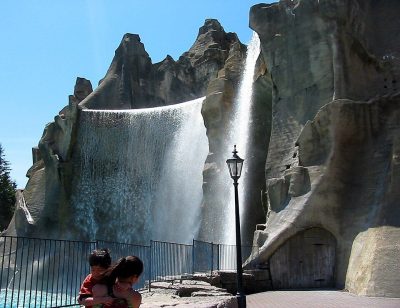 Big drawTheme parkCanada's Wonderland2.8 km outside town, to the south · 3.2M visitors a year (2025)
 AttractionLeviathan2.4 km outside town, to the south
 AttractionYukon Striker2.9 km outside town, to the south
 AttractionBehemoth3.1 km outside town, to the south
 AttractionMighty Canadian Minebuster3.1 km outside town, to the south
 AttractionDareDeviler2.9 km outside town, to the south
Photos: each place’s Wikidata image, from Wikimedia Commons under the licence below (our copy, resized).
Photo credits (6)
- Canada's Wonderland: Mathew Ingram, CC BY 2.0, Wikimedia Commons
- Leviathan: Chris!!!!!, CC BY 2.0, Wikimedia Commons
- Yukon Striker: Jason Zhang, CC BY-SA 3.0, Wikimedia Commons
- Behemoth: Mindme, CC BY-SA 3.0, Wikimedia Commons
- Mighty Canadian Minebuster: Mike chernucha, CC BY-SA 2.0, Wikimedia Commons
- DareDeviler: Mike chernucha, CC BY-SA 2.0, Wikimedia Commons
Famous people from around Hope
No notable person born in Hope is on our list; these were born in the towns around it.


Photo credits
Max Aitken, 1st Baron Beaverbrook: Unknown author, Public domain · Phillip Di Giuseppe: TheAHL, CC BY 2.0
About Hope
Neighbourhood in Vaughan
TownRatings splits Vaughan into neighbourhoods drawn from census dissemination areas; Hope is one of them, named from the city’s map or OpenStreetMap.
Statistics Canada: population estimates 2025 (17-10-0155), Census of Population 2021, 2021 census boundaries.
- Population
- 6,997 (people, 2021 estimate)
- Province or territory
- Ontario
- City
- Vaughan
- Census subdivision
- 3519028
Hope’s neighbours
The nearest places of 1,000 or more. Statistics Canada
| Town | People | km | Overall | Cost | Safety | Health |
|---|---|---|---|---|---|---|
| Hope | 6,997 | — | A− | C− | B+ | A |
| Teston | 7,437 | 2.1 | A− | C | B+ | A |
| Upper Thornhill Estates | 10,435 | 2.9 | A− | C | B+ | A |
| Carrville Corners | 13,004 | 3.7 | A− | C | B+ | A |
| Peace Village | 14,598 | 3.8 | A− | D | B+ | A |
| Maple | 20,122 | 3.8 | A− | D | B+ | A |
| The Valleys of Thornhill | 9,979 | 4.4 | A− | C− | B+ | A |
People: Statistics Canada, Census 2021. Distances: centre to centre.
Questions about Hope
Is Hope a young town or an old one?
Its median age is 39, where Canadian towns sit at 45.2.
Sources: Statistics Canada, Census of Population 2021 · population estimates 2025 (17-10-0155) and 2021 census boundaries · Uniform Crime Reporting Survey 2023–25 (35-10-0026, 35-10-0183 to 35-10-0190) · CMHC rents as published by Statistics Canada (34-10-0133) · grades by TownRatings. Under the Statistics Canada Open Licence.
Adapted from Statistics Canada (Census of Population 2021, population estimates 2025, 2021 census boundaries) under the Statistics Canada Open Licence; this does not constitute an endorsement by Statistics Canada. Neighbourhood names in some cities © OpenStreetMap contributors (ODbL).