

 Top
National Historic Site · 1765–1766Old Barrington Meeting HouseHighway 3Photo: Dennis G. Jarvis · CC BY-SA 2.0 · Commons file
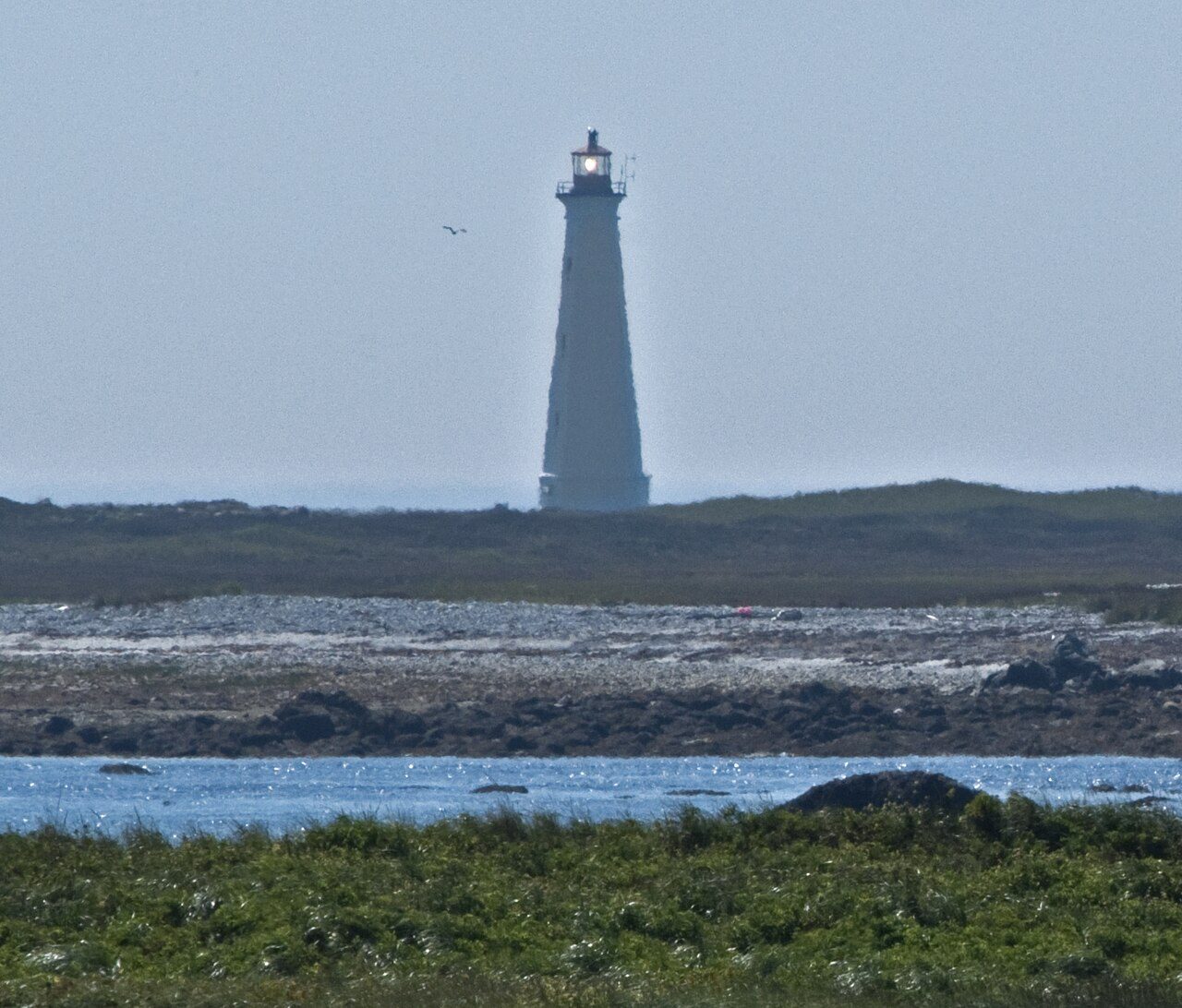 Lighthouse (new) · Photo: Manfredwinslow · CC BY-SA 3.0
4historic places on the registers
History of Barrington · Canada’s heritage registers
Barrington’s record starts in 1629 with Fort St. Louis
On the registers Barrington counts 4 historic places, 3 at the top. Few towns have as much for their size: 6 for every 10,000 residents, more than 95% of Canadian towns. Counted by designation, there are a provincial or municipal listing. Add one just outside the town.
Historic places
4
6 per 10,000 residents
Highest designations
3
National Historic Sites and Classified Federal Heritage Buildings
Provincial and local listings
1
provincial and municipal listings with an encyclopedia article
Oldest building
1629
the first construction date on its record
Homes built before 1961
27%
typical town: 18%
In pictures
2 of the 3 highest designations in Barrington, in photos
Pictured and oldest in Barrington: Old Barrington Meeting House, 1765. 3 of the places on Barrington’s heritage registers are pictured here; the others keep their register record. Photos show 2 of Barrington’s places with the highest designations.
Photos from Wikimedia Commons, each credited to its photographer with its licence; names open the place’s page. Tap a photo to step through them full screen.
The map
Where Barrington’s history is
Every place on the registers inside the town, by its designation.
Highest designationsProvincial and local listings
Dots open their places’ pages; hover first to read the name.
The 4, by tier
3 Highest designations1 Provincial and local listings
What the map shows is the open record: the federal directory in full, and from provincial or municipal lists only the places Wikidata ties to an encyclopedia article.
Points from Wikidata (Parks Canada’s files carry none) and from Québec’s register, as mapped there.
Highest designations
3 places in Barrington with the highest designation
The first was designated in 1931, the latest in 1988. Here that means 2 National Historic Sites and a Classified Federal Heritage Building. National Historic Sites and Classified Federal Heritage Buildings, Canada’s highest federal recognition. Each one opens its own page.
 Top
Classified Federal Heritage Building · 1923–1924Lighthouse (new)Hawk Point RoadPhoto: Manfredwinslow · CC BY-SA 3.0 · Commons file
National Historic Site · 1629Fort St. Louisnear Route 3
Provincial and local listings
One more place Barrington or its province protects
Provincial and municipal listings that Wikidata records and an encyclopedia describes. Each one opens its own page.
 Local
Municipally Registered Property · 1968Barrington Woolen MillPhoto: Dennis G. Jarvis · CC BY-SA 2.0 · Commons file
Just outside
Just outside Barrington
Places the registers give to the town from within 5 km of its edge, nearest first.
Just outside Barrington: 1
| LighthouseRecognized Federal Heritage Building · 100 m outside the town |
Homes by age
Little new building in Barrington: 2.1% of homes date from 2016 to 2021, against 4.1%
30% of Barrington’s homes date from 1981 to 2000, well above the typical 23%. At 27%, Barrington’s share of pre-1961 homes is above the typical town’s 18%. Barrington built little from 2001 to 2015: 7.3% of its homes, where most towns have 15%.
27%
Before 1961
34%
1961–80
30%
1981–2000
7.3%
2001–15
2.1%
2016–21
BarringtonTypical town
2021 Census, private dwellings by period of construction (Statistics Canada); the typical town is the middle Canadian town of 2,500 or more.
Born here
Barrington’s people of the past, born 1814–1913
Counting only births before 1914, there are 5. Best known is Thomas Coffin Doane, with articles in 3 Wikipedia languages. 3 of the 5 were born in the years before Confederation. At 89, Norman Emmons Smith outlived the rest, dying in 1969.
Thomas Coffin Doane
Thomas Coffin
Thomas Robertson
Norman Emmons Smith
Felton Legere
1800182518501875190019251950

Thomas Coffin Doane1814–1896 · 19th century Canadian photographer

Thomas Robertson1852–1902 · Canadian civil servant, entrepreneur and politician
FL
Felton Legere1913–1963 · Canadian politician

Thomas Coffin1817–1890 · Canadian politician
NS
Norman Emmons Smith1880–1969 · Canadian politician from Nova Scotia
Everyone born in Barrington → Born before 1914 (the page’s periods: Confederation to the First World War). Birthplaces from Wikidata, each checked against the person’s Wikipedia article.
Towns its size
Barrington has the 1st most of 16 towns its size
Towns of 6,700 to 6,800 residents, by places on the registers.
Barrington4
The typical town its size has 0. 13 of them have nothing on the registers.
In brief
Barrington in brief
Counted by age, 27% of Barrington’s homes predate 1961, against 18% in the typical town. The count is 4 historic places, 3 with the highest designation. It tops the 16 towns nearest its size for historic places. Its people of the past include Thomas Coffin Doane (1814), Thomas Robertson (1852) and Felton Legere (1913). The rest is about typical: the list grew between 1931 and 1988.
How to read these numbers
What this data can and can’t tell you
- Provincial and municipal lists. Provincial and municipal listings here come from Wikidata alone, since the provinces’ own registers can’t be reused; a listing needs an encyclopedia article to get a page.
- Map points. Where a federal place sits on the map is Wikidata’s placing; the directory itself has no coordinates.
- The grade. There is no history grade: the page sets out the record and compares it with other towns.
- The federal register. Federal places come from Parks Canada’s directory, which counts National Historic Sites, federal heritage buildings, stations and lighthouses; their statements are the register’s own.
- Protection. A National Historic Site designation recognises significance; it doesn’t by itself protect a building the federal government doesn’t own. Legal protection comes from provincial and municipal designations, whose own registers aren’t open data outside Québec.
- People and events. Persons of national historic significance come with no location; a town gets one only by birthplace (name and both life years agreeing) or by one of its own places that bears the name and whose record tells the story. Events, which can’t be tied, are left out.
- The tiers. Tiers follow the designation: national recognition and classement first, other federal designations next, provincial and local listings last.
Questions about Barrington’s history
What is the oldest building in Barrington?
Fort St. Louis, a National Historic Site, begun in 1629.
Which places in Barrington have the highest designation?
Fort St. Louis, Old Barrington Meeting House and Lighthouse (new).
How old are the homes in Barrington?
27% predate 1961, where the typical town has 18%.
Why might a heritage building in Barrington be missing here?
Provincial and municipal registers outside Québec aren’t open data. Wikidata knows 26 more listings in Barrington, but without an open description or an encyclopedia article they get no page.
Contains information licensed under the Open Government Licence – Canada (Parks Canada).
Sources: Parks Canada, Directory of Federal Heritage Designations · Canadian Register of Historic Places (federal extract) · Wikidata (CC0) for map points, other names and articles · Statistics Canada, 2021 Census (homes by period of construction). Under the Statistics Canada Open Licence.
Adapted from Statistics Canada (Census of Population 2021, population estimates 2025, 2021 census boundaries) under the Statistics Canada Open Licence; this does not constitute an endorsement by Statistics Canada. Neighbourhood names in some cities © OpenStreetMap contributors (ODbL).