 Top
National Historic Site · 1902–1904Banff Park Museum91 Banff AvenuePhoto: Acroterion · CC BY-SA 4.0 · Commons file
 Banff Park Museum · Photo: Acroterion · CC BY-SA 4.0
8historic places on the registers
History of Banff · Canada’s heritage registers
The registers list 8 historic places in Banff, 2 at the top
Designations here include 5 Recognized Federal Heritage Buildings and a heritage railway station. Per resident Banff outdoes 96% of Canadian towns, with 7 for every 10,000 people. Go back to 1902 and you reach Banff Park Museum, the oldest of them. For the municipality itself, Wikidata has 1885, which can be an incorporation or a merger rather than a founding.
Historic places
8
7 per 10,000 residents
Highest designations
2
National Historic Sites and Classified Federal Heritage Buildings
Other federal designations
6
Recognized buildings, railway stations, lighthouses
Oldest building
1902
the first construction date on its record
Homes built before 1961
10%
typical town: 18%
In pictures
Banff now and then, in 8 photos and 6 old views
The photos cover every place on Banff’s registers. For 2 of Banff’s places, old views sit on the place’s own page. Two worth a look first: Banff Park Museum and Banff Springs Hotel.
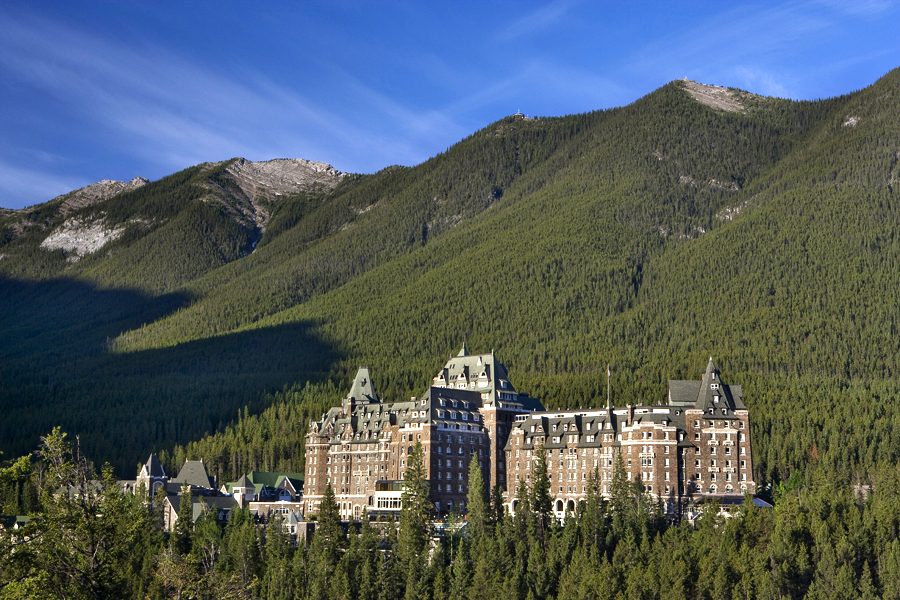 Banff Springs Hotel
 Information Building
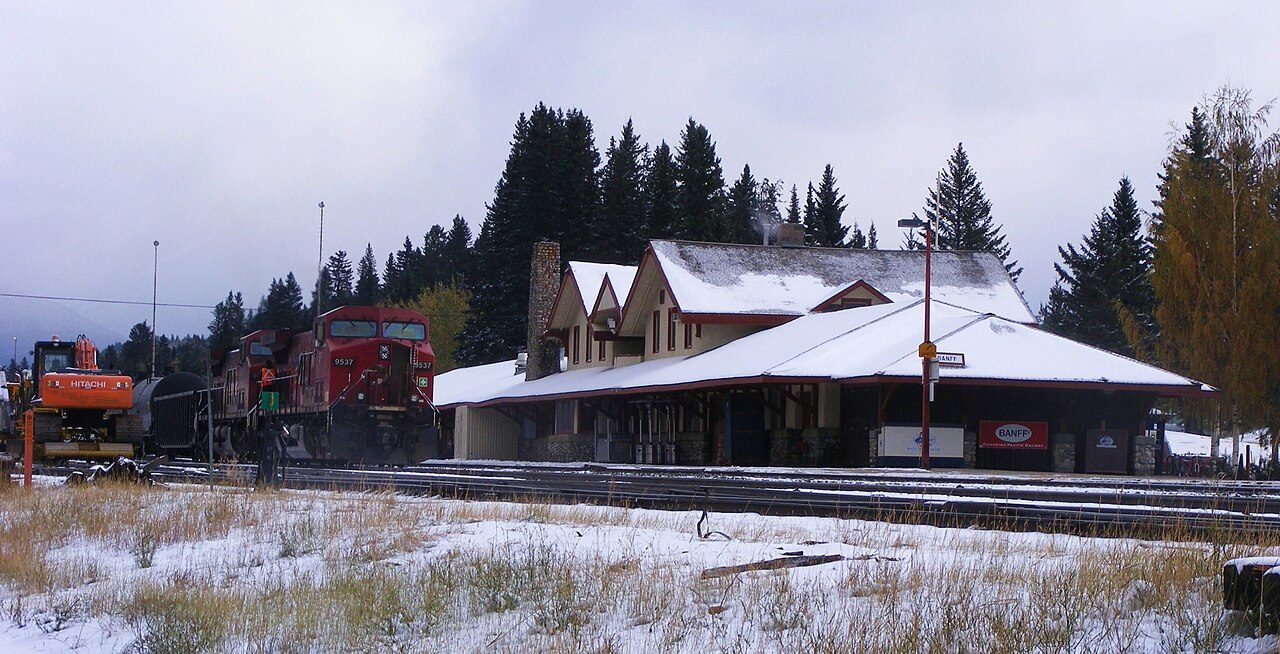 Canadian Pacific Railway Station, Banff, Alberta
 Administration Building
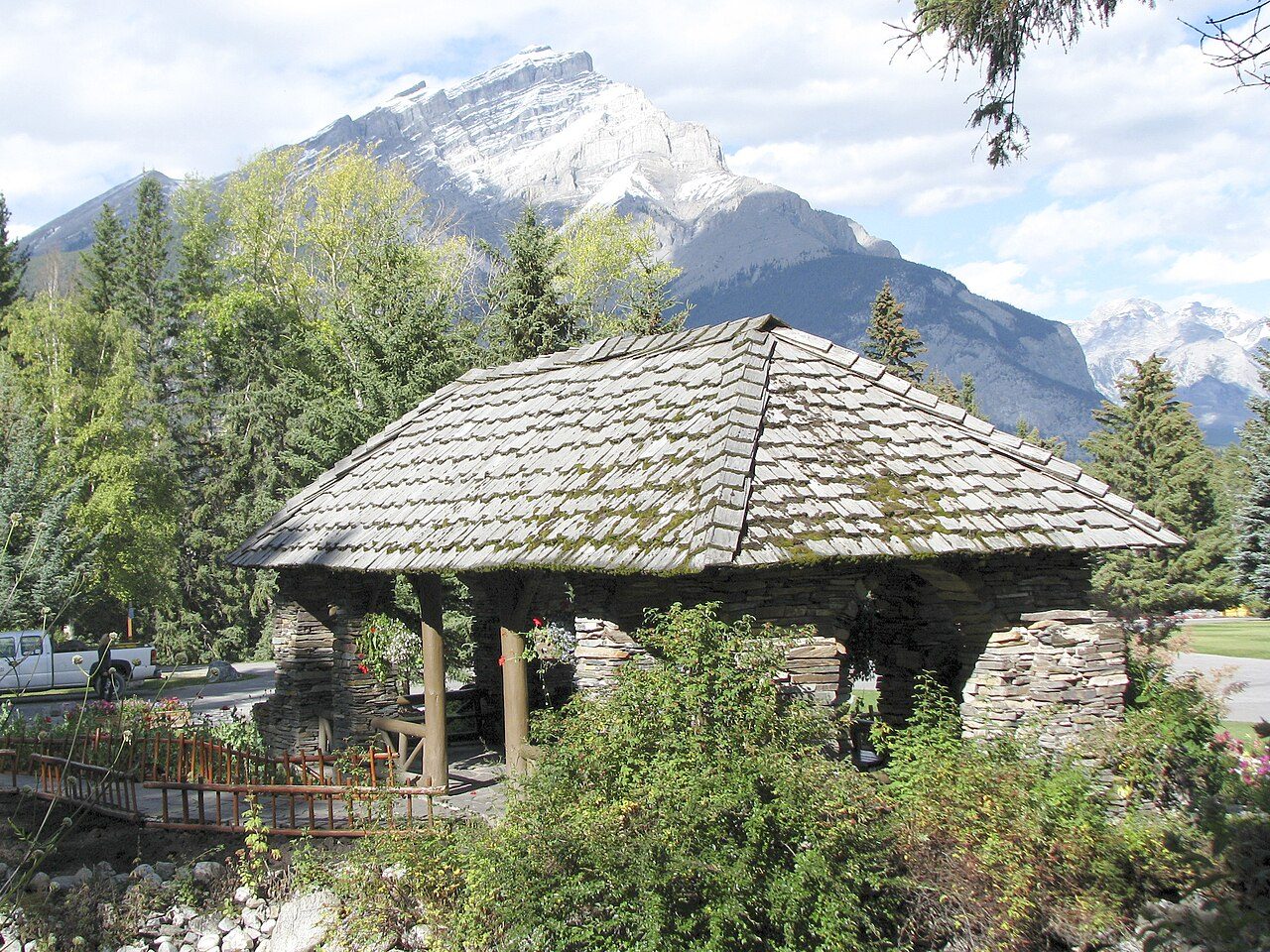 Cambrian Pavilion+3See all photos
Photos from Wikimedia Commons, each credited to its photographer with its licence; names open the place’s page. Tap a photo to step through them full screen.
Through time
Banff between 1906 and 1927
In order of date: 4 old photographs of the town, then the oldest views of 2 of its historic places. Swipe along the strip; each picture opens at full size.
 c. 1906
 c. 1906
 1915
 1917
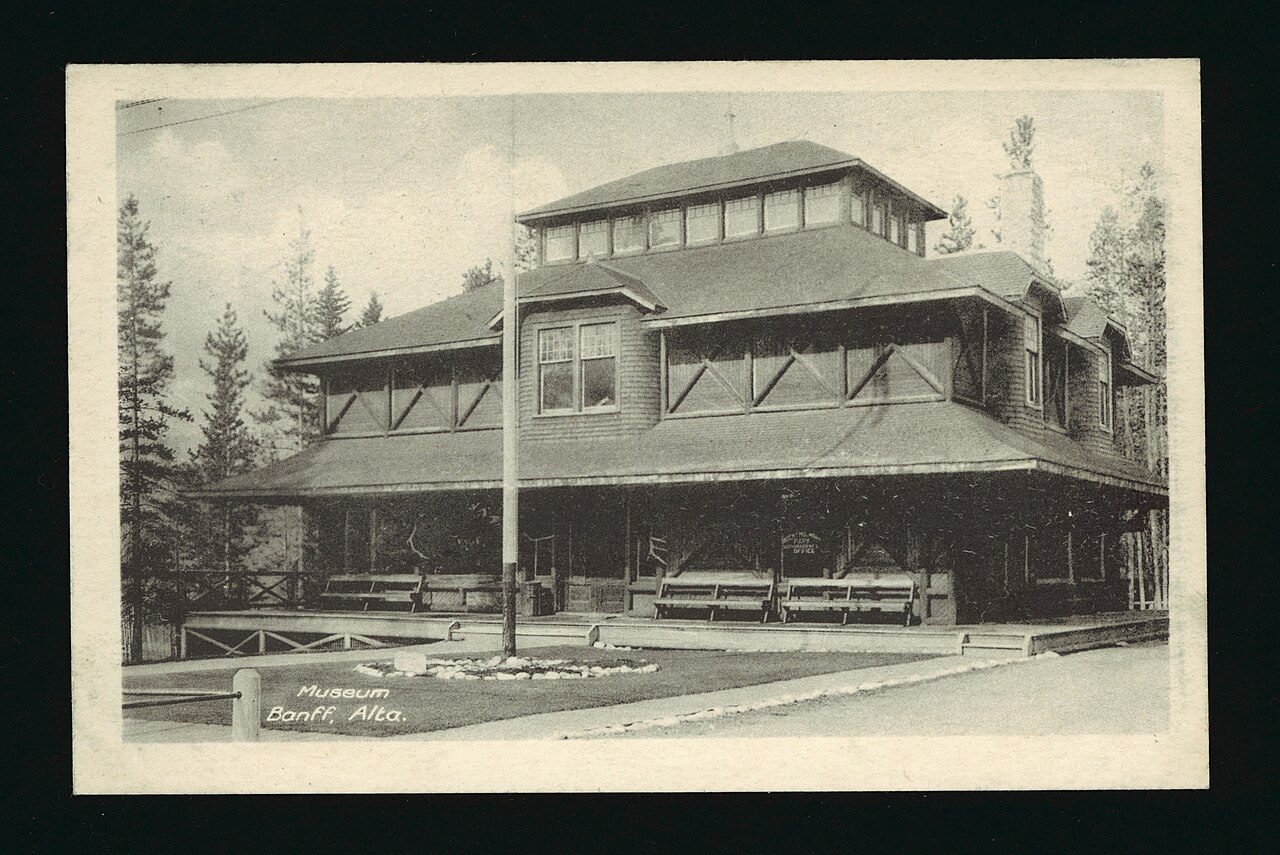 1920s
 c. 1927
Public domain or CC0, made before 1950, from Wikimedia Commons; old views of places can be drawings, prints or maps of their time. Each credit opens the image’s page.
The map
Where Banff’s history is
Every place on the registers inside the town, by its designation.
Highest designationsOther federal designations
Tap any dot to open that place’s own page; hovering shows its name.
The 8, by tier
2 Highest designations6 Other federal designations
Parks Canada’s Directory of Federal Heritage Designations lists the places the Government of Canada has recognized; outside Québec, provincial and municipal listings come only through Wikidata, and only those with an encyclopedia article get a page.
Points from Wikidata (Parks Canada’s files carry none) and from Québec’s register, as mapped there.
Highest designations
2 places in Banff with the highest designation
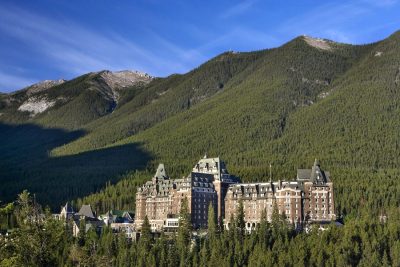
They date from 1902 (Banff Park Museum) to 1911. National Historic Sites and Classified Federal Heritage Buildings, Canada’s highest federal recognition. Designations came from 1985 to 1988. Each one opens its own page.
 Top
National Historic Site · 1911–1929Banff Springs HotelSpray AvenuePhoto: Kimpayant · CC BY-SA 3.0 · Commons file
Other federal designations
6 more federal designations in Banff
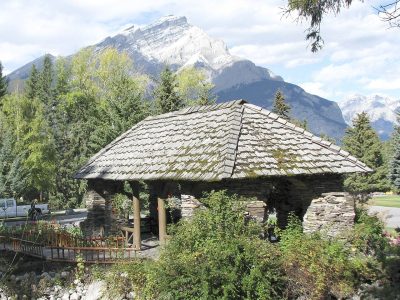
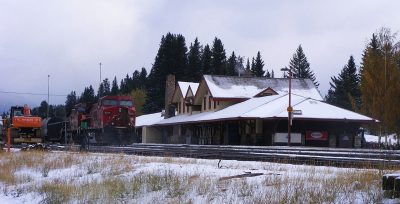
They date from 1910 (“Canadian Pacific Railway Station, Banff, Alberta”) to 1939. By designation: 5 Recognized Federal Heritage Buildings and a heritage railway station. Recognized Federal Heritage Buildings, heritage railway stations and lighthouses. Each one opens its own page.
 Fed
Recognized Federal Heritage Building · 1934–1936Cambrian PavilionCascades of Time GardenPhoto: Odysseus1479 · CC BY-SA 3.0 · Commons file
 Fed
Recognized Federal Heritage Building · 1934–1936Devonian PavilionCascades of Time GardenPhoto: Odysseus1479 · CC BY-SA 3.0 · Commons file
 Fed
Recognized Federal Heritage Building · 1935–1937Administration Building101 Mountain AvenuePhoto: Odysseus1479 · CC BY-SA 3.0 · Commons file
 Fed
Recognized Federal Heritage Building · 1935–1936Rustic Lookout PavilionCascades of Time GardenPhoto: Odysseus1479 · CC BY-SA 3.0 · Commons file
 Fed
Recognized Federal Heritage Building · 1939–1941Information Building224 Banff AvenuePhoto: Royalbroil · CC BY-SA 3.0 · Commons file
 Fed
Heritage Railway Station · 1910–1911Canadian Pacific Railway Station, Banff, AlbertaLynx StreetPhoto: Diannaa · CC BY-SA 3.0 · Commons file
What’s designated
63% of Banff’s historic places are theatres, museums and memorials
The top of the list holds Banff Park Museum and Banff Springs Hotel. By kind, the list runs to 4 groups.
Theatres, museums and memorials5
Mills, shops and works1
Stations, lighthouses and bridges1
Other places1
Each place sits in one group, from its name first, then the uses its register lists.
How old
For Banff, most dated places belong to the wars and the Depression
Each place by the first construction date on its record.
British North America 1760–18660
After Confederation 1867–19133
Wars and Depression 1914–19455
Since 1946 1946 on0
Homes by age
Pre-1961 homes are scarce in Banff: 10%, against a usual 18%
Homes built from 2016 to 2021 make up 6.7% of Banff’s, above the typical 4.1%. More of Banff’s homes were built from 1981 to 2000 than in any other period: 41%. Count back from today and half of Banff’s homes are older than 2001.
10%
Before 1961
28%
1961–80
41%
1981–2000
15%
2001–15
6.7%
2016–21
BanffTypical town
2021 Census, private dwellings by period of construction (Statistics Canada); the typical town is the middle Canadian town of 2,500 or more.
Towns its size
Banff has the most of 16 towns its size
Towns of 11,300 to 11,500 residents, by places on the registers.
Banff8
The middle one has 0. 10 of them have none.
In brief
Banff in brief
Banff has 8 historic places, 2 with the highest designation. Among the 16 towns nearest its size, none has more historic places. Most of its dated places come from the wars and the Depression: 5 of 8. The census dates only 10% of its homes before 1961, against 18% in the typical town. Otherwise the figures are ordinary: Foley Martin (1901) is its person of the past on the record; and the list grew between 1985 and 1997.
How to read these numbers
What this data can and can’t tell you
- People and events. Parks Canada’s open file gives its national historic persons no place. A town’s page names one only when the person was born there (matched by name and both life years) or one of its own historic places carries the name and its record speaks of them; national historic events stay off.
- Map points. Federal places get their map points from Wikidata, since Parks Canada’s files carry none; they are as mapped there.
- The tiers. National Historic Sites and the most protected buildings form the top tier; recognized federal buildings, stations and lighthouses the second; provincial and municipal listings the third.
- Protection. Being on these registers doesn’t mean a building can’t change. Federal designation commemorates; protection is provincial or municipal, and those lists aren’t open here.
- The grade. History isn’t one of Canada’s graded pillars, so this page describes and compares without a letter.
- Provincial and municipal lists. The local and provincial lists outside Québec aren’t published openly, so this page counts what Wikidata records and pages only the places an encyclopedia describes.
- The federal register. Every federal designation is in Parks Canada’s directory, and the Canadian Register of Historic Places gives most of them a bilingual statement of significance.
Questions about Banff’s history
Which places in Banff have the highest designation?
Banff Park Museum and Banff Springs Hotel.
What is the oldest building in Banff?
By its record, Banff Park Museum, from 1902 (National Historic Site).
How old are the homes in Banff?
10% of its homes were built before 1961, against 18% in the typical Canadian town.
Why might a heritage building in Banff be missing here?
Its province’s and council’s own lists can’t be reused here; 6 further listings in Banff show up only as Wikidata numbers.
Contains information licensed under the Open Government Licence – Canada (Parks Canada).
Sources: Parks Canada, Directory of Federal Heritage Designations · Canadian Register of Historic Places (federal extract) · Wikidata (CC0) for map points, other names and articles · Statistics Canada, 2021 Census (homes by period of construction). Under the Statistics Canada Open Licence.
Adapted from Statistics Canada (Census of Population 2021, population estimates 2025, 2021 census boundaries) under the Statistics Canada Open Licence; this does not constitute an endorsement by Statistics Canada. Neighbourhood names in some cities © OpenStreetMap contributors (ODbL).