Tracy’s post office opened in 1878, and 5 of its places are on the National Register
More historic than 42% of U.S. towns · #202 of 847 in California. What drives it
Most of Tracy was built recently: 4% of its homes predate 1940 and the median home dates from 1995. Below: 17 old photos and papers, maps from 1892 on, and the census since 1910.
The Tracy post office opened in 1878, the earliest record of the town by name. Another post office, Ellis (1870), opened inside today’s city and later closed.
First census: 596 in 19102020 census: 93,000148 years
How historic is Tracy?
C+
More historic than 42% of U.S. towns, on its age, its old homes and the National Register.
Founding year: the first Tracy post office (Blevins & Helbock, CC0).The full story ↓
History grade
What drives Tracy’s History grade
On its age, its old homes and the National Register, Tracy is more historic than 42% of U.S. towns, #202 of 847 in California. Its National Register listings hold the grade up; its share of homes from before 1940 pulls it down.
C+
HistoryA character grade: shown, never part of Tracy’s overall grade.
Among the 400 U.S. cities of 100,000 or more, Tracy ranks #262 on History.
Few California towns list much on the Register (a typical California town has 0.0 per 10,000 residents, the U.S. 2.4), so Tracy’s 0.5 sits above most of its state (71% of California towns have fewer) while its 5 listings outnumber those of 70% of U.S. towns.
How sure. Graded on any two of the three inputs instead, the letter would range from C− to B−. The pre-1940 share (±1.0 points) is firm at this size. The founding year is the first post office, not a stated founding date.
Founding year: the first post office (other dates in Quick answers). Homes: Census ACS 2020–24. National Register: National Park Service, May 2026 list; each listing counted once (boundary changes and added documentation belong to their listing), and a historic district counts its contributing buildings. How TownRatings grades history →
What stands out about Tracy’s past
Read from the archive, the National Register and the record. The page puts what stands out first.
Fire insurance maps drew every building, what it was made of and what it was used for, so insurers could price the risk of fire. Pick a year, then a sheet.
Nothing in the archives for these yearsWeddings on Main Street, storms, parades, school pictures, the old store. If it’s in your family album, it belongs here.
Until the 1760s, the area that became the city of Tracy was long populated by the Yokuts ethnic group of loosely associated bands of Native Americans and their ancestors. They lived on hunting and gathering game and fish from local rivers and creeks. After encountering the Spanish colonists, the Yokuts suffered from new infectious diseases, which caused social disruption, as did the Spanish efforts to impress them into labor at Mission San José. Mexican and American explorers later arrived, pushing the Yokuts out. The Yokuts people remain, living in small groups with about 2,600 people identifying as Yokut. Along with them, another language group of Native Americans found near Tracy are referred to as the Mono people, numbering around 1,800.
Passages that mention Tracy, cut from the printed page as they were published.
History of San Joaquin County, California1923 · page 515Read the page →
Read the text
Side section of San Joaquin County and established the first general merchandise store of that locality in Ellis, about two miles from the present site of the city of Tracy. In 1876, the village of Ellis contained two stores, one blacksmith shop, five saloons, a school building and a town hall. Upon the completion of the railroad from Richmond to Los Banos, the town of Tracy became an important junction and
Text read by machine from the scan; it may contain errors.
Tracy, the outlaw, king of bandits1908 · page 51Read the page →
Read the text
Tracy was locked up and indicted, with every prospect of conviction, for murder. The dead man had a number of influential friends who exerted every effort to bring Tracy to trial and secure his conviction.
Text read by machine from the scan; it may contain errors.
Scans and text from the Internet Archive. Books published in 1930 or earlier, which are in the public domain.
Timeline
Tracy, 1870 to 2002
Woven from the archive, old maps, post office records, the National Register and the people born here.
The Tracy post office opened in 1878, the earliest record of the town by name (U.S. post office records).
How does Tracy rank for history?
Tracy is more historic than 42% of U.S. towns, #202 of 847 in California. The History grade combines the town’s founding era, the share of homes built before 1940 and its National Register listings. It’s a character grade, so it isn’t part of the overall grade. How it works.
What is on the National Register in Tracy?
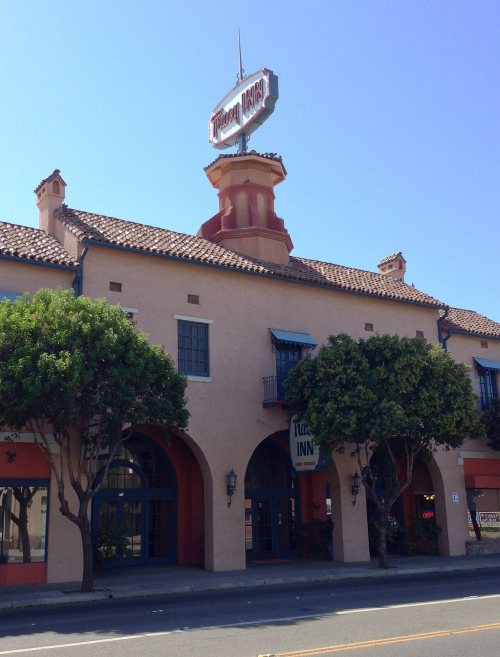
5 listings: 5 buildings, among them the West Side Bank (listed 1978, the first).
How old are the homes in Tracy?
4% of Tracy’s homes were built before 1940 (Census estimate, ±1.0 points), against a typical 3.4% for a California town; the median home was built in 1995.
Founding dates: Wikidata, Wikipedia, the U.S. post office records of Blevins & Helbock (CC0) and the Census. Homes by year built: Census ACS 2020–24. National Register of Historic Places: National Park Service (list of May 22, 2026). Old photos, postcards and papers: Wikimedia Commons, the Library of Congress and other public archives, credited on each item’s page. Maps: U.S. Geological Survey historical topographic maps (via Esri) and Sanborn fire-insurance maps (Library of Congress). History text and census tables: Wikipedia (CC BY-SA 4.0). Places that used to be: USGS Geographic Names Information System (2021).
From Wikimedia Commons (3), the Library of Congress (15), Wikidata (5), the National Register of Historic Places (5), Wikipedia, Wikidata and Wikipedia for famous people, U.S. Geological Survey historical maps, U.S. Census counts (via Wikipedia), the US Post Offices dataset (Blevins & Helbock), the USGS Geographic Names Information System, Sanborn fire insurance maps (Library of Congress) and old county and town histories (Internet Archive). Archive images are copied here with their credits and licenses, shown on each photo’s page. Refreshed monthly.


 1900
 1933
 1937
 1937
 1937
 1937
 1937
 1938
 1938
 1942
 1942
 1942
 Date?
 Date?
 Date?
 Date?
 Date?
 2016