Thousand Oaks’ post office opened in 1938, and 3 of its places are on the National Register
More historic than 23% of U.S. towns · #412 of 847 in California. What drives it
Most of Thousand Oaks was built recently: 0.6% of its homes predate 1940 and the median home dates from 1978. 3 places in town are on the National Register, among them a historic district with 8 buildings. Below: maps from 1900 on and the census since 1950.
The Thousand Oaks post office opened in 1938, the earliest record of the town by name. Wikidata gives 1964. Three smaller post offices, Newbury Park (1875), Triumfo (1915) and Triunfo (1917), opened inside today’s city and later closed.
First census: 1,243 in 19502020 census: 126,96688 years
How historic is Thousand Oaks?
C−
More historic than 23% of U.S. towns, on its age, its old homes and the National Register.
Founding year: the first Thousand Oaks post office (Blevins & Helbock, CC0). Wikidata: 1964.The full story ↓
History grade
What drives Thousand Oaks’ History grade
On its age, its old homes and the National Register, Thousand Oaks is more historic than 23% of U.S. towns, #412 of 847 in California. Its National Register listings hold the grade up; its age pulls it down.
C−
HistoryA character grade: shown, never part of Thousand Oaks’ overall grade.
Among the 400 U.S. cities of 100,000 or more, Thousand Oaks ranks #336 on History.
Few California towns list much on the Register (a typical California town has 0.0 per 10,000 residents, the U.S. 2.4), so Thousand Oaks’ 0.9 sits above most of its state (75% of California towns have fewer) while its 11 historic buildings outnumber those of 76% of U.S. towns.
Newer cities are common at Thousand Oaks’ size: in the typical U.S. city of 100,000 or more, 5% of homes predate 1940.
How sure. Graded on any two of the three inputs instead, the letter would range from D− to C+. The pre-1940 share (±0.2 points) is firm at this size. The founding year is the first post office, not a stated founding date; Wikidata gives 1964.
Founding year: the first post office (other dates in Quick answers). Homes: Census ACS 2020–24. National Register: National Park Service, May 2026 list; each listing counted once (boundary changes and added documentation belong to their listing), and a historic district counts its contributing buildings. How TownRatings grades history →
What stands out about Thousand Oaks’ past
Read from the archive, the National Register and the record. The page puts what stands out first.
Lost post offices, old corners, places now gone and burying grounds
Thousand Oaks’s post office has been open since 1938. Three other post offices opened and closed inside today’s town.
Newbury Park
1875–1972
Triumfo
1915–1917
Triunfo
1917–1936
Thousand Oaks
1938–today
18701950today
Hamlets and corners on the map
Conejo Valley Trailer ParkGreenwich VillageMountclef VillageNewbury ParkNorth RanchTriunfo Corner
Gone or out of use
Rancho Conejo Airportairport
1cemetery inside Thousand Oaks
Olson
US Post Offices dataset (Blevins & Helbock, CC0). Places and cemeteries from the USGS Geographic Names Information System (2021).
On the map
Thousand Oaks on the map, 1900 to 1981
Every edition of the U.S. Geological Survey’s map of Thousand Oaks. Tap a year, or press play to watch the town change.
1900Triunfo Pass sheet · 1:62,500
U.S. Geological Survey historical topographic maps (public domain), via Esri’s collection of the scans. The red ring marks the center of Thousand Oaks.
One of the earliest names used for the area was Conejo Mountain Valley, as used by the founder of Newbury Park, Egbert Starr Newbury, in the 1870s. During the 1920s, today's Thousand Oaks was home to 100 residents. In the 1920s, the residents held a naming competition where the 14-year-old Bobby Harrington's name suggestion won: Thousand Oaks. The valley is characterized by its tens of thousands of oak trees (50,000–60,000 in 2012).
The Thousand Oaks post office opened in 1938, the earliest record of the town by name (U.S. post office records). Wikidata gives 1964.
How does Thousand Oaks rank for history?
Thousand Oaks is more historic than 23% of U.S. towns, #412 of 847 in California. The History grade combines the town’s founding era, the share of homes built before 1940 and its National Register listings. It’s a character grade, so it isn’t part of the overall grade. How it works.
What is on the National Register in Thousand Oaks?
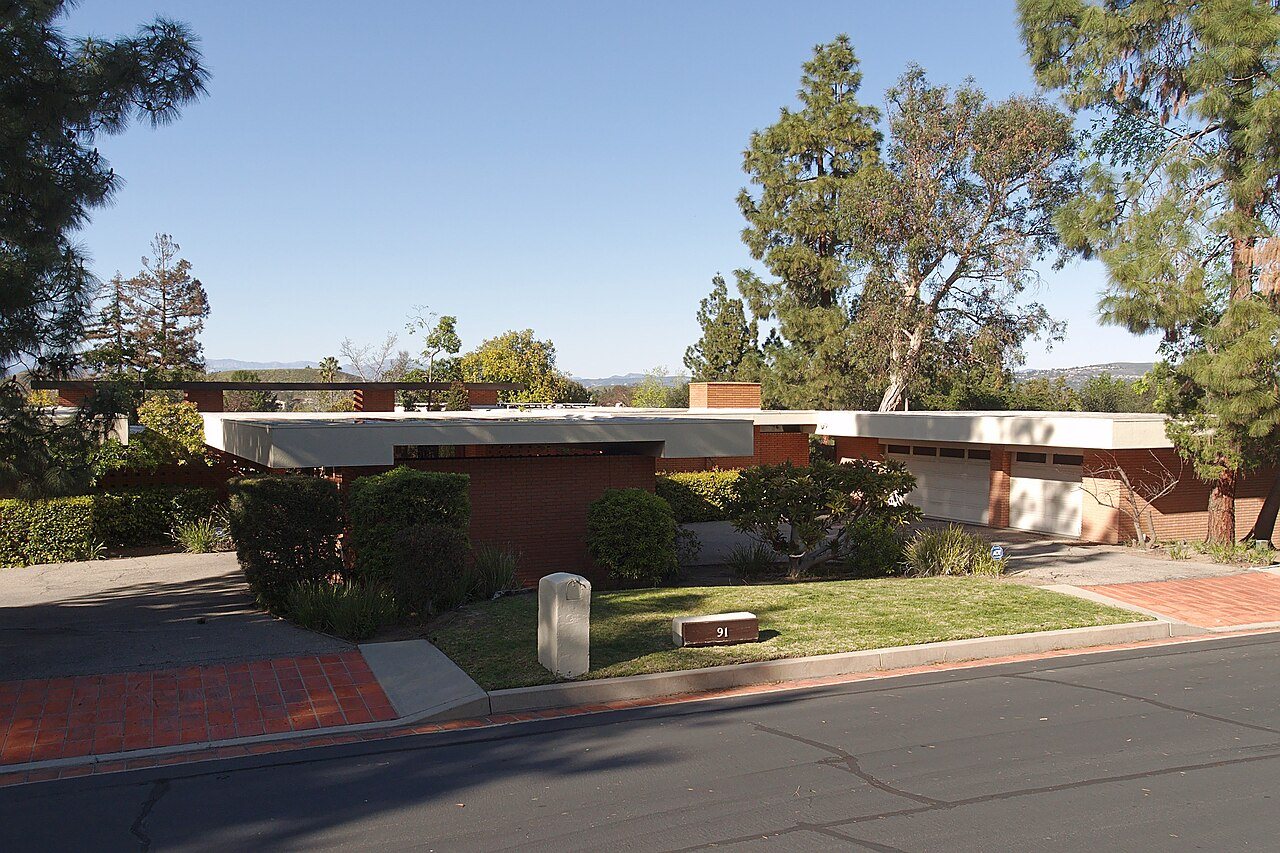
Three places: the Grand Union Hotel (listed 1975), the Joel McCrea Ranch (1997) and the Case Study House No. 28 (2013).
How old are the homes in Thousand Oaks?
0.6% of Thousand Oaks’ homes were built before 1940 (Census estimate), against a typical 3.4% for a California town; the median home was built in 1978.
Founding dates: Wikidata, Wikipedia, the U.S. post office records of Blevins & Helbock (CC0) and the Census. Homes by year built: Census ACS 2020–24. National Register of Historic Places: National Park Service (list of May 22, 2026). Old photos, postcards and papers: Wikimedia Commons, the Library of Congress and other public archives, credited on each item’s page. Maps: U.S. Geological Survey historical topographic maps (via Esri) and Sanborn fire-insurance maps (Library of Congress). History text and census tables: Wikipedia (CC BY-SA 4.0). Places that used to be: USGS Geographic Names Information System (2021).
From Wikimedia Commons (2), Wikidata (2), the National Register of Historic Places (3), Wikipedia, U.S. Geological Survey historical maps, U.S. Census counts (via Wikipedia), the US Post Offices dataset (Blevins & Helbock) and the USGS Geographic Names Information System. Archive images are copied here with their credits and licenses, shown on each photo’s page. Refreshed monthly.




 2017
 2007