Stanford’s post office opened in 1886, and 5 of its places are on the National Register
More historic than 50% of U.S. towns · #156 of 847 in California. What drives it
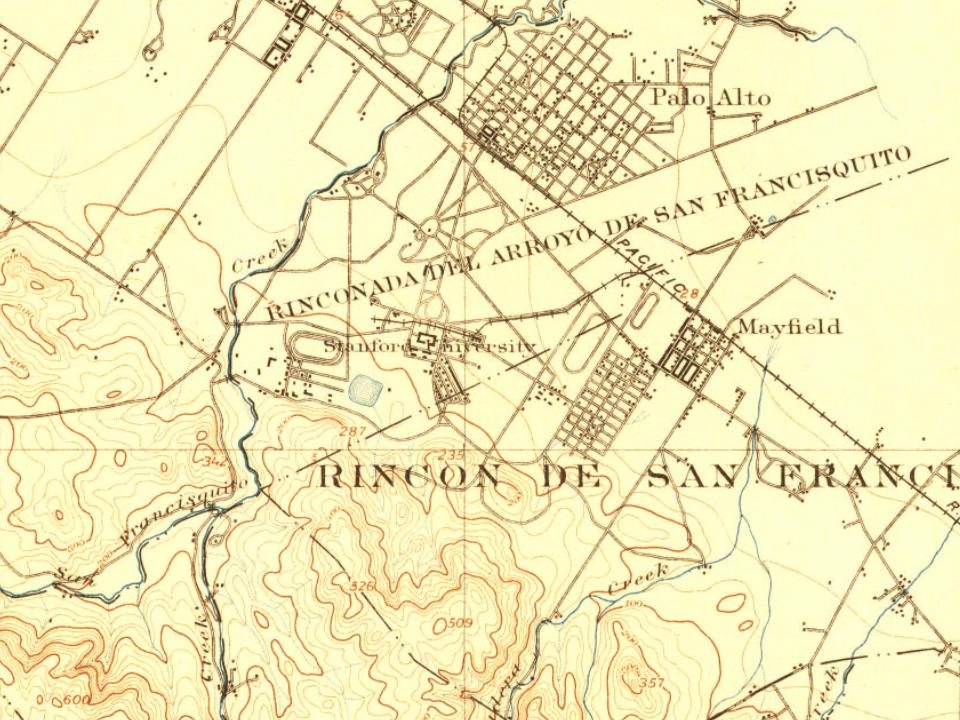
Most of Stanford was built recently: 6% of its homes predate 1940 and the median home dates from 1982. 5 places in town are on the National Register, among them 2 National Historic Landmarks. Below: 5 old photos and papers, maps from 1897 on, and the census since 2000.
The Stanford post office opened in 1886, the earliest record of the town by name. Another post office, Stanford University (1893), opened inside today’s town and later closed.
First census: 13,314 in 20002020 census: 21,150140 years
How historic is Stanford?
B−
More historic than 50% of U.S. towns, on its age, its old homes and the National Register.
Founding year: the first Stanford post office (Blevins & Helbock, CC0).
History grade
What drives Stanford’s History grade
On its age, its old homes and the National Register, Stanford is more historic than 50% of U.S. towns, #156 of 847 in California. Its National Register listings hold the grade up; its share of homes from before 1940 pulls it down.
B−
HistoryA character grade: shown, never part of Stanford’s overall grade.
Few California towns list much on the Register (a typical California town has 0.0 per 10,000 residents, the U.S. 2.4), so Stanford’s 3.8 sits above most of its state (85% of California towns have fewer) while its 7 historic buildings outnumber those of 73% of U.S. towns.
How sure. Graded on any two of the three inputs instead, the letter would range from C to B. The pre-1940 share is a Census survey estimate (±3.2 points). The founding year is the first post office, not a stated founding date.
Founding year: the first post office (other dates in Quick answers). Homes: Census ACS 2020–24. National Register: National Park Service, May 2026 list; each listing counted once (boundary changes and added documentation belong to their listing), and a historic district counts its contributing buildings. How TownRatings grades history →
What stands out about Stanford’s past
Read from the archive, the National Register and the record. The page puts what stands out first.
Wikipedia doesn’t have a history of Stanford yet. The photos, dates and memories neighbors add here are how it gets written.
Stanford is a census-designated place (CDP) in the northwestern corner of Santa Clara County, California, United States. It is the home of Stanford University, after which it was named. The CDP's population was 21,150 at the 2020 census. Stanford is adjacent to the city of Palo Alto, which borders it to the east, but the CDP itself remains unincorporated. Most of the Stanford University campus and other core University-owned land is situated within the CDP of Stanford, though the Stanford University Medical Center, the Stanford Shopping Center, and the Stanford Research Park are officially part of the city of Palo Alto. Its resident population consists of the inhabitants of on-campus housin…
Its first post office opened in 1886. Between the 2010 and 2020 censuses its population grew from 13,809 to 21,150 (+53%).
Intro from Wikipedia. Population: U.S. Census Bureau.
From the old history books
What they wrote about Stanford, 1905–1922
Passages that mention Stanford, cut from the printed page as they were published.
History of Santa Clara County, California, with biographical sketches of the leading men and women of the county who have been identified with its growth and development from the early days to the present1922 · page 329Read the page →
Read the text
The work of construction was begun upon the Central Pacific Railroad on January 8, 1863, when Leland Stanford, as president of the company, turned the first shovelful of earth, and in May, 1869, the Central Pacific and the Union Pacific Railroad companies were united at Promontory Point, where Leland Stanford drove the last spike in the line of railroad connecting by rail the Pacific and the Atlantic oceans, and binding
Text read by machine from the scan; it may contain errors.
History of Santa Clara County, California, with biographical sketches of the leading men and women of the county who have been identified with its growth and development from the early days to the present1922Read the page →
Read the text
During 1896-7, Dr. Wilbur was instructor in physiology at Stanford University, and during 1899-1900 he was lecturer and demonstrator in physiology at the Cooper Medical College; and from 1900-03 he was assistant professor of physiology at Stanford University. From 1909 to 1916 he was professor of medicine at Stanford University, and from 1911 to 1916 he was dean of the Medical School there. On
Text read by machine from the scan; it may contain errors.
History of Santa Clara County California1922 · page 329Read the page →
Read the text
The work of construction was begun upon the Central Pacific Railroad on January 8, 1863, when Leland Stanford, as president of the company, turned the first shovelful of eart,h, and in May, 1869. the Central Pacific and the Union Pacific Railroad companies were united at Promontory Point, where Leland Stanford drove the last spike in the line of railroad connecting by rail the Pacific and the Atlantic oceans, and binding
Text read by machine from the scan; it may contain errors.
Kappa Alpha Theta. Established at University of the Pacific, April 4, 1888. Transferred to Stanford University, January i, 1892. At the opening of Stanford University the Theta group of girls left the University of the Pacific, excepting two members, and came to Stanford, the charter being transferred a couple of months later.
Text read by machine from the scan; it may contain errors.
Scans and text from the Internet Archive. Books published in 1930 or earlier, which are in the public domain.
Timeline
Stanford, 1886 to 1989
Woven from the archive, old maps, post office records, the National Register and the people born here.
Nothing in the archives for these yearsWeddings on Main Street, storms, parades, school pictures, the old store. If it’s in your family album, it belongs here.
The Stanford post office opened in 1886, the earliest record of the town by name (U.S. post office records).
How does Stanford rank for history?
Stanford is more historic than 50% of U.S. towns, #156 of 847 in California. The History grade combines the town’s founding era, the share of homes built before 1940 and its National Register listings. It’s a character grade, so it isn’t part of the overall grade. How it works.
What is on the National Register in Stanford?
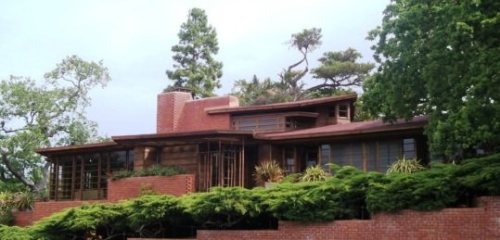
5 listings, 2 of them National Historic Landmarks: 5 buildings, among them the Lou Henry Hoover House (a National Historic Landmark since 1985). 7 historic buildings in all.
How old are the homes in Stanford?
6% of Stanford’s homes were built before 1940 (Census estimate, ±3.2 points), against a typical 3.4% for a California town; the median home was built in 1982.
Founding dates: Wikidata, Wikipedia, the U.S. post office records of Blevins & Helbock (CC0) and the Census. Homes by year built: Census ACS 2020–24. National Register of Historic Places: National Park Service (list of May 22, 2026). Old photos, postcards and papers: Wikimedia Commons, the Library of Congress and other public archives, credited on each item’s page. Maps: U.S. Geological Survey historical topographic maps (via Esri) and Sanborn fire-insurance maps (Library of Congress). History text and census tables: Wikipedia (CC BY-SA 4.0). Places that used to be: USGS Geographic Names Information System (2021).
From Wikimedia Commons (8), the Library of Congress (4), the National Register of Historic Places (5), Wikidata and Wikipedia for famous people, U.S. Geological Survey historical maps, U.S. Census counts (via Wikipedia), the US Post Offices dataset (Blevins & Helbock), the USGS Geographic Names Information System and old county and town histories (Internet Archive). Archive images are copied here with their credits and licenses, shown on each photo’s page. Refreshed monthly.




 ★ Landmark
 ★ Landmark




 Date?
 Date?
 2024
 2023
 2019
 2016
 2014
 2014
 2008