Ramona’s post office opened in 1886, and 5 of its places are on the National Register
More historic than 48% of U.S. towns · #166 of 847 in California. What drives it
Most of Ramona was built recently: 4% of its homes predate 1940 and the median home dates from 1983. Below: 1 old photo or paper, maps from 1942 on, and the census since 1950.
The Ramona post office opened in 1886, the earliest record of the town by name. Another post office, Nuevo (1883), opened inside today’s town and later closed.
First census: 1,158 in 19502020 census: 21,468140 years
How historic is Ramona?
B−
More historic than 48% of U.S. towns, on its age, its old homes and the National Register.
Founding year: the first Ramona post office (Blevins & Helbock, CC0).The full story ↓
History grade
What drives Ramona’s History grade
On its age, its old homes and the National Register, Ramona is more historic than 48% of U.S. towns, #166 of 847 in California. Its National Register listings hold the grade up; its share of homes from before 1940 pulls it down.
B−
HistoryA character grade: shown, never part of Ramona’s overall grade.
Few California towns list much on the Register (a typical California town has 0.0 per 10,000 residents, the U.S. 2.4), so Ramona’s 4.9 sits above most of its state (87% of California towns have fewer) while its 11 historic buildings outnumber those of 76% of U.S. towns.
How sure. Graded on any two of the three inputs instead, the letter would range from C− to B. The pre-1940 share (±1.7 points) is firm at this size. The founding year is the first post office, not a stated founding date.
Founding year: the first post office (other dates in Quick answers). Homes: Census ACS 2020–24. National Register: National Park Service, May 2026 list; each listing counted once (boundary changes and added documentation belong to their listing), and a historic district counts its contributing buildings. How TownRatings grades history →
What stands out about Ramona’s past
Read from the archive, the National Register and the record. The page puts what stands out first.
Before it was permanently settled, the Ramona area was inhabited by the Kumeyaay Nation of Native Americans (Diegueño), a semi-nomadic people, who established annual settlements there as they moved between coastal and inland grounds. Their presence is indicated by archeological evidence such as rock paintings, etchings, and grinding stones used to grind acorns into meal for bread.
During Mexican governance of California, Rancho Valle de Pamo (also called Rancho Santa María) was a 17,709-acre (71.67 km2) Mexican land grant that occupied the Santa Maria Valley and was centered on present-day Ramona.
Ramona stood quietly in his arms. Ah, well for Felipe that he did not know, never could know, the Ramona that Alessandro had known. This gentle, faithful, grateful Ramona, asking herself fervently now if she would do her brother a wrong, yielding up to him what seemed to her only the broken fragment of a life; weighing his words, not in the light of passion, but of calmest, most unselfish affection,— ah, how unlike was she to that Ramona who flung her-
Text read by machine from the scan; it may contain errors.
Ramona had chanced to come in as this conversation was going on. Hearing Alessandro's name she seated herself at the window, looking out, but listening intently. The month had done much for Alessandro with Ramona, though neither Alessandro nor Ramona knew it. It had done this much, — that Ramona knew always when Alessandro was near, that she trusted him, and that she had ceased to think of him as an Indian any more than when she thought of Felipe, she
Text read by machine from the scan; it may contain errors.
to wait till after his mother had left the room, before he asked Ramona what she was on the point of say ing. As soon as the Senora went out, he said, " What was it, Ramona, you were going to say just now?" Ramona colored. She had decided not to say it.
Text read by machine from the scan; it may contain errors.
Ramona stood quietly in his arms. Ah, well for Felipe that he did not know, never could know, the Ramona that Alessandro had known. This gentle, faithful, grateful Ramona, asking herself fervently now if she would do her brother a wrong, yielding up to him what seemed to her only the broken frag ment of a life ; weighing his words, not in the light of passion, but of calmest, most unselfish affection,
Text read by machine from the scan; it may contain errors.
Scans and text from the Internet Archive. Books published in 1930 or earlier, which are in the public domain.
Timeline
Ramona, 1883 to 1993
Woven from the archive, old maps, post office records, the National Register and the people born here.
Nothing in the archives for these yearsWeddings on Main Street, storms, parades, school pictures, the old store. If it’s in your family album, it belongs here.
The Ramona post office opened in 1886, the earliest record of the town by name (U.S. post office records).
How does Ramona rank for history?
Ramona is more historic than 48% of U.S. towns, #166 of 847 in California. The History grade combines the town’s founding era, the share of homes built before 1940 and its National Register listings. It’s a character grade, so it isn’t part of the overall grade. How it works.
What is on the National Register in Ramona?
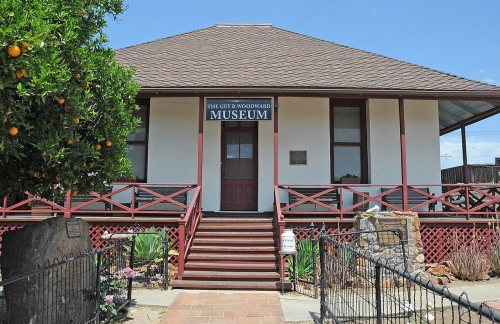
5 listings: 4 buildings, among them the Castle, The (listed 1978, the first), and 1 site. 11 historic buildings in all.
How old are the homes in Ramona?
4% of Ramona’s homes were built before 1940 (Census estimate, ±1.7 points), against a typical 3.4% for a California town; the median home was built in 1983.
Founding dates: Wikidata, Wikipedia, the U.S. post office records of Blevins & Helbock (CC0) and the Census. Homes by year built: Census ACS 2020–24. National Register of Historic Places: National Park Service (list of May 22, 2026). Old photos, postcards and papers: Wikimedia Commons, the Library of Congress and other public archives, credited on each item’s page. Maps: U.S. Geological Survey historical topographic maps (via Esri) and Sanborn fire-insurance maps (Library of Congress). History text and census tables: Wikipedia (CC BY-SA 4.0). Places that used to be: USGS Geographic Names Information System (2021).
From Wikimedia Commons (6), the National Register of Historic Places (5), Wikipedia, Wikidata and Wikipedia for famous people, U.S. Geological Survey historical maps, U.S. Census counts (via Wikipedia), the US Post Offices dataset (Blevins & Helbock), the USGS Geographic Names Information System and old county and town histories (Internet Archive). Archive images are copied here with their credits and licenses, shown on each photo’s page. Refreshed monthly.




 2018
 2015
 2015
 2011
 2008


