Shannon HillsAR
Public schools that outperform most of Arkansas. Settled in 1980, this town now has 4,829 residents.
What should you know before moving to Shannon Hills?
Strong in places, weak in others. The weak point is walkability. Most errands need a car: it is less walkable than 95% of U.S. towns. Health is weaker too (C−): residents are less healthy than 82% of U.S. towns on CDC estimates. Its best grade is for schools — its schools outperform 85% of the state's. A typical home there costs about $196K, 2.9 years of the Little Rock metro’s $67K median household income. Add incomes to its strengths (B+): the median household earns $71K. Overall, that makes a B−, good for 33rd of 123 in Arkansas. On that grade it does better than 46% of U.S. towns.
Figures: schools, state test and graduation results · incomes, Census ACS, 2020–24 · health, CDC PLACES · home values, Zillow.
What makes Shannon Hills stand out
Where Shannon Hills beats most towns.
Shannon Hills has grown 54% since 2010
3,143 counted in 2010 and 4,490 in 2020; an estimated 4,829 in 2025.
Growth hasn’t slowed: 7.4% since 2020, after 42.9% in the decade before.
U.S. Census 2010 & 2020 counts · Census Bureau estimate, July 1, 2025
How Shannon Hills grades
Each subject compared with towns across the country (schools within Arkansas), ordered by how far Shannon Hills is from typical.
How TownRatings grades towns →
Little Rock Central High School National Historic Site and 17 more within 40 miles
Museums, parks, gardens and other places to visit around Shannon Hills. Close and well known come first.
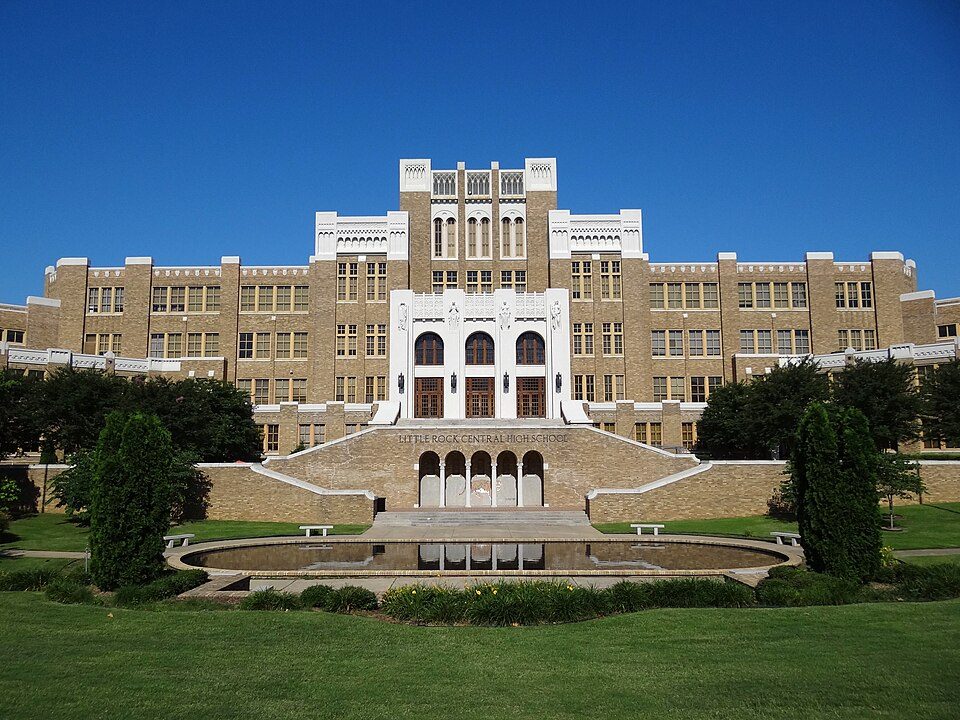 10 mi National Historic SiteLittle Rock Central High School National Historic Site49K visitors a year
 12 mi MuseumClinton Presidential Center
 36 mi National ParkHot Springs National Park2.5M visitors a year
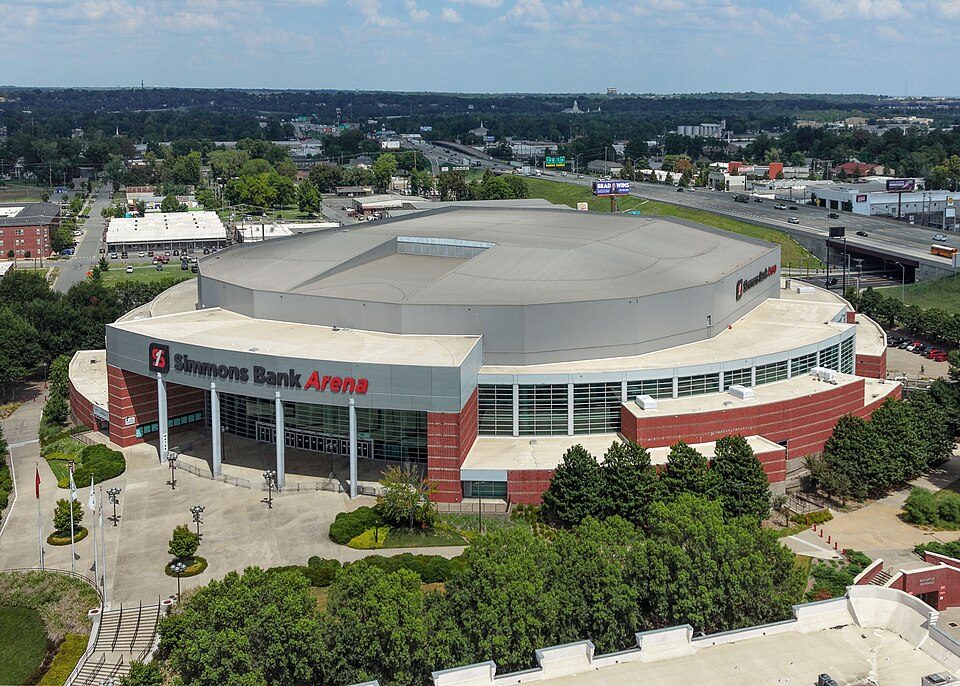 12 mi Stadium & arenaSimmons Bank Arena10 mi Zoo & aquariumLittle Rock Zoo36 mi Theme parkMagic Springs and Crystal Falls
Photo credits
Little Rock Central High School National Historic Site: Adam Jones, Ph.D., CC BY-SA 3.0 · Clinton Presidential Center: Archipreneur, CC BY-SA 3.0 · Hot Springs National Park: Unknown, Public domain · Simmons Bank Arena: Quintin Soloviev, CC BY 4.0


Moving to Shannon Hills: who provides what
Who provides power, water and the rest in Shannon Hills, and how to reach them.
EPA SDWIS (Oct 9, 2026) · HIFLD + EIA-861 2025 · Census 2020 ZCTAs · NCES 2024–25 · registration: vote.gov, updated Nov 18, 2024.
The data
Ordered by what stands out in Shannon Hills.
Shannon Hills looks healthier within Arkansas than nationally, but it has little public open land and has a long record of flood insurance claims.
0% of Shannon Hills is conserved land
Just 1 of its 1,684 acres are conserved, so there is little public open land in Shannon Hills itself; its outdoors grade is C−.
There are 1.1 miles of trail across 1 park or preserve. Shannon Hills has one park or preserve, 4 acres in all. Also worth knowing: the trail density for Shannon Hills comes to 0.4 miles per square mile, close to both Arkansas’ towns (0.3) and U.S. towns (0.4).
| Biggest places to walk | Trails | Acres |
|---|---|---|
| 1. Shamrock Park | 0.3 mi | 4 |
Trails & parks © OpenStreetMap contributors · Conserved land: USGS PAD-US
Shannon Hills earns an A for schools
The Bryant School District runs its public schools. Its one school is below. Shannon Hills’ only public school teaches 504 students.
| School | Level | Students | Letter |
|---|---|---|---|
| Robert L. Davis Elementary SchoolLargest public elementary schoolGrades K–5 | Grades K–5 | 504 | B+ |
NCES · EDFacts · graded within AR on state tests and graduation
Shannon Hills earns a C− for health
Within Arkansas it is healthier than 52% of the 123 graded towns: much of Arkansas scores lower on these measures.
Just over a quarter of Shannon Hills adults have been diagnosed with depression. In Shannon Hills, 38% of adults feel lonely, where Arkansas’ towns sit at 35% and U.S. towns at 33%. The town does better than the Arkansas average on 7 of 32 CDC measures and worse on 6.
| Shannon Hills | Arkansas towns | U.S. towns | |
|---|---|---|---|
| Sleep under 7 hours (CDC PLACES) | 44% | 39% | 36% |
| Frequent mental distress (CDC PLACES) | 21% | 19% | 17% |
| Feel lonely (CDC PLACES) | 38% | 35% | 33% |
| Food insecurity (CDC PLACES) | 24% | 19% | 14% |
| What stands out | Shannon Hills | AR |
|---|---|---|
| Fewer adults who have had cancer | 5.5% | 8.2% |
| Fewer adults with heart disease | 5.4% | 7.7% |
| More adults facing a utility shut-off | 15.2% | 10.4% |
CDC PLACES 2025 · modeled estimates for adults · CMS · HRSA
More than half of Shannon Hills’ working residents commute to Little Rock
Shannon Hills has 207 jobs for its 2,025 working residents: even if every job went to a resident, most would still commute out. 22.6% of workers work from home, against 8.8% across Arkansas.
Among 123 Arkansas towns, just 7 have a lower share of residents below the poverty line than Shannon Hills. For most workers, Shannon Hills is a place to come home to: only 2% work in town. Jobs based in Shannon Hills grew to 207 in 2023, 157 more than in 2013. Shannon Hills’ average commute stands at 27 minutes.
| Shannon Hills | Arkansas towns | U.S. towns | |
|---|---|---|---|
| Below the poverty line | 3.9% | 18% | 9.6% |
| Working residents who work in town | 2% | 22% | 8% |
| Average trip to work | 27 minutes | 21 minutes | 25 minutes |
| Median household income | $71,000 | $55,000 | $80,000 |
Where working residents work
Census LEHD 2023 · ACS
Shannon Hills: mild winters and hot summers
July afternoons reach 92°, January nights drop to 32° and about 4 inches of snow falls in a winter.
Typical low → high °F
NOAA U.S. Climate Normals, 1991–2020
More middle-aged adults than Arkansas overall
In Shannon Hills, 20% of adults 25 and older hold a bachelor’s degree or more. Adults 35 to 64 are 45% of residents (37% statewide); adults 18 to 34 are 17% of residents (22% statewide). The town has grown 7.4% since 2020, to 4,829 residents in the Census Bureau’s 2025 estimate. The midpoint age for Shannon Hills comes to 41.2 years.
| Shannon Hills | Arkansas towns | U.S. towns | |
|---|---|---|---|
| Median age | 41.2 years | 36.6 years | 40.5 years |
| Bachelor’s degree or more, 25+ | 20% | 20% | 29% |
Ages · share of residents
Education · adults 25 and older
Women and men · all residents
54% women, 46% men
That’s an even split within the survey’s margin of ±6.2 points. Across Arkansas, 50.6% of residents are women.
| Shannon Hills | AR | U.S. | |
|---|---|---|---|
| Under 10 | 16.4% | 12.3% | 11.6% |
| 10 to 17 | 6% | 10.8% | 10.3% |
| 18 to 24 | 4.3% | 9.4% | 9.1% |
| 25 to 34 | 12.8% | 13% | 13.7% |
| 35 to 44 | 18.7% | 12.7% | 13.2% |
| 45 to 54 | 19.8% | 11.8% | 12.2% |
| 55 to 64 | 6.4% | 12.5% | 12.7% |
| 65 to 74 | 8% | 10.3% | 10.2% |
| 75 and older | 7.5% | 7.2% | 7% |
| No diploma | 9% | 11.3% | 10.4% |
| High school | 35.3% | 34.1% | 26% |
| Some college | 23.3% | 20.7% | 19.1% |
| Associate’s | 12.6% | 8.2% | 8.8% |
| Bachelor’s | 13.9% | 16.3% | 21.6% |
| Graduate | 5.9% | 9.5% | 14.1% |
Census population estimates, 2025 · U.S. Census Bureau · ACS 2020-2024 5-year estimates · in a town of 4,800, single groups can be off by several points
Shannon Hills earns a B for cost of living
For households in Shannon Hills, the share who own their home is 84%. Homes here are typically worth about $196,000, up 2.9% in a year, 13% below the Arkansas typical home.
Typical home value
Census ACS, 2020–24 · Zillow Home Value Index · Redfin Data Center
Shannon Hills has a moderate natural-hazard risk, chiefly from inland flooding
57 flood insurance claims have been filed here, and 17 properties have flooded more than once.
Expected damage from storms and floods is higher here than in nearly three fifths of U.S. communities. The national flood insurance program has paid 57 claims in Shannon Hills since 1982. FEMA puts 37% of the town’s expected hazard losses down to inland flooding, and 19% to tornadoes. Households in the town have drawn federal disaster aid in 3 declared disasters, most recently in 2025.
FEMA flood insurance claims · FEMA disaster declarations and aid · FEMA National Risk Index · OpenFEMA
Shannon Hills sees more crime per resident than 51% of U.S. towns
Shannon Hills’ rate of reported violence is 3.1 per 1,000 residents. Within Arkansas, it does better than 80% of towns.
| Shannon Hills | Arkansas towns | U.S. towns | |
|---|---|---|---|
| Property crimes per 1,000 (2025) | 6 per 1,000 residents | 13.8 | 9.9 |
| Violent crimes per 1,000 (2025) | 3.1 per 1,000 residents | 3.7 | 1.6 |
Violent crime per 1,000 residents
Property crime per 1,000 residents
FBI crime data, 2025 · crimes reported to police
Everything we know about Shannon Hills
Colleges nearby
8 within 15 miles of the center of Shannon Hills
About 7 of every 100 Shannon Hills residents are enrolled in college, against 5 across Arkansas.
98% of working residents leave Shannon Hills for work
Where Shannon Hills’s working residents go each day. Line width shows the share.
Census LEHD 2023
About Shannon Hills
City in Arkansas, United States
Shannon Hills is a city in Saline County, Arkansas, United States. The population was 3,143 at the 2010 census, rising to 4,490 with the 2020 census. It is part of the Little Rock–North Little Rock–Conway Metropolitan Statistical Area.
From Wikipedia, licensed CC BY-SA 4.0 · facts via Wikidata (CC0)
- Area
- 2.6 sq mi
- Elevation
- 338 ft
- Area code
- 501
Shannon Hills’s neighbors
2 towns share a border with Shannon Hills.
| Town | AR rank | Overall | Cost | Safety | Schools | Health |
|---|---|---|---|---|---|---|
| Shannon Hills | #33 | B− | B | B− | A | C− |
| Alexander | #59 | C | A− | C− | A | C |
| Bryant | #14 | B+ | B+ | C | A | B |
Questions about Shannon Hills
Short answers, built from the data on this page.
Is Shannon Hills, AR a good place to live?
Shannon Hills grades B− overall, better than 46% of U.S. towns and #33 of 123 in Arkansas. It grades C− for health, B− for safety and A for schools. Walkability is its weak spot, with a D−.
Is Shannon Hills, AR safe?
Within Arkansas, it does better than 80% of towns.
Is Shannon Hills, AR expensive?
Cost of living, which also weighs rents, property taxes and how many households pay 30% or more of their income for housing, grades B.