Bigelow dates to 1905, and 15% of its homes were built before 1940
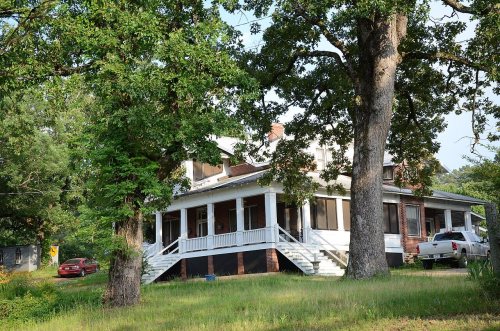
Its Register listings are the Bigelow Methodist Episcopal Church, South and the C.L. Sailor House. Its Register listings are the Bigelow Methodist Episcopal Church, South and the C.L. Sailor House. Below: the census since 1910.
Bigelow did not exist by its current name until 1911, as it was formerly known as "Esau"—a community a few miles southwest of the present Bridge that grew to border the edge of the small town of Fourche. In 1911, Fourche River Mill owner, N.P. Bigelow, built an elaborate white house of the best lumber on a hill above the town. He was elected mayor, and then gained permission from the state's General Assembly to change the name of Esau to Bigelow. A vote was taken to move the county seat from Perryville to Bigelow, Bigelow won the vote, but the move was never made.
Founding dates: Wikidata, Wikipedia, the U.S. post office records of Blevins & Helbock (CC0) and the Census. Homes by year built: Census ACS 2020–24. National Register of Historic Places: National Park Service (list of May 22, 2026). Old photos, postcards and papers: Wikimedia Commons, the Library of Congress and other public archives, credited on each item’s page. Maps: U.S. Geological Survey historical topographic maps (via Esri) and Sanborn fire-insurance maps (Library of Congress). History text and census tables: Wikipedia (CC BY-SA 4.0). Places that used to be: USGS Geographic Names Information System (2021). How TownRatings grades history →
From Wikimedia Commons (3), the National Register of Historic Places (2), Wikipedia, U.S. Census counts (via Wikipedia), the US Post Offices dataset (Blevins & Helbock) and the USGS Geographic Names Information System. Archive images are copied here with their credits and licenses, shown on each photo’s page. Refreshed monthly.


 2018
 2015
 2015