Guest, Sign inJoin

Post to Carolina

We’ll email a one-tap link to publish your post. No password, and nothing is public until you click it.
Already a member? Sign in
–Not graded
History · Carolina

Carolina’s post office opened in 1900

Most of Carolina was built recently: 4% of its homes predate 1940 and the median home dates from 1984. Below: maps from 1971 on and the census since 1970.

1900first post office
0on the National Register
4%homes built before 1940
Photo: Tails Wx · CC BY-SA 4.0
Quick answers

How Carolina began

When was Carolina founded?

1900

The Carolina post office opened in 1900, the earliest record of the town by name.

First census: 192 in 19702020 census: 286126 years
Founding year: the first Carolina post office (Blevins & Helbock, CC0).The full story ↓

What stands out about Carolina’s past

Read from the archive, the National Register and the record. The page puts what stands out first.

★ What stands out · Help out

Start Carolina’s collection

The first neighbors to add old photos shape how Carolina’s history is told.

Decades since 1900 with photos
00s10s20s30s40s50s60s70s80s90s
0 of 10 decades. The empty ones are waiting for someone’s album.
The story

How Carolina came to be

From Wikipedia’s history of Carolina.

Read it all →

Carolina was founded by Elzy Henderson Garvin from Wagener, South Carolina. South Carolina had been hit by an especially severe drought and when missionaries from the Church of Jesus Christ of Latter-day Saints (the Mormons) arrived in the area, many members of the Garvin family converted to the Mormon faith. Elzy Garvin left South Carolina in search of better land, better climate for farming and for matters of faith. It was recorded that he once remarked, "Our family left Ireland to practice our faith, and we are not becoming something new." The area reminded him so much of his home state that he named it "Carolina".

Text from Wikipedia, licensed CC BY-SA 4.0.

From the old history books

What they wrote about Carolina, 1884–1901

Passages that mention Carolina, cut from the printed page as they were published.

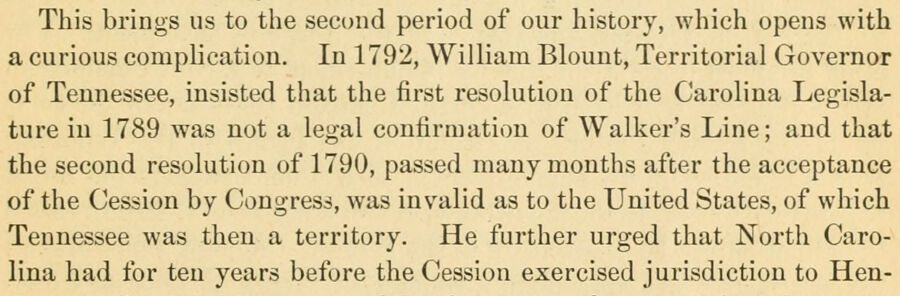
This brings us to the second period of our history, which opens with a curious complication. In 1792, William Blount, Territorial Governor of Tennessee, insisted that the first resolution of the Carolina Legislature in 1789 was not a legal confirmation of Walker's Line; and that the second resoluti…
History of the South Carolina cession, and the Northern boundary of Tennessee1884 · page 21Read the page →
Read the text

This brings us to the second period of our history, which opens with a curious complication. In 1792, William Blount, Territorial Governor of Tennessee, insisted that the first resolution of the Carolina Legislature in 1789 was not a legal confirmation of Walker's Line; and that the second resolution of 1790, passed many months after the acceptance of the Cession by Congress, was invalid as to the United States, of which Tennessee was then a territory. He further urged that North Carolina had for ten years before the Cession exercised jurisdiction to Hen-

Text read by machine from the scan; it may contain errors.
"My grandfather went on horseback from Xorth Carolina to Tennessee in 1823 or 1824. [It was in 1825, quoting Mrs. E. H. Powell as authority. ] He laid claim to several tracts of government lands in Henry and Obion counties and then returned to Xorth Carolina for his family, moving them to the forme…
Annals of the Fowler family, with branches in Virginia, North Carolina, South Carolina, Tennessee, Kentucky, Alabama, Mississippi, California, and Texas1901 · page 270Read the page →
Read the text

"My grandfather went on horseback from Xorth Carolina to Tennessee in 1823 or 1824. [It was in 1825, quoting Mrs. E. H. Powell as authority. ] He laid claim to several tracts of government lands in Henry and Obion counties and then returned to Xorth Carolina for his family, moving them to the former county, where lie located very near the present town of Paris, where he continued to reside until his death in 1854, at the ripe age of seventy-five years.

Text read by machine from the scan; it may contain errors.

Scans and text from the Internet Archive. Books published in 1930 or earlier, which are in the public domain.

Timeline

Carolina, 1900 to 1971

Woven from the archive, old maps, post office records, the National Register and the people born here.

  1. 20th century
  2. 1900Post officeThe Carolina post office opens
  3. 1905Post officeThe Carolina post office closes
  4. 1971On the mapFirst mapped by the U.S. Geological Survey
By decade

No old photos in the archives yet

Weddings on Main Street, storms, parades, school pictures, the old store. If it’s in your family album, it belongs here.

Be the first to add onePhotograph a print flat, in daylight, no flash.
Add from your album
On the map

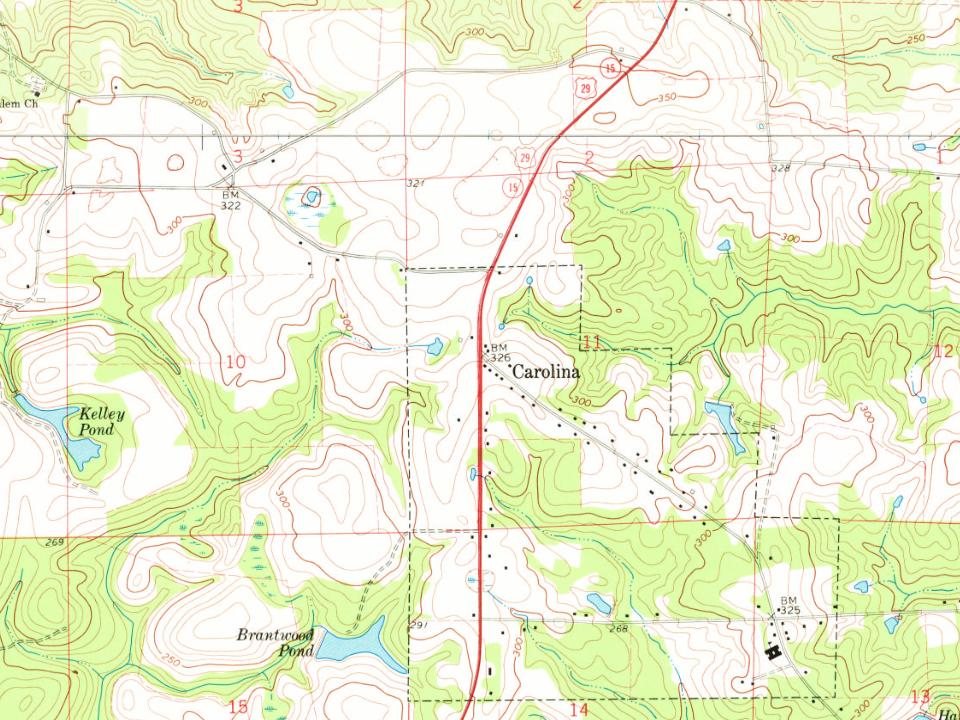
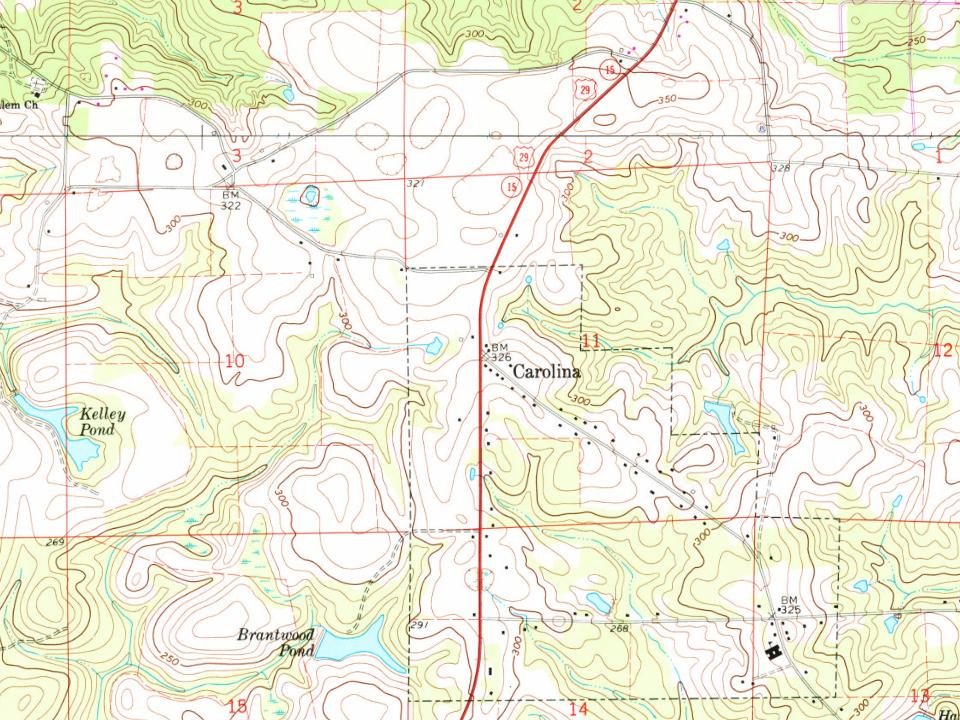
Carolina on the map, 1971 to 1981

Every edition of the U.S. Geological Survey’s map of Carolina. Tap a year, or press play to watch the town change.

Carolina on the 1971 USGS mapCarolina on the 1981 USGS map1971Carolina sheet · 1:24,000

U.S. Geological Survey historical topographic maps (public domain), via Esri’s collection of the scans. The red ring marks the center of Carolina.

People over time

Carolina, census by census

0100200300198020002020Peak: 297

Between 192 and 297 people in every census since 1970.

6 censuses, 1970–2020.

U.S. Census Bureau decennial counts, from the census table on Carolina’s Wikipedia page.

Famous people

Famous people close to Carolina

Nobody well known was born in Carolina itself, so here are the best known from just nearby.

See all →
Places that used to be

Lost post offices

Carolina had its own post office from 1900 to 1905.

Carolina
1900–1905
19001960today

US Post Offices dataset (Blevins & Helbock, CC0). Places and cemeteries from the USGS Geographic Names Information System (2021).

Questions about Carolina’s history

What year was Carolina founded?

The Carolina post office opened in 1900, the earliest record of the town by name (U.S. post office records).

Memory lane

What the archives can’t tell you, neighbors can.

Town Square →
Start a conversation
Sources

Where this page comes from

Founding dates: Wikidata, Wikipedia, the U.S. post office records of Blevins & Helbock (CC0) and the Census. Homes by year built: Census ACS 2020–24. National Register of Historic Places: National Park Service (list of May 22, 2026). Old photos, postcards and papers: Wikimedia Commons, the Library of Congress and other public archives, credited on each item’s page. Maps: U.S. Geological Survey historical topographic maps (via Esri) and Sanborn fire-insurance maps (Library of Congress). History text and census tables: Wikipedia (CC BY-SA 4.0). Places that used to be: USGS Geographic Names Information System (2021). How TownRatings grades history →

From Wikipedia, U.S. Geological Survey historical maps, U.S. Census counts (via Wikipedia), the US Post Offices dataset (Blevins & Helbock), the USGS Geographic Names Information System and old county and town histories (Internet Archive). Archive images are copied here with their credits and licenses, shown on each photo’s page. Refreshed monthly.