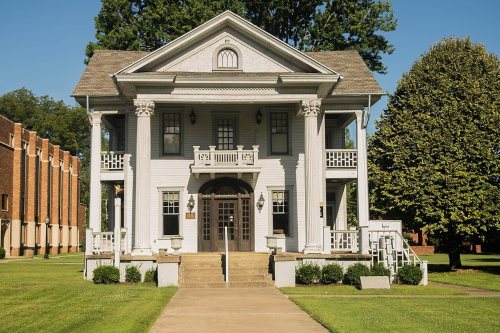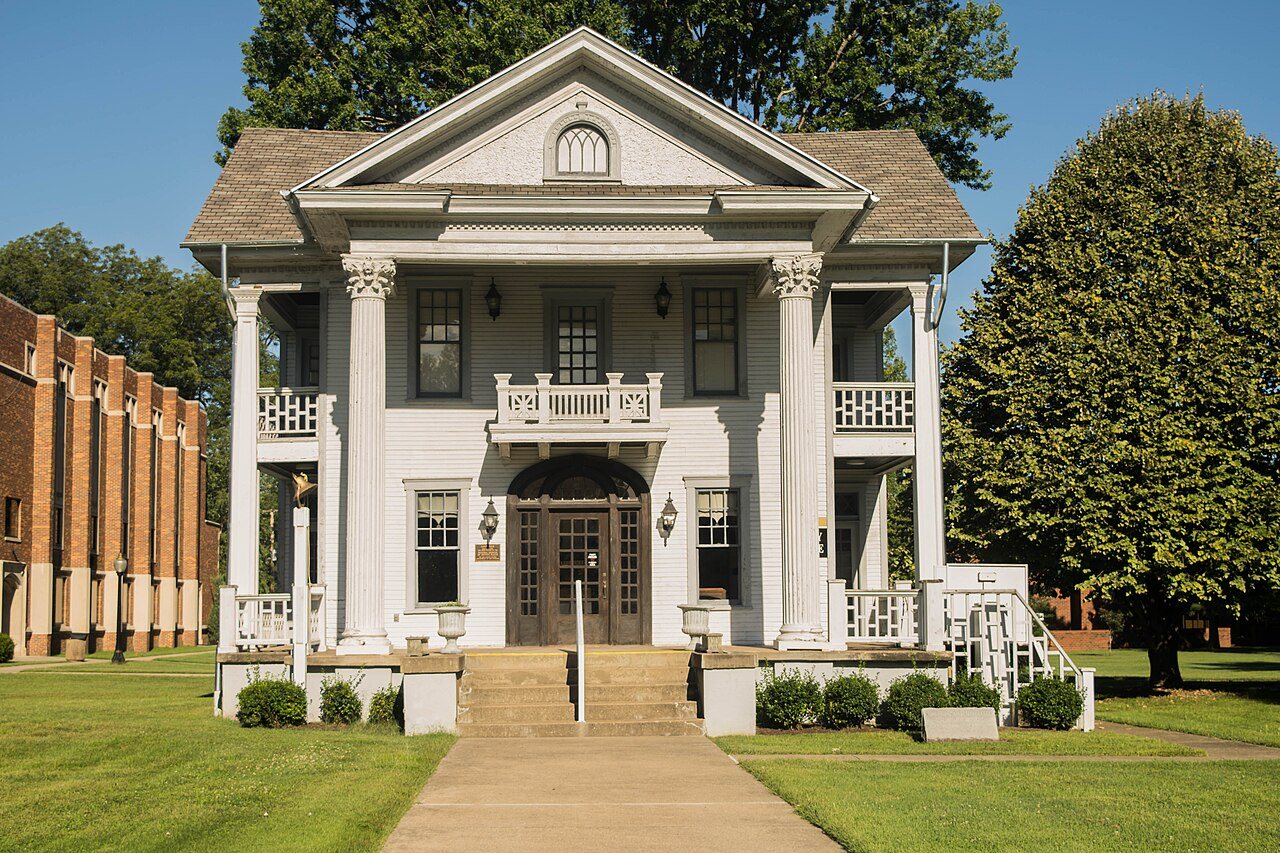
Canty House · National Register of Historic Places
Institute’s story
127 years in pictures
The archive holds 6 old photos and papers going back to 1935.
3 places on the National Register of Historic Places.
- 1899Institute is settled
Each edition grades its towns against each other only.

A town of 521, settled in 1899.
Institute’s median age is 26.8 years, below both the West Virginia town median (42.2 years) and the median of U.S. towns (40.5 years). Institute is home to West Virginia State University. Institute has fewer than 1,000 residents, too few for fair grades; the figures below are still real.
Where Institute beats most towns.
| College | Students |
|---|---|
| West Virginia State University | 2,991 |
The archive holds 6 old photos and papers going back to 1935.
3 places on the National Register of Historic Places.
Institute is unincorporated, so Kanawha County and regional agencies provide most services.
EPA SDWIS (Oct 9, 2026) · HIFLD + EIA-861 2025 · Census 2020 ZCTAs · NCES 2024–25 · registration: vote.gov, updated Aug 3, 2026.
Ordered by what stands out in Institute.
Most working residents leave Institute for work: only 5% work in town. 21% of Institute residents live below the poverty line, where West Virginia’s towns sit at 16% and U.S. towns at 9.6%. Since 2013, Institute has lost 710 jobs, to 398 in 2023.
| Institute | West Virginia towns | U.S. towns | |
|---|---|---|---|
| Below the poverty line | 21% | 16% | 9.6% |
| Average trip to work | 19 minutes | 21 minutes | 25 minutes |
| Working residents who work in town | 4.8% | 14% | 8% |
Census LEHD 2023 · ACS
Expected storm and flood damage is higher than in 69% of U.S. communities. Since 2004, 7 flood insurance claims have been paid out in Institute.
FEMA flood insurance claims · FEMA National Risk Index · OpenFEMA
Institute has chilly, snowy winters and warm summers. July afternoons reach 87°, January nights drop to 25° and about 32 inches of snow falls in a winter.
NOAA U.S. Climate Normals, 1991–2020
25% of adults report frequent mental distress in Institute. Of the 62 West Virginia towns we compare, none has a higher share of adults who feel lonely than Institute. 14% of adults report frequent physical distress in Institute.
| Institute | West Virginia towns | U.S. towns | |
|---|---|---|---|
| Frequent mental distress (CDC PLACES) | 25% | 21% | 17% |
| Feel lonely (CDC PLACES) | 44% | 34% | 33% |
| Food insecurity (CDC PLACES) | 28% | 17% | 14% |
| Sleep under 7 hours (CDC PLACES) | 45% | 40% | 36% |
| What stands out | Institute | WV |
|---|---|---|
| Fewer adults who have had cancer | 3.9% | 9.6% |
| Fewer adults with COPD | 6.2% | 10.6% |
| More adults facing food insecurity | 28.1% | 16.2% |
CDC PLACES 2025 · modeled estimates for adults · CMS · HRSA
3 within 15 miles of the center of Institute
College town 43 of every 100 Institute residents are enrolled in college, against 5 across West Virginia.
In a town this size, neighbors are the best guide. Ask them anything.
3 places in Institute on the National Register of Historic Places.
Unincorporated community in West Virginia, United States
Institute is an unincorporated community on the Kanawha River in Kanawha County, West Virginia, United States. Interstate 64 and West Virginia Route 25 pass by the community, which has grown to intermingle with nearby Dunbar. As of the 2020 census, Institute had a population of 569. The town was founded by a formerly enslaved woman, Mary Barnes. Institute is home to West Virginia State University (formerly the West Virginia Colored Institute and the source of the town's toponym) and the West Virginia State Police Academy. Its economy includes several major industrial plants, which have had a number of environmental incidents polluting the local community.
From Wikipedia, licensed CC BY-SA 4.0 · facts via Wikidata (CC0)
Short answers, built from the data on this page.
Institute has fewer than 1,000 residents, too few for fair grades; the figures below are still real.