Founding year: the first Monroe post office (Blevins & Helbock, CC0).
History grade
What drives Monroe’s History grade
On its age, its old homes and the National Register, Monroe is more historic than 93% of U.S. towns, #22 of 362 in Wisconsin. All 3 inputs are above most U.S. towns; its National Register listings ranks highest and its age lowest.
A
HistoryA character grade: shown, never part of Monroe’s overall grade.
Wisconsin towns list more on the Register than most of the country (a typical Wisconsin town has 3.0 per 10,000 residents, the U.S. 2.4), so Monroe’s 86.9 sits above most of its state (94% of Wisconsin towns have fewer) while its 92 historic buildings outnumber those of 89% of U.S. towns.
How sure. Graded on any two of the three inputs instead, the letter would range from A− to A. The pre-1940 share is a Census survey estimate (±3.7 points). The founding year is the first post office, not a stated founding date.
Founding year: the first post office (other dates in Quick answers). Homes: Census ACS 2020–24. National Register: National Park Service, May 2026 list; each listing counted once (boundary changes and added documentation belong to their listing), and a historic district counts its contributing buildings. How TownRatings grades history →
What stands out about Monroe’s past
Read from the archive, the National Register and the record. The page puts what stands out first.
National Park Service, National Register of Historic Places. Photos from Wikimedia Commons, credited on each place’s page.
Every building
Monroe, building by building, 1884–1915
Fire insurance maps drew every building, what it was made of and what it was used for, so insurers could price the risk of fire. Pick a year, then a sheet.
Sanborn Map Company, via the Library of Congress. Editions published in 1930 or earlier, which are in the public domain.
The story so far
Monroe, in brief
Wikipedia doesn’t have a history of Monroe yet. The photos, dates and memories neighbors add here are how it gets written.
Monroe is a city in Green County, Wisconsin, United States, and its county seat. The population was 10,661 at the 2020 census. The city is bordered by the Town of Monroe to the north and the Town of Clarno to the south. It is nicknamed the "Cheese Capital of the USA".
Its first post office opened in 1839. Its population held steady between the last two censuses: 10,827 in 2010, 10,661 in 2020.
Intro from Wikipedia. Population: U.S. Census Bureau.
From the old history books
What they wrote about Monroe, 1884–1912
Passages that mention Monroe, cut from the printed page as they were published.
History of Green County, Wisconsin1884 · page 260Read the page →
Read the text
of the town of Brooklyn. Afterward (and in the interest of temperance) two several parts of sections 2 and 3, in the town of Clarno (both of which are now in the city of Monroe) were detached and added to the town of Monroe. Finally by a law approved March 25, 1882, the city of Monroe was incorporated, forming a new civil division, entirely independent of the
Text read by machine from the scan; it may contain errors.
History of Monroe County Wisconsin1912 · page 66Read the page →
Read the text
Originally, in 1849 LaCrosse eounty eomprised all the territory ineluded in its present limits and that of Monroe, Jackson, Trempeleau and Buffalo counties; settlements being rapid in the next few years and the inhabitants somewhat ‘‘erowded”’ as they thought, in 1853. upon application to the legislature, Jackson eounty was set off, and in 1854 Trempeleau, Buffalo and Monroe eounties were established and detaehed from LaCrosse county.
Text read by machine from the scan; it may contain errors.
History of Monroe County Wisconsin1912 · page 282Read the page →
Read the text
new hall and in the following year, 1897, the Baptist Church was finished and dedicated on the 7th day of February, and the year 1896 also saw the dedication of the magnificent new court house erected by the county of Monroe; the exercises took place on the 13th day of March in that year and were attended by representatives from every town, village and city in the county of Monroe; the exercises were followed by a banquet in the evening, with probably more oratory let loose than had ever
Text read by machine from the scan; it may contain errors.
History of Green County, Wisconsin1884 · page 900Read the page →
Read the text
The town of Monroe embraces congressional township 2 north, range 7 east, of the fourth principal meridian, except that portion which is included within the incorporated limits of the city of Monroe, which lies in the southeastern part of this town. The surface of this town is, in places, quite broken, yet it is all an excellent agricultural and stock raising region. The soil
Text read by machine from the scan; it may contain errors.
Scans and text from the Internet Archive. Books published in 1930 or earlier, which are in the public domain.
Timeline
Monroe, 1839 to 1984
Woven from the archive, old maps, post office records, the National Register and the people born here.
The Monroe post office opened in 1839, the earliest record of the town by name (U.S. post office records).
How does Monroe rank for history?
Monroe is more historic than 93% of U.S. towns, #22 of 362 in Wisconsin. The History grade combines the town’s founding era, the share of homes built before 1940 and its National Register listings. It’s a character grade, so it isn’t part of the overall grade. How it works.
What is on the National Register in Monroe?
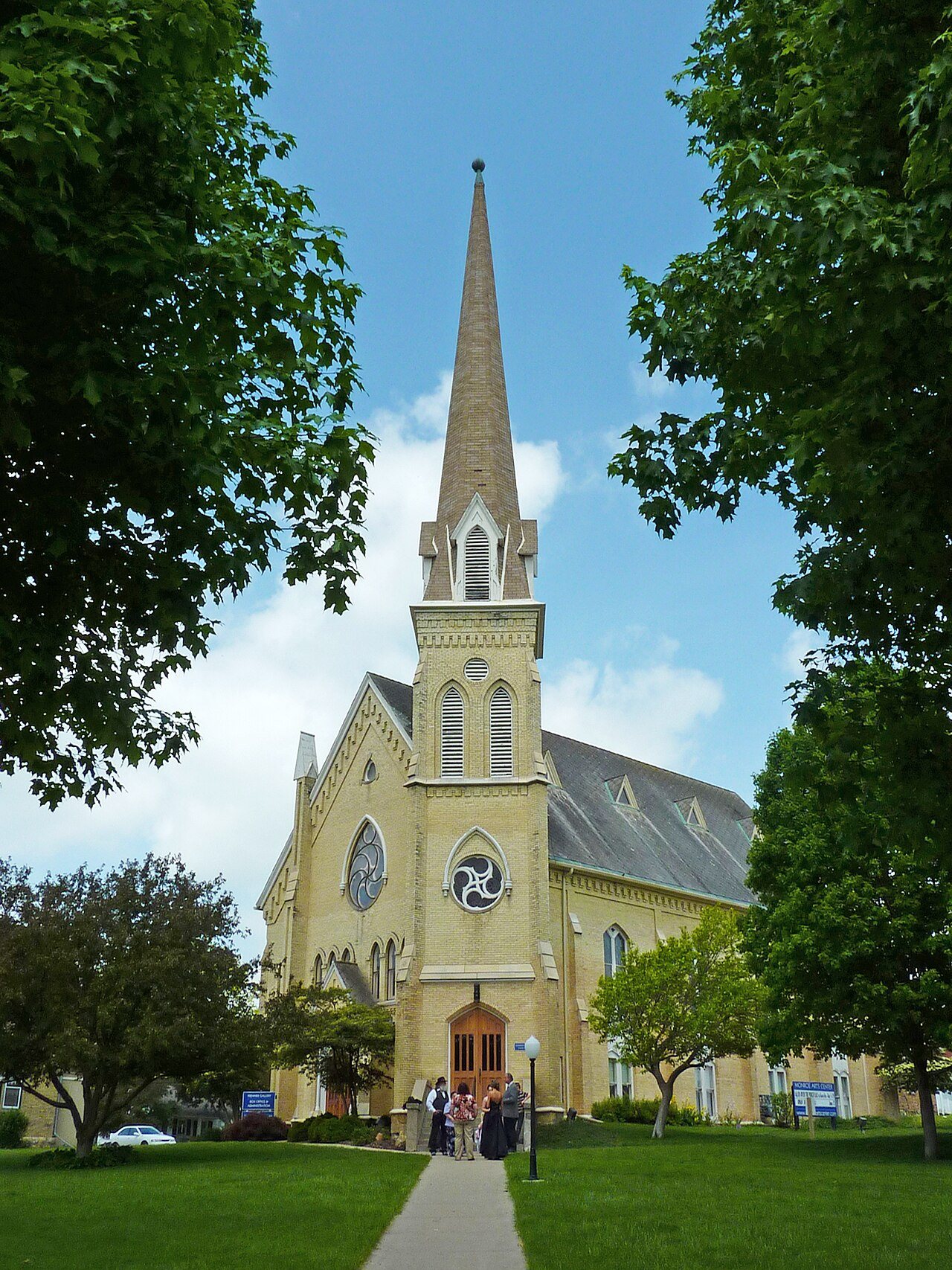
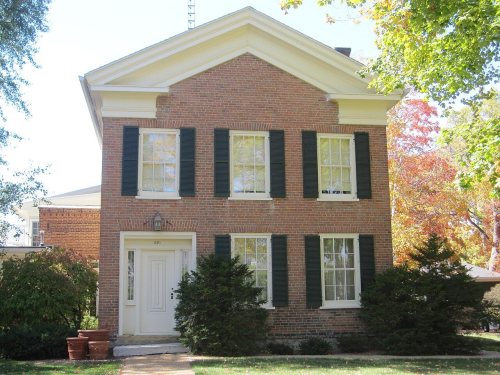
14 listings: 12 buildings, among them the Gen. Francis H. West House (listed 1975, the first), 1 historic district, the Monroe Commercial District, with 78 contributing buildings, and 1 structure. 92 historic buildings in all.
How old are the homes in Monroe?
24% of Monroe’s homes were built before 1940 (Census estimate, ±3.7 points), against a typical 12% for a Wisconsin town; the median home was built in 1966.
Founding dates: Wikidata, Wikipedia, the U.S. post office records of Blevins & Helbock (CC0) and the Census. Homes by year built: Census ACS 2020–24. National Register of Historic Places: National Park Service (list of May 22, 2026). Old photos, postcards and papers: Wikimedia Commons, the Library of Congress and other public archives, credited on each item’s page. Maps: U.S. Geological Survey historical topographic maps (via Esri) and Sanborn fire-insurance maps (Library of Congress). History text and census tables: Wikipedia (CC BY-SA 4.0). Places that used to be: USGS Geographic Names Information System (2021).
From Wikidata (6), the National Register of Historic Places (14), Wikidata and Wikipedia for famous people, U.S. Geological Survey historical maps, U.S. Census counts (via Wikipedia), the US Post Offices dataset (Blevins & Helbock), the USGS Geographic Names Information System, Sanborn fire insurance maps (Library of Congress) and old county and town histories (Internet Archive). Archive images are copied here with their credits and licenses, shown on each photo’s page. Refreshed monthly.