More historic than 84% of U.S. towns · #7 of 285 in Washington. What drives it
Dated to 1871 (Wikidata), with 26% of its homes built before 1940 and 17 historic districts holding 2,298 contributing buildings. Below: 17 old photos and papers, maps from 1884 on, the census since 1880, and every listing on the Register.
Founding year: Wikidata. First post office: 1872.The full story ↓
History grade
What drives Spokane’s History grade
On its age, its old homes and the National Register, Spokane is more historic than 84% of U.S. towns, #7 of 285 in Washington. Its National Register listings hold the grade up; its age pulls it down.
A−
HistoryA character grade: shown, never part of Spokane’s overall grade.
Among the 400 U.S. cities of 100,000 or more, Spokane ranks #106 on History.
Few Washington towns list much on the Register (a typical Washington town has 0.1 per 10,000 residents, the U.S. 2.4), so Spokane’s 99.8 sits above most of its state (96% of Washington towns have fewer) while its 2,298 historic buildings outnumber those of 99% of U.S. towns.
How sure. Graded on any two of the three inputs instead, the letter would range from B to A+. The pre-1940 share (±1.0 points) is firm at this size. Two sources give 1871.
Founding year: Wikidata (other dates in Quick answers). Homes: Census ACS 2020–24. National Register: National Park Service, May 2026 list; each listing counted once (boundary changes and added documentation belong to their listing), and a historic district counts its contributing buildings. How TownRatings grades history →
What stands out about Spokane’s past
Read from the archive, the National Register and the record. The page puts what stands out first.
The first humans to live in the Spokane area were hunter-gatherers that lived off plentiful fish and game; early human remains have been dated to 8,000 to 13,000 years ago. The Spokane tribe, after which the city is named (the name meaning "children of the sun" or "sun people" in Salishan),[a] are believed to be either their direct descendants, or descendants of people from the Great Plains. When asked by early white explorers, the Spokanes said their ancestors came from "up North." Early in the 19th century, the Northwest Fur Company sent two white fur trappers west of the Rocky Mountains to search for fur. These were the first white men met by the Spokanes, who believed they were sacred, and set the trappers up in the Colville River valley for the winter.
Passages that mention Spokane, cut from the printed page as they were published.
An illustrated history of Spokane county, state of Washington1900 · page 94Read the page →
Read the text
and hose carts. On October i, 1884, took place the first reading of an ordinance amending an ordinance creating a fire department for the City of Spokane Falls. Rescue Hose No. i and Spokane Hose No. 2 were accepted and made a part of the fire department of the City of Spokane Falls. On June 10, 1885, F. M.
Text read by machine from the scan; it may contain errors.
History of the city of Spokane and Spokane County, Washington1912 · page 265Read the page →
Read the text
Spokane Bridge on tlie Spokane river, about seventeen miles east of the falls, the place being then known as Kendall's Bridge, and later as Cowley's Bridge. He continued to conduct a store at that place and at the same time operated the bridge and executed government contracts for furnishing supplies to Fort Coeur d'Alene. Mr. Cowley has been identified with the upbuilding of Spokane since the year of the great fire, entering financial circles here as cashier in the Traders National Bank. His capability for the management of important financial interests was soon manifest and after five years he was elected to the presidency of the
Text read by machine from the scan; it may contain errors.
An illustrated history of Spokane county, state of Washington1900 · page 516Read the page →
Read the text
and in the saw-milling business there for a year or more, after which he moved to California, then up to Seattle, thence to Walla Walla and from there to Spokane, traveling on horseback. He took a homestead on Pleasant prairie, but after making final proof moved to a point subsecjuently named Dartford in his honor, on the Little Spokane river, eight miles
Text read by machine from the scan; it may contain errors.
History of the city of Spokane and Spokane County, Washington1912 · page 586Read the page →
Read the text
The only son, Arthur W. Cowley, was educated in the Spokane common schools and the high school, also in Oberlin, Ohio, where he studied for a year, and in the State University of Wisconsin, where he spent three years, winning the degree of Civil Engineer in 1903. His early practical business experience came to him in connection with the bridge department of the Chicago & Northwestern Railroad at Chicago, and in the spring of 1904 he returned to Spokane, where he became connected with the Great Northern Railroad Company, acting as chief draftsman for three years. He then took up architectural work on his own account in the summer
Text read by machine from the scan; it may contain errors.
Scans and text from the Internet Archive. Books published in 1930 or earlier, which are in the public domain.
Timeline
Spokane, 1871 to 1997
Woven from the archive, old maps, post office records, the National Register and the people born here.
Nothing in the archives for these yearsWeddings on Main Street, storms, parades, school pictures, the old store. If it’s in your family album, it belongs here.
Every edition of the U.S. Geological Survey’s map of Spokane. Tap a year, or press play to watch the town change.
1950Spokane NW sheet · 1:24,000
U.S. Geological Survey historical topographic maps (public domain), via Esri’s collection of the scans. The red ring marks the center of Spokane.
Every building
Spokane, building by building, 1884–1910
Fire insurance maps drew every building, what it was made of and what it was used for, so insurers could price the risk of fire. Pick a year, then a sheet.
In 1871, according to Wikidata. Spokane’s post office opened in 1872, and the census of 1880 counted 350 people here.
How does Spokane rank for history?
Spokane is more historic than 84% of U.S. towns, #7 of 285 in Washington. The History grade combines the town’s founding era, the share of homes built before 1940 and its National Register listings. It’s a character grade, so it isn’t part of the overall grade. How it works.
What is on the National Register in Spokane?
130 listings: 106 buildings, 17 historic districts with 2,175 contributing buildings, 3 sites, 4 structures, and 1 object. 2,298 historic buildings in all.
How old are the homes in Spokane?
26% of Spokane’s homes were built before 1940 (Census estimate, ±1.0 points), against a typical 4.3% for a Washington town; the median home was built in 1961.
Founding dates: Wikidata, Wikipedia, the U.S. post office records of Blevins & Helbock (CC0) and the Census. Homes by year built: Census ACS 2020–24. National Register of Historic Places: National Park Service (list of May 22, 2026). Old photos, postcards and papers: Wikimedia Commons, the Library of Congress and other public archives, credited on each item’s page. Maps: U.S. Geological Survey historical topographic maps (via Esri) and Sanborn fire-insurance maps (Library of Congress). History text and census tables: Wikipedia (CC BY-SA 4.0). Places that used to be: USGS Geographic Names Information System (2021).
From Wikimedia Commons (10), the Library of Congress (7), Wikidata (19), the National Register of Historic Places (131), Wikipedia, Wikidata and Wikipedia for famous people, U.S. Geological Survey historical maps, U.S. Census counts (via Wikipedia), the US Post Offices dataset (Blevins & Helbock), the USGS Geographic Names Information System, Sanborn fire insurance maps (Library of Congress) and old county and town histories (Internet Archive). Archive images are copied here with their credits and licenses, shown on each photo’s page. Refreshed monthly.


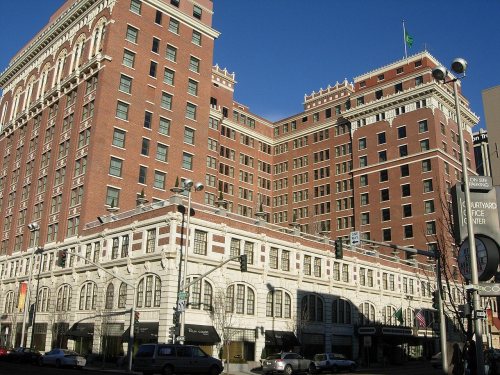


 c. 1885
 1890
 1900
 1900
 1903
 1903
 1903
 1903
 1905
 1907
 1908
 1908
 1908
 1909


