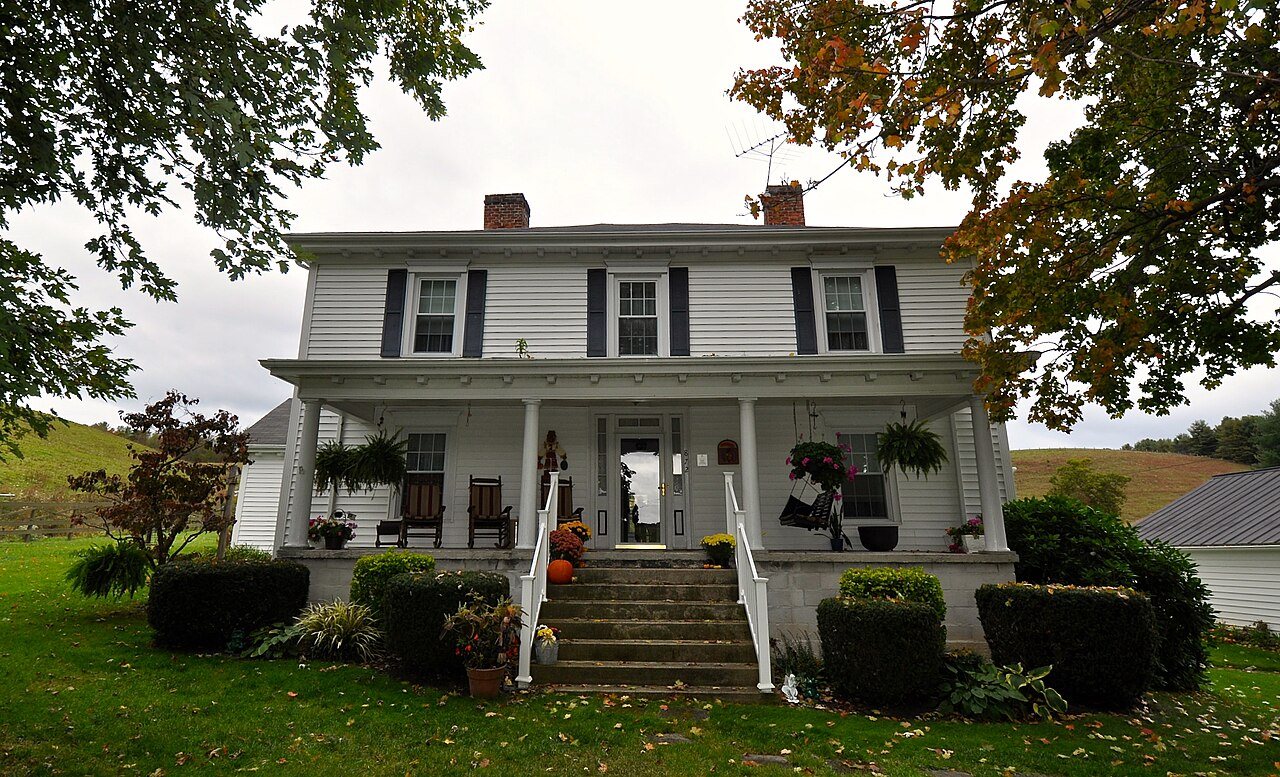
 Guerrant House · Photo: Skye Marthaler · CC BY-SA 3.0
Riner’s public schools outscore 79% of Virginia districts
The grade covers the public school district serving Riner, from kindergarten through graduation, on state tests and graduation. Each state writes its own tests, so this is the one TownRatings grade compared within Virginia, not nationally.
From Virginia state tests taken in spring 2021, when nearly all of students in the tested grades sat them, and the class of 2023’s four-year graduation rate, as reported to the U.S. Department of Education.
Riner’s schools, in brief
Spending and class size
The district spends $15,175 per student, against $17,169 across Virginia (FY2024). Spending doesn’t count toward the grade. Districts ↓
One elementary school, then one middle and one high school
From grade 6 the district’s path is Auburn Middle, then Auburn High. See the path ↓
Choice beyond the district
Auburn Baptist Christian Academy (private) is in town. Every school ↓
Written from the figures on this page. Tests are from 2020–21, graduation from the class of 2023; each school’s own letter uses 2020–21 results.
What’s behind Riner’s grade
A−: better than 79% of Virginia school districts. Test scores and graduation are both above the Virginia average; graduation is the stronger of the two.
Where will my kid go?
Pick a grade. These are the public schools that serve Riner, with each school’s own grade.
Kindergarten in Riner
Auburn Elementary
Grades PK–5 · 544 students · 13:1 students per teacher
6th grade in Riner
Auburn Middle
Grades 6–8 · 309 students · 12:1 students per teacher
7th grade in Riner
Auburn Middle
Grades 6–8 · 309 students · 12:1 students per teacher
8th grade in Riner
Auburn Middle
Grades 6–8 · 309 students · 12:1 students per teacher
9th grade in Riner
Auburn High
Grades 9–12 · 393 students · 12:1 students per teacher
10th grade in Riner
Auburn High
Grades 9–12 · 393 students · 12:1 students per teacher
11th grade in Riner
Auburn High
Grades 9–12 · 393 students · 12:1 students per teacher
12th grade in Riner
Auburn High
Grades 9–12 · 393 students · 12:1 students per teacher
Riner’s public schools are run by Montgomery County Public Schools, which also serves Blacksburg and Christiansburg. To confirm the school for a specific address, ask the district.
The district
Spending and class size are shown but don’t count toward the grade. Each district’s own page has every school.
How students score
Riner vs. its neighbors
Schools grades for the Virginia towns that share Riner’s borders.
| Town | Schools | Main districts |
|---|---|---|
| Riner | A− | Montgomery County |
Every school in Riner
4 schools. Each public school’s letter compares its own 2020–21 reading and math results with Virginia’s other public schools (the newest school-level results we have).
Questions about Riner’s schools
Are Riner’s schools good?
By Virginia’s own tests, yes: the public schools Riner children attend outscore 79% of Virginia’s school districts on tests and graduation, an A− Schools grade. Among towns with similar incomes they beat 77%. Tests are from 2020–21, graduation from the class of 2023.
What school district is Riner in?
Montgomery County Public Schools, which runs grades PK–12 and enrolls 9,461 students in 19 schools (2024–25).
Where do Riner kids go to high school?
Auburn High, with 393 students; its own test results earn a B+.
What is Riner’s graduation rate?
94% of the class of 2023 in Montgomery County Public Schools graduated in four years, against 89% across Virginia.
How much does Riner spend per student?
$15,175 in Montgomery County Public Schools (FY2024), against $17,169 across Virginia. Spending doesn’t count toward the grade.
Are there private schools in Riner?
Yes: Auburn Baptist Christian Academy (religious, grades PK–12, 195 students).
Parents talk
What Riner families are saying about school.
Looking for colleges? Colleges near Riner → They have their own page.
School data: state test results (2020–21, with participation) and four-year graduation rates (class of 2023) reported to the U.S. Department of Education (EDFacts via ED Data Express); each school’s own letter uses its 2020–21 results (EDFacts via the Urban Institute); schools and enrollment from NCES (2024–25; private schools 2023–24); spending from the Census Bureau’s school finance survey (FY2024). The School Grade is our own summary, graded within Virginia. Stars are from neighbors.