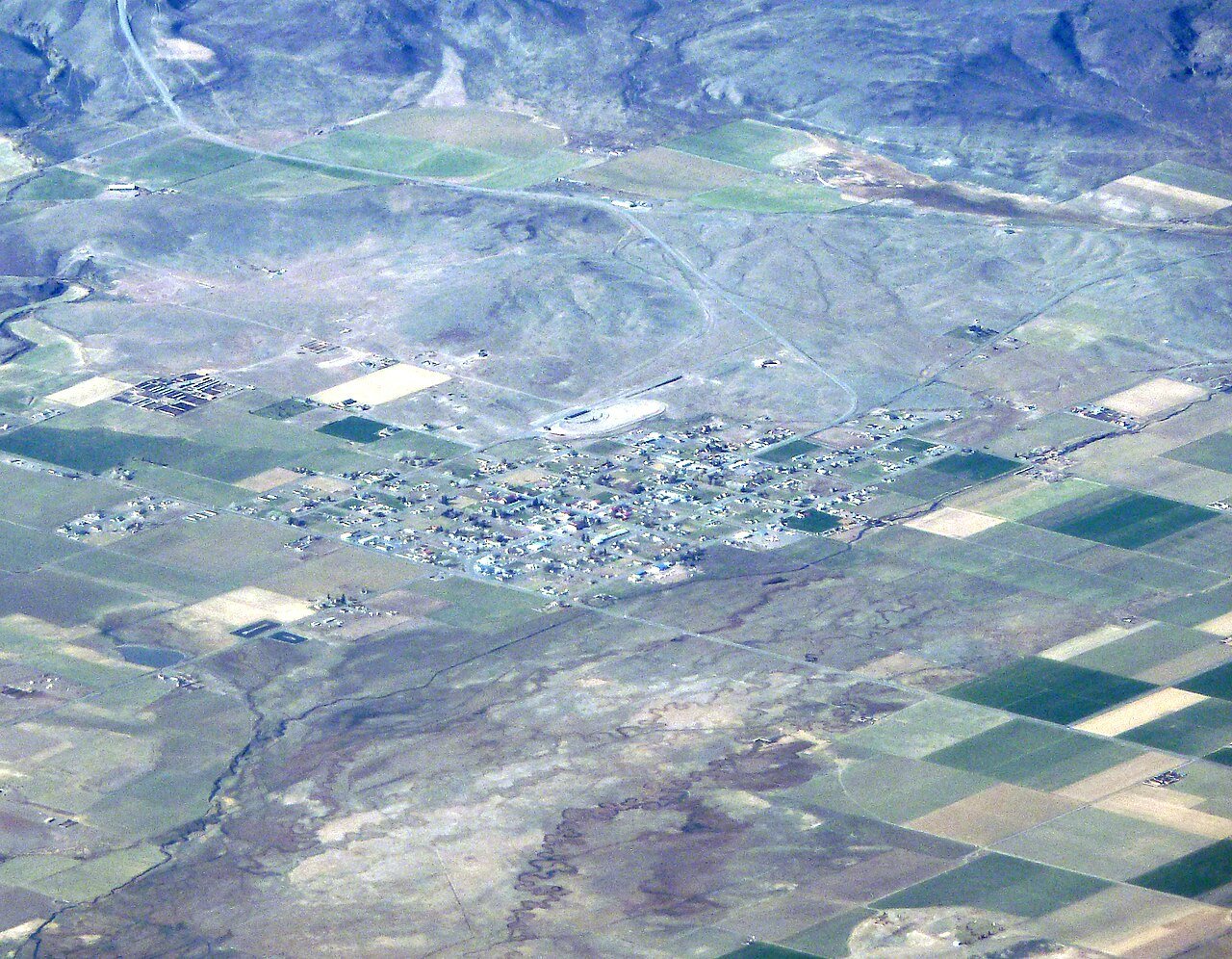
 Photo: Bobak Ha'Eri · CC BY 3.0
Loa spent less per resident in 2022 than 79% of similar cities
Loa’s town government spent $177,000 on day-to-day services in the year to June 30, 2022, about $306 per resident. Water and other utilities ($74,000) are counted separately.
What stands out about how Loa is run
Read from the town’s budget and official records.
$306 per resident in 2022: less than 79% of them
Loa’s day-to-day spending in 2022 ($306 per resident, hospital and utilities left out) against 139 Utah cities of under 2,500 that don’t run their own schools: the median was $548, and the middle half spent $328–$952. Loa spent less than 79% of them.
Later years come from a Census sample, so the comparison stays on 2022. How Town Hall compares budgets →
Utah cities of under 2,500 that don’t run their own schools, 2022 Census of Governments (every government counted that year; Loa itself left out).
About $306 per resident a year, or $0.84 a day
Day-to-day services only. The biggest line: administration & buildings, at 85%.
Thank you for being a neighbor
No trend yet
Loa reported only 2022 to the Census Bureau, so there is no trend yet.
The typical homeowner pays $1,443 a year
Every local property tax on the home: town, schools and county. About 0.33% of the home’s value, vs 0.52% across Utah.
Typical yearly bill next door and statewide
The Housing page’s calculator splits a monthly payment into loan, tax and insurance at Loa’s rate.
Can I afford it? →The median bill homeowners report to the Census survey (bills of $10,000+ are reported as “$10,000+”). The effective rate is that bill ÷ the median home value: a rough guide, not the official tax rate. In a town this small the estimate has a wide margin.
Tax bills are one input to Loa’s Cost of living grade. Cost of living in Loa →
Who’s in charge in Loa
Names change after every election, so we link to the source that keeps them current.
One full-time town employee for every 579 residents
On the payroll in March 2022, from the Census Bureau’s Annual Survey of Public Employment & Payroll (a Census estimate). Residents: the Census population in the 2022 finance file (579).
By department full-time, plus part-time, March 2022
The Census reports one month’s payroll (March); yearly figures are that month × 12, an estimate. Part-timers count half in the bar lengths.
Wayne School District
Loa’s K–12 school district, shared with Bicknell, Hanksville, Lyman, Torrey. It’s its own government, with a budget separate from the town’s.
Of the $19,515 per pupil, $11,321 goes to the classroom (teachers, aides, supplies); the rest to buses, buildings, counselors and administration. Building projects and debt payments aren’t in the per-pupil figure.
Utah districts overall: 42% local, 51% state, 8% federal.
School year 2023–24. Census Bureau school finance survey.
Loa’s votes are counted by county
Utah reports official results by county and precinct, not by town, so there are no official results for Loa alone, and we don’t estimate them. These are Wayne County’s results.
 Donald J TrumpRepublican75.0%1,236 votes
 Kamala D HarrisDemocrat23.1%381 votes
Others: 1.9% (32 votes).
Most votes in Wayne County: Donald J Trump
Utah: Trump 59.4%, Harris 37.8%
100% of Loa lies in Wayne County. Every 2024 race in Wayne County is on the county’s page.
Wayne County’s 2024 results →Official 2024 general election returns, as certified (MIT Election Data + Science Lab). Percentages are of votes for candidates; blank and spoiled ballots aren’t counted. Candidates are listed by votes, and party colors are neutral on purpose.
Portraits: Kamala D Harris: official vice-presidential portrait, Lawrence Jackson, The White House, 2021; Donald J Trump: official portrait, Shealah Craighead, The White House, 2017. All are U.S. government works in the public domain. A race shows photos only when every candidate has an official portrait; otherwise every candidate in it gets initials.
From town hall to Washington
Every level of government that speaks for Loa.
- 1Your townTown governmentLocal officials aren’t on record yet.
- 2Utah HouseState representatives
- 3Utah SenateState senator
- 4GovernorStatewide
- 5U.S. HouseYour representative in Congress
- 6U.S. SenateBoth represent all of Utah
Democrat · Republican · other or independent. Tap a name for their official page.
Reach Loa’s government
Neighbors add phone numbers and hours to the Handbook.
Questions about Loa’s government
How much does Loa spend per resident?
About $306 per resident on day-to-day services in the year to June 30, 2022, as reported to the Census Bureau. In 2022, the last full count, its $306 was less than 79% of 139 Utah cities of under 2,500 that don’t run their own schools.
What is the property tax rate in Loa?
Homeowners report a typical bill of $1,443 a year (Census ACS, 2020–24), about 0.33% of the typical home’s value, vs 0.52% across Utah. For the official rate per $1,000 of assessed value, see the town’s assessor.
Who runs Loa’s government?
We name an official only when a public source lists a current term, and none does for Loa yet.
How did Loa vote in 2024?
Utah counts votes by county and precinct, not by town, so there are no official results for Loa alone. Wayne County, where 100% of Loa lies, voted Trump 75.0%, Harris 23.1% for president; its page has every race.
How many people work for Loa?
1 full-time and 19 part-time employees in March 2022, with a March payroll of $13,605 (about $163,260 a year if every month were the same); Census Bureau estimates.
Who represents Loa in the state legislature?
State Senate District 27 (Derrin Owens) and State House District 69 (Logan Monson). The House district also covers 26 other towns. Listed by Open States; districts from the Census Bureau.
Ask neighbors about Loa’s government
Neighbors who’ve been to the meetings can help.
Budget and staff: U.S. Census Bureau, Census of Governments (2022, every government) and Annual Survey of State and Local Government Finances (2023–24, a sample) and the Annual Survey of Public Employment & Payroll; day-to-day spending is current operations, with hospitals, utilities and airports apart. School district: Census school finance survey, 2023–24. Property tax: Census American Community Survey, 2020–24. Elections: official 2024 returns via the MIT Election Data + Science Lab; turnout uses Census citizen voting-age population (CVAP, 2020–24). Officials: Open States, names shown only with a current term (checked October 9, 2026). Districts: Census Bureau (119th Congress, 2024 state districts); legislators: Open States and congress-legislators. How Town Hall works →