
Hideout Canyon Utah, 2010
Hideout’s story
18 years in pictures
The archive holds 6 old photos and papers going back to 2010 and 2 maps from 1955 on.
- 2008Hideout is settled
Each edition grades its towns against each other only.

A town of 1,587, settled in 2008.
The best of Hideout’s subject grades are an A+ for health and the outdoors and an A− for schools; the weakest is a C− for hazard risk. 28% of the land in Hideout is conserved, above both the Utah town median (3.4%) and the median of U.S. towns (4.3%). No town in Utah scores higher than Hideout on the outdoors. The biggest place to walk is Jordanelle State Park, 836 acres with 6.7 miles of trail. Hideout has fewer than 2,500 residents, so it gets subject grades but no overall grade.
Where Hideout beats most towns.
Where Hideout’s working residents go each day. Line width shows the share.
Census LEHD 2023
Each subject compared with towns across the country (schools within Utah), ordered by how far Hideout is from typical.
How TownRatings grades towns →
The archive holds 6 old photos and papers going back to 2010 and 2 maps from 1955 on.
Museums, parks, gardens and other places to visit around Hideout. Close and well known come first.
 Big draw27 mi Stadium & arenaDelta Center
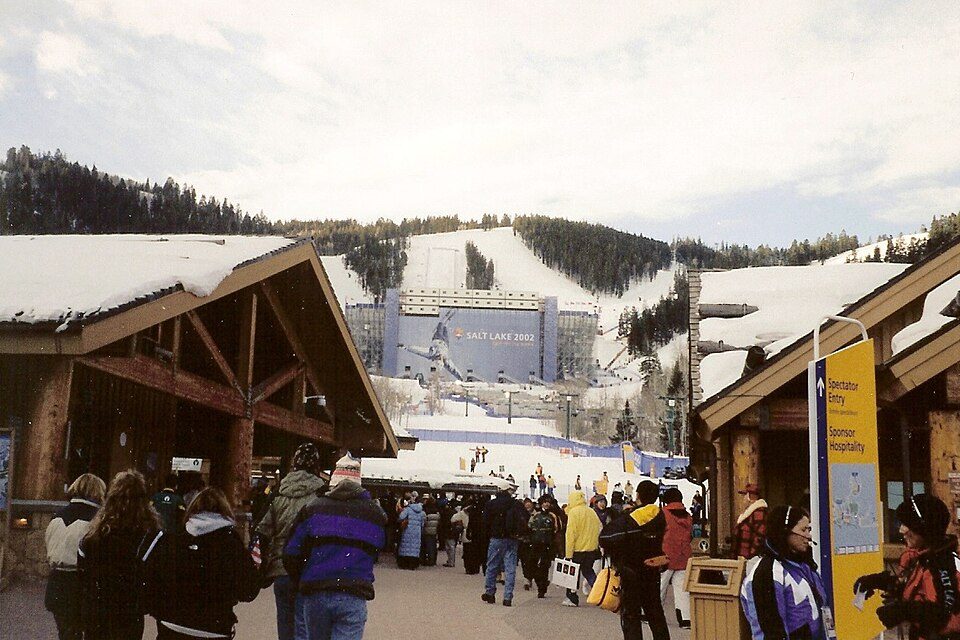 4 mi Ski areaDeer Valley Resort351 runs · 3,110 ft vertical
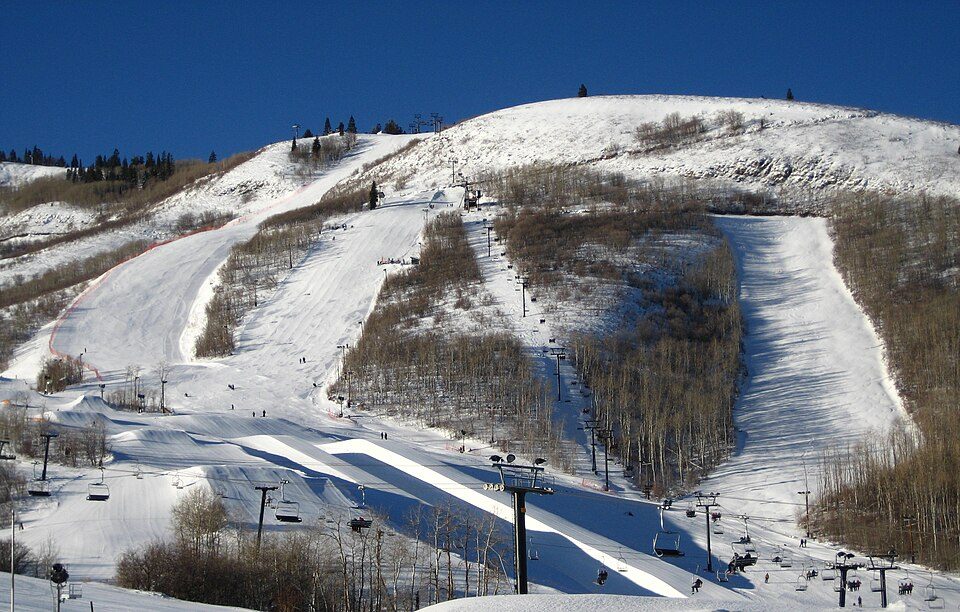 7 mi Ski areaPark City Mountain Resort393 runs · 3,100 ft vertical
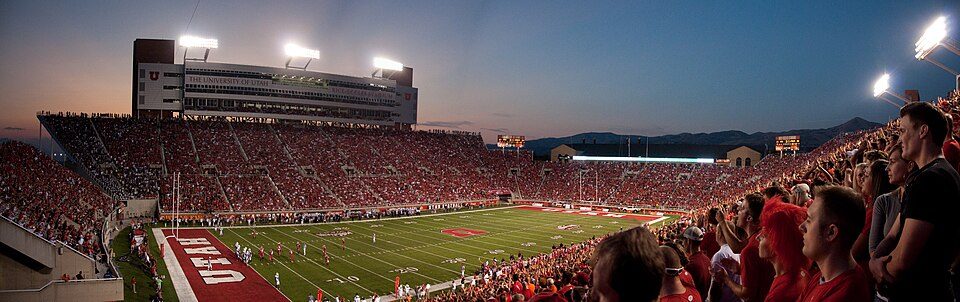 25 mi Stadium & arenaRice–Eccles Stadium27 mi Theme parkEvermore Park
 26 mi Stadium & arenaAmerica First Field
Delta Center: Lomrjyo, CC BY-SA 4.0 · Deer Valley Resort: Ken Lund from Las Vegas, Nevada, USA, CC BY-SA 2.0 · Park City Mountain Resort: Rudi Riet from Washington, DC, United States, CC BY-SA 2.0 · Rice–Eccles Stadium: Brenton Walker, CC BY 2.0 · America First Field: Scott Catron, CC BY-SA 2.0
Who provides power, water and the rest in Hideout, and how to reach them.
EPA SDWIS (Oct 9, 2026) · HIFLD + EIA-861 2025 · Census 2020 ZCTAs · NCES 2024–25 · registration: vote.gov, updated Mar 13, 2026.
Ordered by what stands out in Hideout.
Only 2 of the 119 Utah towns we compare have a lower share of adults who smoke cigarettes than Hideout. Hideout: just over a quarter of adults feel lonely. On top of that, among adults in the town, 13% say their health is fair or poor, below both Utah’s towns (15%) and U.S. towns (19%).
| Hideout | Utah towns | U.S. towns | |
|---|---|---|---|
| Feel lonely (CDC PLACES) | 26% | 33% | 33% |
| Frequent mental distress (CDC PLACES) | 13% | 17% | 17% |
| Depression (CDC PLACES) | 20% | 28% | 23% |
| Smoke cigarettes (CDC PLACES) | 5.5% | 8% | 14% |
| What stands out | Hideout | UT |
|---|---|---|
| Fewer older adults who have lost all their teeth | 3.7% | 9.8% |
| Fewer smokers | 5.5% | 8.1% |
CDC PLACES 2025 · modeled estimates for adults · CMS · HRSA
Trails run 11 miles in 1 park or preserve. Hideout’s trail density stands at 2.4 miles per square mile.
| Biggest places to walk | Trails | Acres |
|---|---|---|
| 1. Jordanelle State Park | 6.7 mi | 836 |
Trails & parks © OpenStreetMap contributors · Conserved land: USGS PAD-US
For half of commuters, work is under 23 miles away. Employers in Hideout added 47 jobs between 2013 and 2023, to 56. Among 120 Utah towns, just 4 have a higher share of residents below the poverty line than Hideout. The top destinations are Park City (23%), Salt Lake City (13%) and Snyderville (7%).
| Hideout | Utah towns | U.S. towns | |
|---|---|---|---|
| Below the poverty line | 20% | 6.2% | 9.6% |
| Working residents who work in town | 0.2% | 8.4% | 8% |
| Median household income | $99,000 | $101,000 | $80,000 |
| Average trip to work | 22 minutes | 22 minutes | 25 minutes |
Census LEHD 2023 · ACS
Hideout’s FEMA risk score comes in at 77 of 100. 53% of the town’s expected losses from natural hazards come from avalanches, followed by wildfires at 22%.
FEMA National Risk Index · OpenFEMA
In Hideout, the typical July afternoon high is 83°F.
NOAA U.S. Climate Normals, 1991–2020
The share of households in Hideout who are owner-occupiers: 68%. Homes sold in Hideout spent a median 77 days on the market. Sellers in Hideout got 96.5% of the asking price, typically.
| Hideout | Utah towns | U.S. towns | |
|---|---|---|---|
| Households that own their home | 68% | 79% | 73% |
| Median rent | $1,442 a month | $1,538 a month | $1,185 a month |
Census ACS, 2020–24 · Zillow Home Value Index · Redfin Data Center
None within 15 miles of Hideout; the nearest are
About 2 of every 100 Hideout residents are enrolled in college, against 8 across Utah.
Town in the state of Utah, United States
Hideout is a town in the northwestern corner of Wasatch County, Utah, United States, in the northern part of the state. Lying just to the north and east of Jordanelle Reservoir along Utah State Route 248 (SR-248), the town was incorporated in 2008 under short-lived state law. The population was 922 at the 2020 census.
From Wikipedia, licensed CC BY-SA 4.0 · facts via Wikidata (CC0)
Short answers, built from the data on this page.
The typical home is worth about $1,150,000, 116% above the Utah typical home. Cost of living, which also weighs rents, property taxes and how many households pay 30% or more of their income for housing, grades B−.


