
Pony Express Parkway in, 2006
Eagle Mountain’s story
30 years in pictures
Census counts: 2,157 in 2000, 43,623 in 2020. The archive holds 11 old photos and papers going back to 2006 and 3 maps from 1968 on.
- 1996Eagle Mountain is settled
Each edition grades its towns against each other only.

FEMA rates its natural-hazard risk higher than 92% of U.S. communities, with wildfire at the top. Overall it grades B+, 76th of 118 graded towns in Utah. It is healthier than 90% of U.S. towns and the median household earns $114K. Eagle Mountain’s trail density is 3.0 miles per square mile, against 1.1 in Utah’s towns and 0.4 across U.S. towns. On history, just 5 of Utah’s 173 towns do worse. The biggest place to walk is Cory Wride Memorial Park, 75 acres with 1.9 miles of trail.
Where Eagle Mountain beats most towns, and one thing worth knowing.
| Widest gap | Eagle Mountain | UT |
|---|---|---|
| Fewer adults with heart disease | 2.6% | 4.7% |
21,415 counted in 2010 and 43,623 in 2020; an estimated 66,557 in 2025.
Growth hasn’t slowed: 52.6% since 2020, after 103.7% in the decade before.
U.S. Census 2010 & 2020 counts · Census Bureau estimate, July 1, 2025
Each subject compared with towns across the country (schools within Utah), ordered by how far Eagle Mountain is from typical.
How TownRatings grades towns →
Census counts: 2,157 in 2000, 43,623 in 2020. The archive holds 11 old photos and papers going back to 2006 and 3 maps from 1968 on.
Museums, parks, gardens and other places to visit around Eagle Mountain. Close and well known come first.
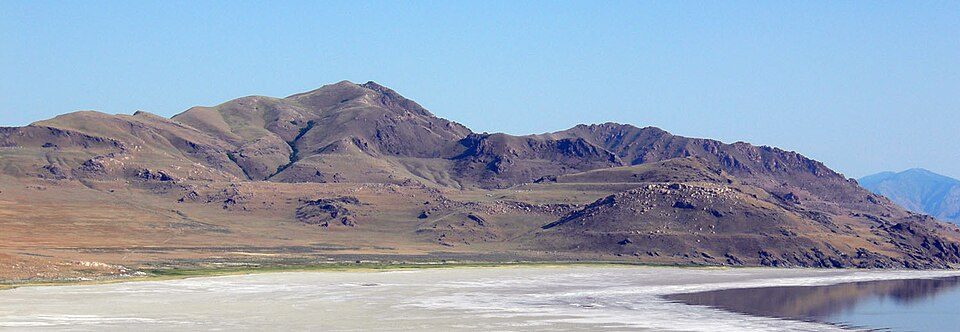 18 mi LakeLake Bonneville
 Big draw32 mi Stadium & arenaDelta Center13 mi Theme parkEvermore Park
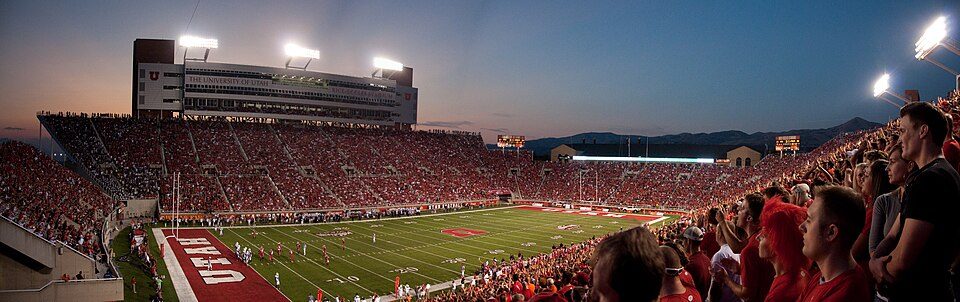 32 mi Stadium & arenaRice–Eccles Stadium
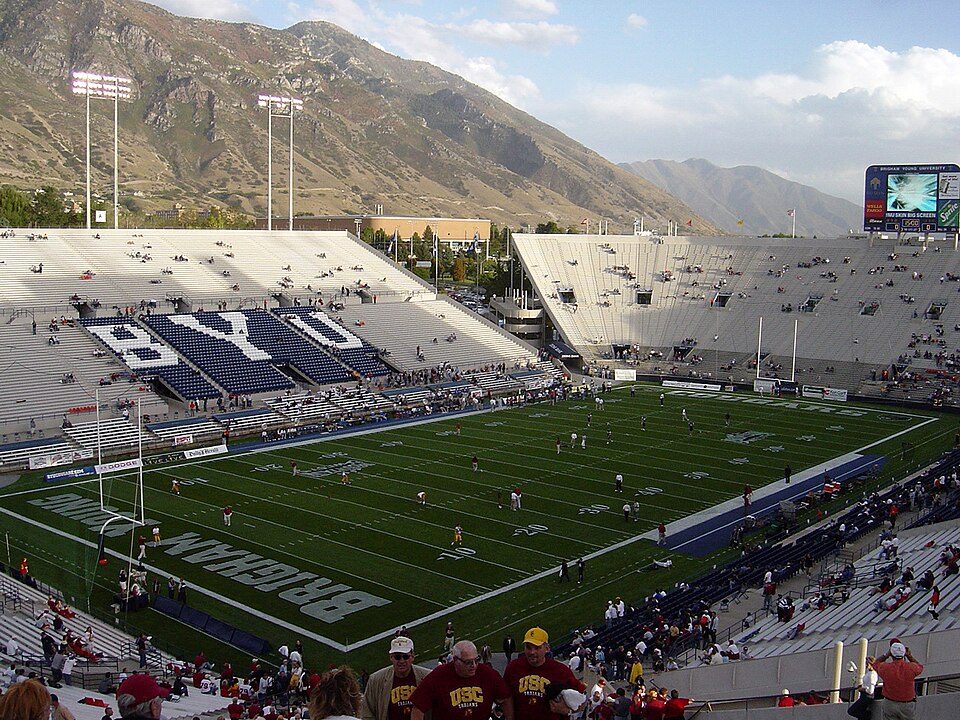 19 mi Stadium & arenaLaVell Edwards Stadium
 13 mi LakeUtah Lake
Lake Bonneville: Wilson44691, Public domain · Delta Center: Lomrjyo, CC BY-SA 4.0 · Rice–Eccles Stadium: Brenton Walker, CC BY 2.0 · LaVell Edwards Stadium: The original uploader was Bobak at English Wikipedia., CC BY-SA 2.5 · Utah Lake: NASA Earth Observatory images by Lauren Dauphin, using Landsat data from the U.S, Public domain
Who provides power, water and the rest in Eagle Mountain, and how to reach them.
EPA SDWIS (Oct 9, 2026) · HIFLD + EIA-861 2025 · Census 2020 ZCTAs · NCES 2024–25 · registration: vote.gov, updated Mar 13, 2026.
Ordered by what stands out in Eagle Mountain.
Eagle Mountain has home values still below their peak and is healthy by national standards but mid-pack in Utah; it also carries more natural-hazard risk than most of Utah (mostly wildfires).
On this, Eagle Mountain is where Utah’s towns sit at 3.4% and U.S. towns at 4.3%. 154 miles of trail in 45 parks and preserves.
| Biggest places to walk | Trails | Acres |
|---|---|---|
| 1. Cory Wride Memorial Park | 1.9 mi | 75 |
| 2. Mountain Ranch Bike Park | 0.5 mi | 70 |
| 3. Smith Ranch Regional Park | 0.5 mi | 15 |
Trails & parks © OpenStreetMap contributors · Conserved land: USGS PAD-US
Its public schools are run by the Alpine District. Three of its 13 schools are below, each with why it’s listed.
| School | Level | Students | Letter |
|---|---|---|---|
| Desert SkyLargest public elementary schoolGrades K–6 | Grades K–6 | 1,096 | – |
| Cedar Valley HighLargest public high schoolGrades 7–12 | Grades 7–12 | 3,300 | C |
| Ranches AcademyTop results in townGrades K–6 | Grades K–6 | 360 | A− |
NCES · EDFacts · graded within UT on state tests and graduation
Within Utah it is healthier than 64% of the 118 graded towns: Utah sets a high bar. Its widest gap with Utah is heart disease: 2.6% of its 24,139 adults have heart disease, against 4.7% statewide.
20% of Eagle Mountain adults have high blood pressure. Only 1 of the 118 Utah towns we compare have a lower share of adults who have diabetes than Eagle Mountain. 28% of Eagle Mountain adults have been diagnosed with depression.
| Eagle Mountain | Utah towns | U.S. towns | |
|---|---|---|---|
| High blood pressure (CDC PLACES) | 20% | 28% | 35% |
| Yearly checkup (CDC PLACES) | 66% | 72% | 79% |
| Binge drink (CDC PLACES) | 10% | 11% | 16% |
| Diabetes (CDC PLACES) | 5.4% | 8.4% | 12% |
| What stands out | Eagle Mountain | UT |
|---|---|---|
| Fewer adults with heart disease | 2.6% | 4.7% |
| Fewer adults who have had a stroke | 1.5% | 2.5% |
| Fewer adults treating high blood pressure | 50.2% | 65.6% |
CDC PLACES 2025 · modeled estimates for adults · CMS · HRSA
FEMA rates its natural-hazard risk higher than 99% of Utah towns, with expected losses of about $288 per resident a year; that rating is what its D− for hazard risk is built on.
Among 119 Utah towns, just 1 have a higher FEMA risk score than Eagle Mountain.
FEMA National Risk Index · OpenFEMA
Children under 18 are 43% of residents (28% statewide); people 65 and older are 3% of residents (12% statewide). The median age in Eagle Mountain is 23 years. No town among the 119 in Utah we compare has a higher share of children under 18 than Eagle Mountain.
| Eagle Mountain | Utah towns | U.S. towns | |
|---|---|---|---|
| Under 18 | 43% | 30% | 22% |
| Median age | 23 years | 32.7 years | 40.5 years |
| Aged 65 or older | 2.9% | 11% | 18% |
| Bachelor’s degree or more, 25+ | 38% | 36% | 29% |
51% women, 49% men
That’s an even split within the survey’s margin of ±1.4 points. Across Utah, 49.3% of residents are women. Median age: women 22.6, men 23.4.
| Eagle Mountain | UT | U.S. | |
|---|---|---|---|
| Under 10 | 27.4% | 14.6% | 11.6% |
| 10 to 17 | 16% | 13.2% | 10.3% |
| 18 to 24 | 8.9% | 11.6% | 9.1% |
| 25 to 34 | 17.1% | 14.8% | 13.7% |
| 35 to 44 | 16% | 13.8% | 13.2% |
| 45 to 54 | 8.2% | 11% | 12.2% |
| 55 to 64 | 3.5% | 9.1% | 12.7% |
| 65 to 74 | 1.9% | 7.3% | 10.2% |
| 75 and older | 1% | 4.6% | 7% |
| No diploma | 6.1% | 6.6% | 10.4% |
| High school | 17.1% | 22.3% | 26% |
| Some college | 25.9% | 23.5% | 19.1% |
| Associate’s | 13.1% | 9.9% | 8.8% |
| Bachelor’s | 27% | 24.7% | 21.6% |
| Graduate | 10.8% | 13% | 14.1% |
U.S. Census Bureau · ACS 2020-2024 5-year estimates
Eagle Mountain has 4,752 jobs for its 23,910 working residents: even if every job went to a resident, most would still commute out. The average commute takes 32.3 minutes, against 22.1 across Utah.
Most working residents leave Eagle Mountain for work: only 6% work in town. Eagle Mountain’s average trip to work is 32 minutes. Jobs based in Eagle Mountain grew to 4,752 in 2023, 3,416 more than in 2013.
| Eagle Mountain | Utah towns | U.S. towns | |
|---|---|---|---|
| Average trip to work | 32 minutes | 22 minutes | 25 minutes |
| Work from home | 22% | 16% | 11% |
| Median household income | $114,000 | $101,000 | $80,000 |
| Below the poverty line | 3.6% | 6.4% | 9.6% |
Census LEHD 2023 · ACS
Eagle Mountain has chilly winters and warm summers, with very little rain. July afternoons reach 91°, January nights drop to 18° and about 26 inches of snow falls in a winter.
NOAA U.S. Climate Normals, 1991–2020
The typical value, about $505K, is 11% below its July 2022 peak.
The typical Eagle Mountain home is worth about $505,000, down 0.6% in a year, 5% below the Utah typical home. 85% of households own their home in Eagle Mountain.
| Eagle Mountain | Utah towns | U.S. towns | |
|---|---|---|---|
| Median rent | $2,020 a month | $1,538 a month | $1,185 a month |
| Households that own their home | 85% | 79% | 73% |
Census ACS, 2020–24 · Zillow Home Value Index · Redfin Data Center
2 within 15 miles of the center of Eagle Mountain
About 5 of every 100 Eagle Mountain residents are enrolled in college, against 8 across Utah.
12% of the town is conserved land, across 45 parks and preserves.
City in Utah, United States
Eagle Mountain is a city in Utah County, Utah. It is part of the Provo–Orem metropolitan area, and located to the west and north of the Lake Mountains. The city was incorporated in December 1996 and reached a population of 43,623 by the 2020 Census, increasing to an estimated 66,557 by 2025, cementing its reputation as one of the fastest-growing communities in the state’s recent history.
From Wikipedia, licensed CC BY-SA 4.0 · facts via Wikidata (CC0)
3 towns share a border with Eagle Mountain.
| Town | UT rank | Overall | Cost | Safety | Schools | Health |
|---|---|---|---|---|---|---|
| Eagle Mountain | #76 | B+ | C | — | B+ | A |
| Saratoga Springs | #27 | A | C | A− | B+ | A+ |
| Fairfield | — | — | — | — | — | — |
| Cedar Fort | — | — | — | — | — | — |
Eagle Mountain reports no FBI crime data of its own. Fairfield and Cedar Fort aren’t graded (fewer than 1,000 residents, or not enough data). Compare Eagle Mountain with a neighbor →
Short answers, built from the data on this page.
By most measures, yes. Eagle Mountain grades B+ overall, better than 67% of U.S. towns and #76 of 118 in Utah. It grades A for health and B+ for schools. Hazard risk is its weak spot, with a D−.
That is 5 years of the area's median household income ($100,704 across the Provo-Orem-Lehi, UT metro area). Cost of living, which also weighs rents, property taxes and how many households pay 30% or more of their income for housing, grades C.


