Copperton was established in 1926, by the Utah Copper Company as a residential area and "model city" for its employees. It emerged as a "showplace for company-subsidized family life." Housing construction ended in the 1930s, and company-furnished housing ended in 1955. After that, a private real estate developer managed the homes for employees. A rather large park was also built in the small town.
As of the 2010 Census, Copperton has a population of 826. Copperton is the only mining town remaining for the Bingham Canyon Mine after Lark was torn down in 1980. Currently, only a handful of residents work for the mine. The town's history is directly linked to the mine.
The 2017 American Community Survey reported the population at 579.
Nothing in the archives for these yearsWeddings on Main Street, storms, parades, school pictures, the old store. If it’s in your family album, it belongs here.
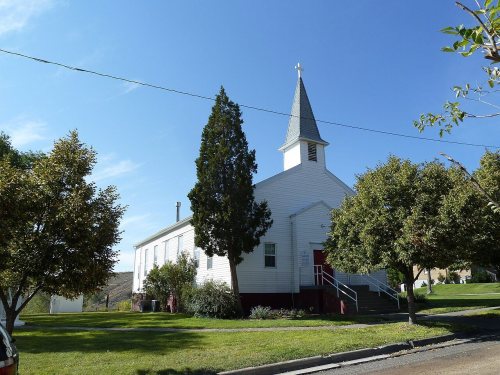
Three places: the Copperton Community Methodist Church (listed 2007), the Utah Copper Company Mine Superintendent's House (1985) and the Copperton Historic District (1986).
Founding dates: Wikidata, Wikipedia, the U.S. post office records of Blevins & Helbock (CC0) and the Census. Homes by year built: Census ACS 2020–24. National Register of Historic Places: National Park Service (list of May 22, 2026). Old photos, postcards and papers: Wikimedia Commons, the Library of Congress and other public archives, credited on each item’s page. Maps: U.S. Geological Survey historical topographic maps (via Esri) and Sanborn fire-insurance maps (Library of Congress). History text and census tables: Wikipedia (CC BY-SA 4.0). Places that used to be: USGS Geographic Names Information System (2021). How TownRatings grades history →
From Wikimedia Commons (4), Wikidata (1), the National Register of Historic Places (3), Wikipedia, the US Post Offices dataset (Blevins & Helbock) and the USGS Geographic Names Information System. Archive images are copied here with their credits and licenses, shown on each photo’s page. Refreshed monthly.


 2017
 2012
 2006


