
White Oak Park, 2008
White Oak’s story
248 years in pictures
Census counts: 5,227 in 1940, 7,630 in 2020. The archive holds 11 old photos and papers going back to 2007 and 5 maps from 1904 on.
- 1778White Oak is settled
Each edition grades its towns against each other only.
A town of 7,286, settled in 1778.
White Oak gives you more for your money than most places: homes are within reach, about $196K for a typical one, or 2.6 years of the Pittsburgh metro’s $76K median household income. It grades B overall, 632nd among Pennsylvania's 1032 graded towns. The low prices come with trade-offs. Its public schools trail 86% of Pennsylvania towns on state tests and graduation. On the plus side, crime is low: it reports less per resident than 83% of U.S. towns. 34% of residents are 65 or older in White Oak, where Pennsylvania’s towns sit at 21% and U.S. towns at 18%. Only 2 of Pennsylvania’s 1,751 towns score higher on the outdoors. White Oak Park, at 794 acres with 24.5 miles of trail, is the biggest park or preserve.
Where White Oak beats most towns.
Where White Oak’s working residents go each day. Line width shows the share.
Census LEHD 2023
Each subject compared with towns across the country (schools within Pennsylvania), ordered by how far White Oak is from typical.
How TownRatings grades towns →
Census counts: 5,227 in 1940, 7,630 in 2020. The archive holds 11 old photos and papers going back to 2007 and 5 maps from 1904 on.
Museums, parks, gardens and other places to visit around White Oak. Close and well known come first.
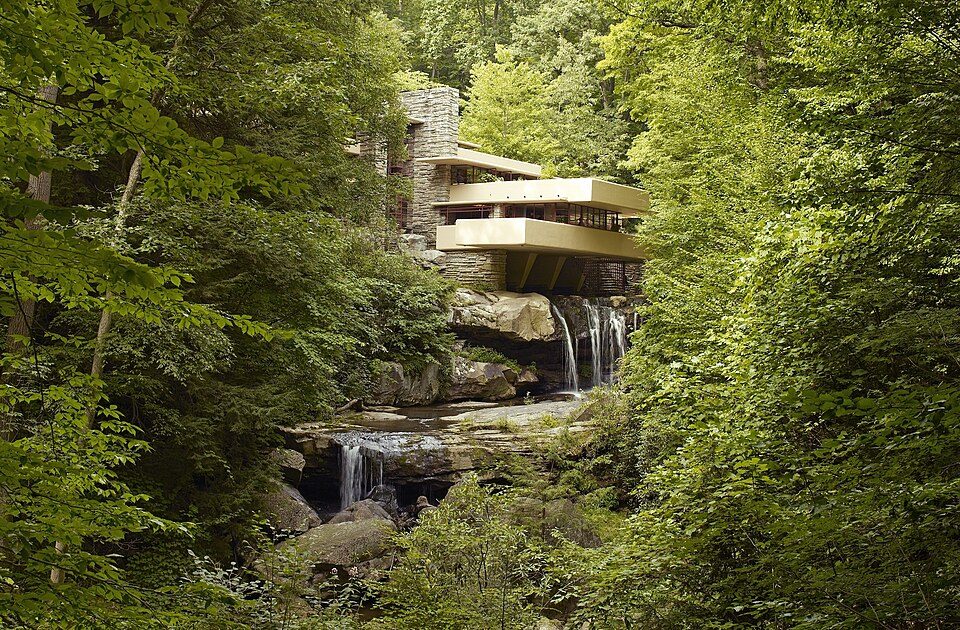 Big draw35 mi MuseumFallingwater
 Big draw14 mi Stadium & arenaAcrisure Stadium
 5 mi Theme parkKennywood
 13 mi LandmarkFort Duquesne
 13 mi Stadium & arenaPNC Park
 12 mi Stadium & arenaPPG Paints Arena
Fallingwater: Carol M. Highsmith, Public domain · Acrisure Stadium: Fo2grfr, CC BY-SA 4.0 · Kennywood: Ski2007 of English Wikipedia, Public domain · Fort Duquesne: Sébastien Paquin, CC BY-SA 3.0 · PNC Park: alpineinc, CC BY 2.0 · PPG Paints Arena: Jleedev, CC BY-SA 4.0
Who provides power, water and the rest in White Oak, and how to reach them.
EPA SDWIS (Oct 9, 2026) · HIFLD + EIA-861 2025 · Census 2020 ZCTAs · NCES 2024–25 · registration: vote.gov, updated Nov 18, 2024.
Ordered by what stands out in White Oak.
White Oak reports less crime than Elizabeth Township or any other graded neighbor, is healthier than towns with similar incomes and has homes that are cheap against local pay.
Its A+ for the outdoors ranks #3 of 1,037 in Pennsylvania.
White Oak’s trail density is 4.0 miles per square mile. 26 miles of trail in 1 park or preserve.
| Biggest places to walk | Trails | Acres |
|---|---|---|
| 1. White Oak Park | 24.5 mi | 794 |
Trails & parks © OpenStreetMap contributors · Conserved land: USGS PAD-US
Its public schools are run by McKeesport Area SD. One of its 2 schools is below, with why it’s listed.
| School | Level | Students | Letter |
|---|---|---|---|
| Francis McClure El SchLargest public elementary schoolGrades K–5 | Grades K–5 | 668 | C |
NCES · EDFacts · graded within PA on state tests and graduation
Its A− tops all 4 graded towns on its borders; Elizabeth Township (A−) comes closest. At 7.4 crimes per 1,000 residents a year, it reports less crime than 66% of Pennsylvania’s graded towns.
FBI crime data, 2025 · crimes reported to police
People 65 and older are 34% of residents (20% statewide); adults 18 to 34 are 14% of residents (22% statewide). The median age in White Oak is 55 years. White Oak has lost 4.7% of its people since 2020, down to 7,286 in the Census Bureau’s 2025 estimate.
| White Oak | Pennsylvania towns | U.S. towns | |
|---|---|---|---|
| Median age | 55 years | 43.2 years | 40.5 years |
| Under 18 | 17% | 20% | 22% |
45% women, 55% men
About 121 men for every 100 women (the survey’s margin: ±3.8 points). Across Pennsylvania, 50.7% of residents are women. Among residents 25 to 34, 68% are men (PA 51%).
| White Oak | PA | U.S. | |
|---|---|---|---|
| Under 10 | 5.8% | 10.8% | 11.6% |
| 10 to 17 | 10.9% | 9.7% | 10.3% |
| 18 to 24 | 5.8% | 9% | 9.1% |
| 25 to 34 | 8.2% | 13% | 13.7% |
| 35 to 44 | 8.9% | 12.6% | 13.2% |
| 45 to 54 | 10.3% | 11.9% | 12.2% |
| 55 to 64 | 16.2% | 13.6% | 12.7% |
| 65 to 74 | 17.9% | 11.4% | 10.2% |
| 75 and older | 16% | 8.1% | 7% |
| No diploma | 3.5% | 7.9% | 10.4% |
| High school | 37.4% | 32.9% | 26% |
| Some college | 16.9% | 15.1% | 19.1% |
| Associate’s | 13.5% | 8.9% | 8.8% |
| Bachelor’s | 20.7% | 20.9% | 21.6% |
| Graduate | 8.1% | 14.3% | 14.1% |
Census population estimates, 2025 · U.S. Census Bureau · ACS 2020-2024 5-year estimates
Most working residents leave White Oak for work: only 6% work in town. The top destinations are Pittsburgh (23%), McKeesport (6%) and Monroeville (5%). Half commute less than 10 miles.
| White Oak | Pennsylvania towns | U.S. towns | |
|---|---|---|---|
| Median household income | $59,000 | $81,000 | $80,000 |
| Average trip to work | 28 minutes | 26 minutes | 25 minutes |
| Below the poverty line | 9.8% | 7.6% | 9.6% |
Census LEHD 2023 · ACS
At 2.6 years of the Pittsburgh metro’s $76K median household income, the typical home (about $196K) costs less against local pay than in 78% of Pennsylvania towns; that ratio is one input to its B+ for cost of living.
Typical home values rose 7.2% in the year to September 2026. 66% of White Oak households own their home.
| White Oak | Pennsylvania towns | U.S. towns | |
|---|---|---|---|
| Households that own their home | 66% | 78% | 73% |
| Median rent | $1,000 a month | $1,116 a month | $1,185 a month |
Census ACS, 2020–24 · Zillow Home Value Index · Redfin Data Center
Expected storm and flood damage is lower than in 68% of U.S. communities. Since 2004, 9 flood insurance claims have been paid out in White Oak.
FEMA flood insurance claims · FEMA National Risk Index · OpenFEMA
White Oak has chilly winters and pleasant summers. July afternoons reach 84°, January nights drop to 22° and about 25 inches of snow falls in a winter.
NOAA U.S. Climate Normals, 1991–2020
Against the 8,765 U.S. towns with household incomes like White Oak’s, it is healthier than 72%, so its B− isn’t only a matter of income.
15% of adults report frequent physical distress in White Oak.
| White Oak | Pennsylvania towns | U.S. towns | |
|---|---|---|---|
| Frequent physical distress (CDC PLACES) | 15% | 14% | 14% |
| Diabetes (CDC PLACES) | 13% | 11% | 12% |
| Frequent mental distress (CDC PLACES) | 16% | 16% | 17% |
| Binge drink (CDC PLACES) | 17% | 18% | 16% |
| What stands out | White Oak | PA |
|---|---|---|
| More adults treating high blood pressure | 84.1% | 79.2% |
| More adults getting cholesterol checked | 88.1% | 85.3% |
| More adults who have had cancer | 11.5% | 8.8% |
CDC PLACES 2025 · modeled estimates for adults · CMS · HRSA
14 within 15 miles of the center of White Oak
About 3 of every 100 White Oak residents are enrolled in college, against 6 across Pennsylvania.
Borough in Pennsylvania, US
White Oak is a borough in Allegheny County, Pennsylvania, United States. The population was 7,630 at the 2020 census. It is a suburb of the Pittsburgh metropolitan area. White Oak was named for a stand of white oak trees near the original town site.
From Wikipedia, licensed CC BY-SA 4.0 · facts via Wikidata (CC0)
6 towns share a border with White Oak.
| Town | PA rank | Overall | Cost | Safety | Schools | Health |
|---|---|---|---|---|---|---|
| White Oak | #632 | B | B+ | A− | D | B− |
| McKeesport | #1016 | D | A− | D− | D | D− |
| North Versailles Township | #791 | C+ | B+ | B− | C− | C− |
| South Versailles Township | — | — | — | — | — | — |
| Greenock | — | — | — | — | — | — |
| Elizabeth Township | #186 | A | B | A− | A | B |
| North Huntingdon Township | #13 | A+ | B+ | A− | A+ | A− |
South Versailles Township and Greenock aren’t graded (fewer than 1,000 residents, or not enough data). Compare White Oak with a neighbor →
Short answers, built from the data on this page.
By most measures, yes. White Oak grades B overall, better than 56% of U.S. towns and #632 of 1032 in Pennsylvania. It grades B− for health, A− for safety and D for schools. Schools is its weak spot, with a D.
Not for the area. Cost of living, which also weighs rents, property taxes and how many households pay 30% or more of their income for housing, grades B+.


