78 years in pictures
Census counts: 2,395 in 1960, 5,625 in 2020. The archive holds 6 old photos and papers going back to 1887 and 2 maps from 1955 on.
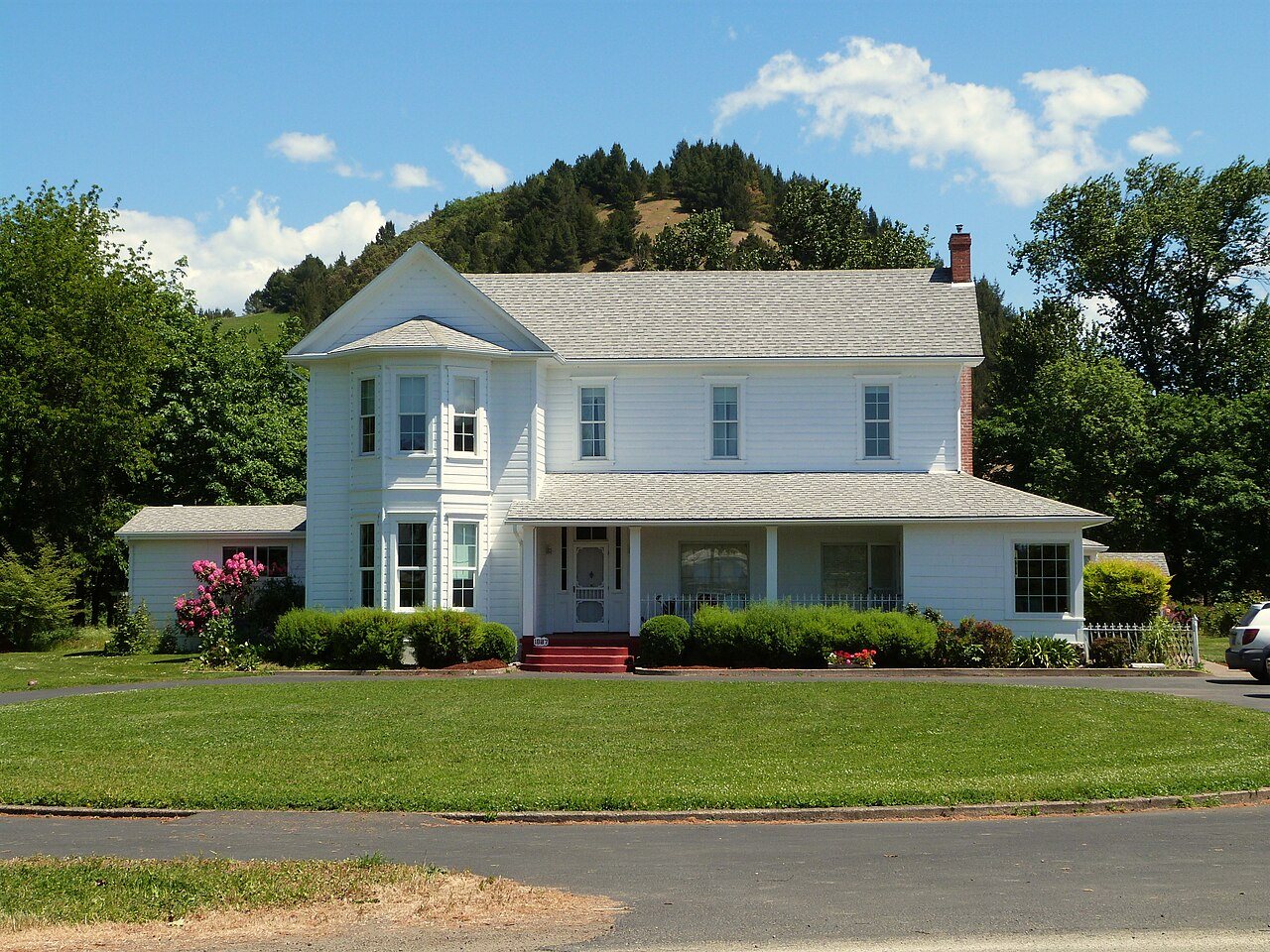
2 places on the National Register of Historic Places.
- 1948Winston is settled
Each edition grades its towns against each other only.

A town of 5,680, settled in 1948.
Winston grades D− overall, 139th among Oregon's 142 graded towns, mostly because of schools and health. Its schools rank behind 92% of the state's. CDC estimates put its residents' health behind 91% of the country. In its favor, it is easier to get around on foot or by transit than 82% of U.S. towns. 24% of residents live below the poverty line in Winston, above both the Oregon town median (11%) and the median of U.S. towns (9.6%). Winston has 2 places on the National Register of Historic Places, among them Miller's Mountain House and William C. and Agnes Winston House. FEMA rates its natural-hazard risk higher than 79% of U.S. communities, with inland flooding at the top.
Where Winston beats most towns, and one thing worth knowing.
| School | Grades | Students |
|---|---|---|
| McGovern Elementary School | 3–5 | 229 |
| Brockway Elementary School | PK–2 | 224 |
| Winston Middle School | 6–8 | 310 |
Each subject compared with towns across the country (schools within Oregon), ordered by how far Winston is from typical.
How TownRatings grades towns →
Census counts: 2,395 in 1960, 5,625 in 2020. The archive holds 6 old photos and papers going back to 1887 and 2 maps from 1955 on.
2 places on the National Register of Historic Places.
Who provides power, water and the rest in Winston, and how to reach them.
EPA SDWIS (Oct 9, 2026) · HIFLD + EIA-861 2025 · Census 2020 ZCTAs · NCES 2024–25 · registration: vote.gov, updated Oct 2, 2026.
Ordered by what stands out in Winston.
Winston trades workers with Roseburg and other neighbors, but it has poverty well above the Oregon rate.
Its public schools are run by Winston-Dillard SD 116. Two of its 4 schools are below, each with why it’s listed. The largest public high school is Douglas High School, with 357 students.
| School | Level | Students | Letter |
|---|---|---|---|
| Winston Middle SchoolLargest public middle schoolGrades 6–8 | Grades 6–8 | 310 | C− |
| Douglas High SchoolLargest public high schoolGrades 9–12 | Grades 9–12 | 357 | B |
NCES · EDFacts · graded within OR on state tests and graduation
19% of adults report frequent physical distress in Winston. Among 142 Oregon towns, just 6 have a higher share of adults who say their health is fair or poor than Winston. 21% of adults report frequent mental distress in Winston.
| Winston | Oregon towns | U.S. towns | |
|---|---|---|---|
| Frequent physical distress (CDC PLACES) | 19% | 15% | 14% |
| Fair or poor health (CDC PLACES) | 28% | 20% | 19% |
| Diabetes (CDC PLACES) | 16% | 11% | 12% |
| Depression (CDC PLACES) | 30% | 27% | 23% |
| What stands out | Winston | OR |
|---|---|---|
| More adults with COPD | 11.8% | 6.8% |
| More smokers | 18.3% | 12% |
| More adults who have had a stroke | 5% | 3.3% |
CDC PLACES 2025 · modeled estimates for adults · CMS · HRSA
The typical Winston home is worth about $307,000, down 1.3% in a year, 38% below the Oregon typical home. The median rent in Winston is $980 a month.
| Winston | Oregon towns | U.S. towns | |
|---|---|---|---|
| Median rent | $980 a month | $1,415 a month | $1,185 a month |
| Households that own their home | 71% | 65% | 73% |
Census ACS, 2020–24 · Zillow Home Value Index · Redfin Data Center
One flood insurance claim has been paid in Winston since 1983.
FEMA flood insurance claims · FEMA National Risk Index · OpenFEMA
Winston has mild winters and warm summers. Winston’s July high is 86°F.
NOAA U.S. Climate Normals, 1991–2020
Winston has about as many jobs (1,684) as working residents, but only 179 people both live and work here. Jobs based here fell from 2,363 in 2013 to 1,684.
Most working residents leave Winston for work: only 9% work in town. Jobs based in Winston fell to 1,684 in 2023, 679 fewer than in 2013. The top destinations are Roseburg (34%), Eugene (5%) and Medford (4%).
| Winston | Oregon towns | U.S. towns | |
|---|---|---|---|
| Average trip to work | 19 minutes | 23 minutes | 25 minutes |
| Median household income | $57,000 | $81,000 | $80,000 |
Census LEHD 2023 · ACS
Within Oregon, it does better than 63% of towns.
| Winston | Oregon towns | U.S. towns | |
|---|---|---|---|
| Property crimes per 1,000 (2025) | 19.5 per 1,000 residents | 15.2 | 9.9 |
| Violent crimes per 1,000 (2025) | 1.4 per 1,000 residents | 2.2 | 1.6 |
FBI crime data, 2025 · crimes reported to police
| Winston | Oregon towns | U.S. towns | |
|---|---|---|---|
| Miles of trail per square mile | 0.1 miles per square mile | 0.8 | 0.4 |
| Conserved land | 1.3% | 4.4% | 4.3% |
| Biggest places to walk | Trails | Acres |
|---|---|---|
| 1. Riverbend Park | — | 17 |
| 2. Harold and Sid Nichols Park | — | 12 |
| 3. Winston Park | — | 9 |
Trails & parks © OpenStreetMap contributors · Conserved land: USGS PAD-US
1 within 15 miles of the center of Winston
About 4 of every 100 Winston residents are enrolled in college, against 6 across Oregon.
2 places in Winston on the National Register of Historic Places.
City in Oregon, United States
Winston is a city in Douglas County, Oregon, United States, located 7 miles southwest of Roseburg. The population was 5,379 according to the 2010 United States census. Winston is best known as the home of Wildlife Safari.
From Wikipedia, licensed CC BY-SA 4.0 · facts via Wikidata (CC0)
One town shares a border with Winston.
Dillard isn’t graded (fewer than 1,000 residents, or not enough data). Compare Winston with a neighbor →
Short answers, built from the data on this page.
Winston grades D− overall, better than 2% of U.S. towns and #139 of 142 in Oregon. It grades D for health, C+ for safety and D for schools. Schools is its weak spot, with a D.
Within Oregon, it does better than 63% of towns.
Yes. That is 5 years of the area's median household income ($61,310 across the Roseburg, OR area). Cost of living, which also weighs rents, property taxes and how many households pay 30% or more of their income for housing, grades C−.