Lima dates to 1831, and 31% of its homes were built before 1940
More historic than 94% of U.S. towns · #87 of 993 in Ohio. What drives it
26 places in town are on the National Register, among them a historic district with 35 buildings. Below: 6 old photos and papers, maps from 1887 on, and the census since 1850.
Founding year: Wikidata; Wikipedia’s history section gives the same year. First post office: 1832.The full story ↓
History grade
What drives Lima’s History grade
On its age, its old homes and the National Register, Lima is more historic than 94% of U.S. towns, #87 of 993 in Ohio. All 3 inputs are above most U.S. towns; its share of homes from before 1940 ranks highest and its age lowest.
A
HistoryA character grade: shown, never part of Lima’s overall grade.
Ohio towns list about as much on the Register as the country (a typical Ohio town has 2.9 per 10,000 residents, the U.S. 2.4), so Lima’s 17.4 sits above most of its state (80% of Ohio towns have fewer) while its 61 historic buildings outnumber those of 86% of U.S. towns.
How sure. Graded on any two of the three inputs instead, the letter would still be A. The pre-1940 share (±2.7 points) is firm at this size. Two sources give 1831.
Founding year: Wikidata (other dates in Quick answers). Homes: Census ACS 2020–24. National Register: National Park Service, May 2026 list; each listing counted once (boundary changes and added documentation belong to their listing), and a historic district counts its contributing buildings. How TownRatings grades history →
What stands out about Lima’s past
Read from the archive, the National Register and the record. The page puts what stands out first.
In the years after the American Revolution, the Shawnee were the most prominent residents of west central Ohio, growing in numbers and permanency after the 1794 Treaty of Greenville. By 1817, the United States had created the Hog Creek Reservation for the local Shawnee, covering portions of what would become Allen and Auglaize counties, and including part of present-day Lima.
John W. Movven and Edmund G. Dempster; the constables, Daniel Miller and Frank Dalzell. The area of Ottawa township is coextensive with the city of Lima, hence the city of Lima .takes the place of the township of Ottawa. I11 1834 the tax duplicate of Lima was $6,108; in 1904, $10,085,889 with a tax rate of 36.8 mills.
Text read by machine from the scan; it may contain errors.
History of Allen County, Ohio. Containing a history of the county, its townships, towns, villages, schools, churches, industries, etc1885 · page 476Read the page →
Read the text
The original town as platted in 1881 was entirely controlled by the county commissioners. In 1841 a movement to organize a system of village government was favorably received ; the coknmissioners were petitioned in the matter, and as a result the village of Lima was established. The town of Lima was organized March 29, 1842, with H. D. Y. Williams, mayor ; W. McHenry, recorder ; John Alexander, Jr., Samuel Black, H. • Davison, T. K Jacobs and D. D. Tompkins, trustees. The council elected John B. Wamsley, treasuier, and Amos Clutter, marshal; Alex-
Text read by machine from the scan; it may contain errors.
Lima, as the county seat, monopolizes, as it were, a great deal of the pioneer history of the county. For this reason every chapter of the general history of the county contains many and lengthy allusions to her old settlers, as well as to pioneers of other divisions of the county, who were also identified;with the history of settlement and progress. From the reminiscences of Robert Bowers, the following sketch of Lima in early days is taken: ‘‘My father brought me to Lima in the fall of 1834. I was then a boy of twelve years of age, and as green as the forest leaves
Text read by machine from the scan; it may contain errors.
Lima postoffice was made a central accounting office for the County of Allen, effective July 1. 1917. and it included all postoffices in the county except the office at Delphos ; the offices reporting were : Beaver Dam, Bluffton, Conant, Elida, Gomer, Harrod, Hume, Kempton, Lafayette, Spencerville, West Cairo and Westminster; on March 15, 1920, Cincinnati was named central accounting office for the third and fourth-class offices in this part of Ohio ; all business for the above named offices except Conant which was discontinued December 15, 1919, was transferred from
Text read by machine from the scan; it may contain errors.
Scans and text from the Internet Archive. Books published in 1930 or earlier, which are in the public domain.
Timeline
Lima, 1831 to 1998
Woven from the archive, old maps, post office records, the National Register and the people born here.
Nothing in the archives for these yearsWeddings on Main Street, storms, parades, school pictures, the old store. If it’s in your family album, it belongs here.
Every edition of the U.S. Geological Survey’s map of Lima. Tap a year, or press play to watch the town change.
1906Lima sheet · 1:62,500
U.S. Geological Survey historical topographic maps (public domain), via Esri’s collection of the scans. The red ring marks the center of Lima.
Every building
Lima, building by building, 1887–1911
Fire insurance maps drew every building, what it was made of and what it was used for, so insurers could price the risk of fire. Pick a year, then a sheet.
In 1831, according to Wikidata and Wikipedia’s history of the town. Lima’s post office opened in 1832, and the census of 1850 counted 757 people here.
How does Lima rank for history?
Lima is more historic than 94% of U.S. towns, #87 of 993 in Ohio. The History grade combines the town’s founding era, the share of homes built before 1940 and its National Register listings. It’s a character grade, so it isn’t part of the overall grade. How it works.
What is on the National Register in Lima?
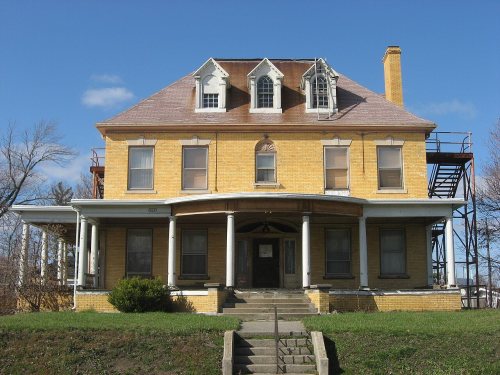
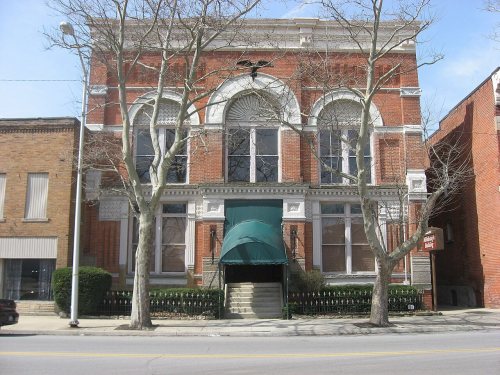
26 listings: 24 buildings, among them the Allen County Courthouse (listed 1974, the first), 1 historic district, the West Market Street Boulevard Historic District, with 35 contributing buildings, and 1 structure. 61 historic buildings in all.
How old are the homes in Lima?
31% of Lima’s homes were built before 1940 (Census estimate, ±2.7 points), against a typical 15% for an Ohio town; the median home was built in 1955.
Founding dates: Wikidata, Wikipedia, the U.S. post office records of Blevins & Helbock (CC0) and the Census. Homes by year built: Census ACS 2020–24. National Register of Historic Places: National Park Service (list of May 22, 2026). Old photos, postcards and papers: Wikimedia Commons, the Library of Congress and other public archives, credited on each item’s page. Maps: U.S. Geological Survey historical topographic maps (via Esri) and Sanborn fire-insurance maps (Library of Congress). History text and census tables: Wikipedia (CC BY-SA 4.0). Places that used to be: USGS Geographic Names Information System (2021).
From the Library of Congress (6), Wikidata (5), the National Register of Historic Places (26), Wikipedia, Wikidata and Wikipedia for famous people, U.S. Geological Survey historical maps, U.S. Census counts (via Wikipedia), the US Post Offices dataset (Blevins & Helbock), the USGS Geographic Names Information System, Sanborn fire insurance maps (Library of Congress) and old county and town histories (Internet Archive). Archive images are copied here with their credits and licenses, shown on each photo’s page. Refreshed monthly.







 1905
 1905
 1905
 1905


