Hamilton dates to 1794, and 27% of its homes were built before 1940
More historic than 95% of U.S. towns · #56 of 993 in Ohio. What drives it
20 places in town are on the National Register, among them eight historic districts with 563 buildings between them. Below: 10 old photos and papers, maps from 1915 on, and the census since 1820.
Founding year: Wikidata. First post office: 1804.The full story ↓
History grade
What drives Hamilton’s History grade
On its age, its old homes and the National Register, Hamilton is more historic than 95% of U.S. towns, #56 of 993 in Ohio. All 3 inputs are above most U.S. towns; its National Register listings ranks highest and its age lowest.
A+
HistoryA character grade: shown, never part of Hamilton’s overall grade.
Ohio towns list about as much on the Register as the country (a typical Ohio town has 2.9 per 10,000 residents, the U.S. 2.4), so Hamilton’s 90.9 sits above most of its state (92% of Ohio towns have fewer) while its 577 historic buildings outnumber those of 98% of U.S. towns.
How sure. Graded on any two of the three inputs instead, the letter would range from A to A+. The pre-1940 share (±1.9 points) is firm at this size. Two sources give 1794.
Founding year: Wikidata (other dates in Quick answers). Homes: Census ACS 2020–24. National Register: National Park Service, May 2026 list; each listing counted once (boundary changes and added documentation belong to their listing), and a historic district counts its contributing buildings. How TownRatings grades history →
What stands out about Hamilton’s past
Read from the archive, the National Register and the record. The page puts what stands out first.
Butler County InfirmarylocaleChurch of ChristchurchFort HamiltonmilitaryGarfield High SchoolschoolGordon Avenue Church of GodchurchGrace Methodist ChurchchurchHamilton Catholic High SchoolschoolImmanuel Evangelical Lutheran ChurchchurchLower FerrycrossingMercy Hospital of HamiltonhospitalSaint Paul Evangelical German Lutheran ChurchchurchSchool Number 1schoolSchool Number 13schoolSchool Number 3schoolUpper FerrycrossingWestminster Presbyterian Churchchurch
4cemeteries and burying grounds inside Hamilton
GreenwoodHamiltonSaint MarySaint Stephens
US Post Offices dataset (Blevins & Helbock, CC0). Places and cemeteries from the USGS Geographic Names Information System (2021).
Hamilton originated as Fort Hamilton, named to honor Alexander Hamilton, first Secretary of the Treasury. The fort was constructed in September through October 1791 by General Arthur St. Clair, governor of the Northwest Territory. It was the first of several built north from Fort Washington into Indian territory. The fort was built to serve as a supply station for the troops of St. Clair during his campaign in the Northwest Indian War. Later, it was used by General "Mad" Anthony Wayne. It was located 28 miles (45 km) upstream from the mouth of the Great Miami River, where the river is shallow during normal flow and easily forded on its gravelly bottom by men, animals, and wagons. In 1792, the fort was enlarged with a stable area by General Wayne. The fort was abandoned in 1796 after the signing of the Treaty of Greenville.
Passages that mention Hamilton, cut from the printed page as they were published.
Biographical and historical sketches1896 · page 149Read the page →
Read the text
on Market to Fourth to the C, H. & D. railroad. John Woods addressed the following communication to the town council of Hamilton, through the Intelligencer.} Hamilton, Ohio, November 19, 1853. Gentlemen: — I understand the subject of annexation, or consolidation of Hamilton and Rossville, is under consideration by you and as it may have some bearing, on the question, I deem it proper to say, that it is possible on the part of the Junction Railroad Company to make their bridge over
Text read by machine from the scan; it may contain errors.
Biographical and historical sketches1896 · page 326Read the page →
Read the text
ation" of the incorporated village of Rossville to the incorporated village of Hamilton, and that there were one hundred and forty-nine votes cast' "Against annexation" of said village of Rossville as aforesaid. James Daugherty, Mayor.
Text read by machine from the scan; it may contain errors.
Scans and text from the Internet Archive. Books published in 1930 or earlier, which are in the public domain.
Timeline
Hamilton, 1794 to 1973
Woven from the archive, old maps, post office records, the National Register and the people born here.
Nothing in the archives for these yearsWeddings on Main Street, storms, parades, school pictures, the old store. If it’s in your family album, it belongs here.
In 1794, according to Wikidata. Hamilton’s post office opened in 1804, and the census of 1820 counted 660 people here.
How does Hamilton rank for history?
Hamilton is more historic than 95% of U.S. towns, #56 of 993 in Ohio. The History grade combines the town’s founding era, the share of homes built before 1940 and its National Register listings. It’s a character grade, so it isn’t part of the overall grade. How it works.
What is on the National Register in Hamilton?
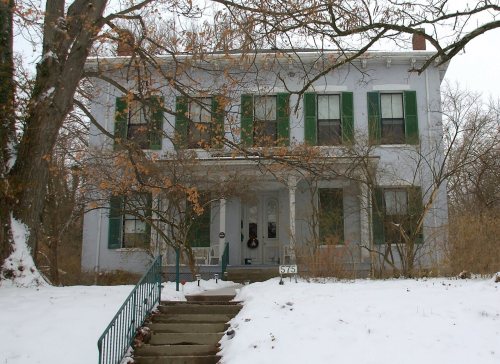
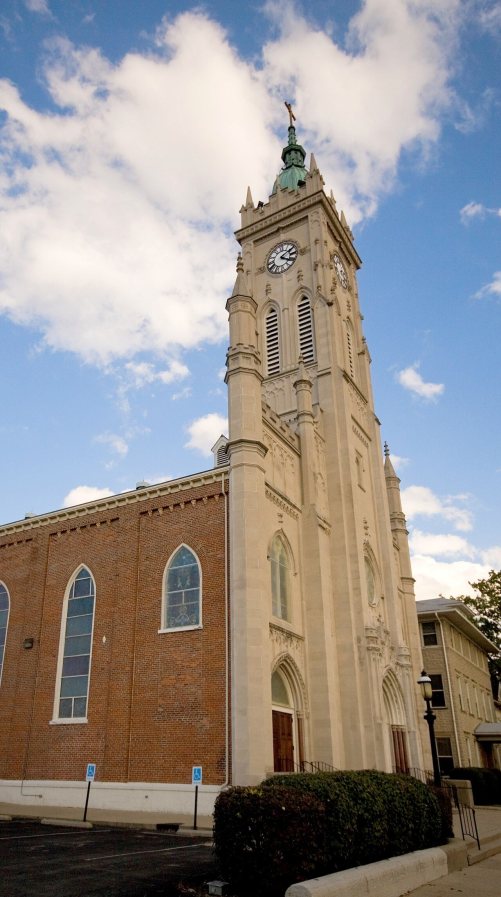
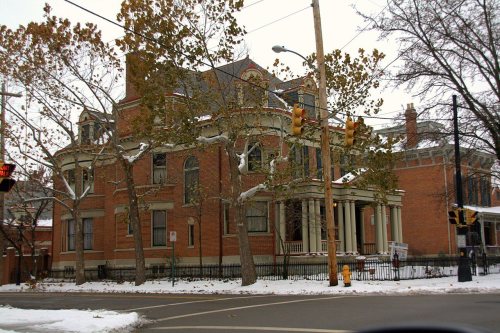
20 listings: 12 buildings, among them the Benninghofen House (listed 1973, the first), and 8 historic districts with 563 contributing buildings. 577 historic buildings in all.
How old are the homes in Hamilton?
27% of Hamilton’s homes were built before 1940 (Census estimate, ±1.9 points), against a typical 15% for an Ohio town; the median home was built in 1956.
Founding dates: Wikidata, Wikipedia, the U.S. post office records of Blevins & Helbock (CC0) and the Census. Homes by year built: Census ACS 2020–24. National Register of Historic Places: National Park Service (list of May 22, 2026). Old photos, postcards and papers: Wikimedia Commons, the Library of Congress and other public archives, credited on each item’s page. Maps: U.S. Geological Survey historical topographic maps (via Esri) and Sanborn fire-insurance maps (Library of Congress). History text and census tables: Wikipedia (CC BY-SA 4.0). Places that used to be: USGS Geographic Names Information System (2021).
From Wikimedia Commons (10), Wikidata (2), the National Register of Historic Places (20), Wikipedia, Wikidata and Wikipedia for famous people, U.S. Geological Survey historical maps, U.S. Census counts (via Wikipedia), the US Post Offices dataset (Blevins & Helbock), the USGS Geographic Names Information System and old county and town histories (Internet Archive). Archive images are copied here with their credits and licenses, shown on each photo’s page. Refreshed monthly.






 1844
 1875
 1875
 1875
 1875
 1875
 1892


