Defiance dates to 1822, and 25% of its homes were built before 1940
More historic than 93% of U.S. towns · #98 of 993 in Ohio. What drives it
10 places in town are on the National Register, among them two historic districts with 103 buildings between them. Below: 10 old photos and papers, maps from 1884 on, and the census since 1850.
Founding year: Wikidata; Wikipedia’s history section gives the same year. First post office: 1821.The full story ↓
History grade
What drives Defiance’s History grade
On its age, its old homes and the National Register, Defiance is more historic than 93% of U.S. towns, #98 of 993 in Ohio. All 3 inputs are above most U.S. towns; its National Register listings ranks highest and its age lowest.
A
HistoryA character grade: shown, never part of Defiance’s overall grade.
Ohio towns list about as much on the Register as the country (a typical Ohio town has 2.9 per 10,000 residents, the U.S. 2.4), so Defiance’s 63.1 sits above most of its state (90% of Ohio towns have fewer) while its 109 historic buildings outnumber those of 90% of U.S. towns.
How sure. Graded on any two of the three inputs instead, the letter would range from A− to A. The pre-1940 share is a Census survey estimate (±3.9 points). Two sources give 1822.
Founding year: Wikidata (other dates in Quick answers). Homes: Census ACS 2020–24. National Register: National Park Service, May 2026 list; each listing counted once (boundary changes and added documentation belong to their listing), and a historic district counts its contributing buildings. How TownRatings grades history →
What stands out about Defiance’s past
Read from the archive, the National Register and the record. The page puts what stands out first.
National Park Service, National Register of Historic Places. Photos from Wikimedia Commons, credited on each place’s page.
Every building
Defiance, building by building, 1884–1911
Fire insurance maps drew every building, what it was made of and what it was used for, so insurers could price the risk of fire. Pick a year, then a sheet.
The city contains the site of Fort Defiance, built by General "Mad" Anthony Wayne in August 1794 during the Northwest Indian War. Wayne surveyed the land and declared to General Charles Scott, "I defy the English, Indians, and all the devils of hell to take it." Using the fort as a base of operations, Wayne ordered his troops to destroy Native American crops and villages within a radius of 50 miles (80 km) around the fort. Today a pair of cannons outside the city library on the Maumee River overlook the confluence and mark the location of Fort Defiance, along with a mounded outline of the fort walls. The city was named after Fort Defiance.
It cannot be doubted that the battle fought upon the banks of the Maumee, below Fort Defiance, was the last grand stand ever made by the Indians in the Northwest territory, having for its object a settlement of the question of race supremacy. The best written account we have of Defiance, at this period, is that of Oliver M. Spencer. His statements are made from observations during his captivity among the Indian tribes sometime prior to 1791.
Text read by machine from the scan; it may contain errors.
Historical souvenir of Fort Defiance and The Northwest Territory1894Read the page →
Read the text
Maumee, below Fort Defiance, was the last -rami stand ever made by the Indians in the Northwest terrr infor its object a settlement of the question of race supremacy. Thelust written account we have of Defiance, at this period, is that of Oliver M. Spencer. His statements are made from observations during his captivity among the Indian tribes sometime prior to [791.
Text read by machine from the scan; it may contain errors.
Scans and text from the Internet Archive. Books published in 1930 or earlier, which are in the public domain.
Timeline
Defiance, 1794 to 1984
Woven from the archive, old maps, post office records, the National Register and the people born here.
Nothing in the archives for these yearsWeddings on Main Street, storms, parades, school pictures, the old store. If it’s in your family album, it belongs here.
In 1822, according to Wikidata and Wikipedia’s history of the town. Defiance’s post office opened in 1821, and the census of 1850 counted 800 people here.
How does Defiance rank for history?
Defiance is more historic than 93% of U.S. towns, #98 of 993 in Ohio. The History grade combines the town’s founding era, the share of homes built before 1940 and its National Register listings. It’s a character grade, so it isn’t part of the overall grade. How it works.
What is on the National Register in Defiance?
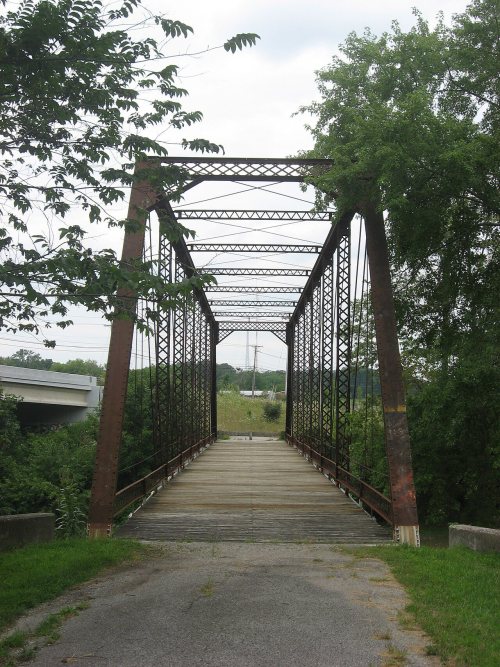
10 listings: 6 buildings, among them the East Side Fire Station (listed 1976, the first), 2 historic districts, the Holgate Avenue Historic District and the Defiance Downtown Historic District, with 103 contributing buildings, 1 site, and 1 structure. 109 historic buildings in all.
How old are the homes in Defiance?
25% of Defiance’s homes were built before 1940 (Census estimate, ±3.9 points), against a typical 15% for an Ohio town; the median home was built in 1965.
Founding dates: Wikidata, Wikipedia, the U.S. post office records of Blevins & Helbock (CC0) and the Census. Homes by year built: Census ACS 2020–24. National Register of Historic Places: National Park Service (list of May 22, 2026). Old photos, postcards and papers: Wikimedia Commons, the Library of Congress and other public archives, credited on each item’s page. Maps: U.S. Geological Survey historical topographic maps (via Esri) and Sanborn fire-insurance maps (Library of Congress). History text and census tables: Wikipedia (CC BY-SA 4.0). Places that used to be: USGS Geographic Names Information System (2021).
From Wikimedia Commons (5), the Library of Congress (5), Wikidata (2), the National Register of Historic Places (10), Wikipedia, Wikidata and Wikipedia for famous people, U.S. Geological Survey historical maps, U.S. Census counts (via Wikipedia), the US Post Offices dataset (Blevins & Helbock), the USGS Geographic Names Information System, Sanborn fire insurance maps (Library of Congress) and old county and town histories (Internet Archive). Archive images are copied here with their credits and licenses, shown on each photo’s page. Refreshed monthly.




 1879
 1879
 1879
 1905
 1905
 1905
 1905
 1905


