Founding year: Wikipedia. First post office: 1807.The full story ↓
History grade
What drives Greene’s History grade
On its age, its old homes and the National Register, Greene is more historic than 98% of U.S. towns. All 3 inputs are above most U.S. towns; its share of homes from before 1940 ranks highest and its age lowest.
A+
HistoryA character grade: shown, never part of Greene’s overall grade.
New York towns list more on the Register than most of the country (a typical New York town has 12.3 per 10,000 residents, the U.S. 2.4), so Greene’s 906 sits above most of its state (95% of New York towns have fewer) while its 142 historic buildings outnumber those of 91% of U.S. towns.
How sure. Graded on any two of the three inputs instead, the letter would range from A to A+. The pre-1940 share is a Census survey estimate (±3.9 points). Two sources give 1792.
Founding year: Wikipedia (other dates in Quick answers). Homes: Census ACS 2020–24. National Register: National Park Service, May 2026 list; each listing counted once (boundary changes and added documentation belong to their listing), and a historic district counts its contributing buildings. How TownRatings grades history →
What stands out about Greene’s past
Read from the archive, the National Register and the record. The page puts what stands out first.
Fire insurance maps drew every building, what it was made of and what it was used for, so insurers could price the risk of fire. Pick a year, then a sheet.
Part of modern Greene was from land purchased in 1785 from the Oneida and Tuscarora people, but many of the Oneida remained in the area until circa 1812. In 1792, the first outside settler arrived and established himself at Greene village.
The town was originally known as Hornby, but was changed to Greene in honor of General Nathanael Greene, a hero of the American Revolution.
Passages that mention Greene, cut from the printed page as they were published.
Past and present of Greene County Missouri1915 · page 1754Read the page →
Read the text
the Wabash Railroad Company in St. Louis. In 1862 he took over the first cargo of petroleum that was ever sent across the Atlantic ocean, returning to St. Louis in 1865 about the close of the Civil war. He came to Greene county soon thereafter, and in 1866 laid out the town of Ash Grove. lie was elected count}' judge in 1 S70. In the early seventies he performed one of his greatest services to the locality in assisting in the reorganization of the Kansas City, Fort Scott & .Memphis railroad, thus securing a new
Text read by machine from the scan; it may contain errors.
Past and present of Greene County Missouri1915Read the page →
Read the text
Rebellion, Thomas J. Whitlock owned and operated a grist mill at Marshfield, Webster county, also owned and operated a grist mill and a saw-mill in Greene county. He was identified with nearly evcr_\' enterprise that bad for its object the upbuilding and advancement of the county in any way. He was widely known, a good mixer, made and retained friends easily and was loyal in Ids friendships. He bad no superiors and few equals among tbe pioneers as a business man and public-spirited citizen.
Text read by machine from the scan; it may contain errors.
Scans and text from the Internet Archive. Books published in 1930 or earlier, which are in the public domain.
Timeline
Greene, 1792 to 1919
Woven from the archive, old maps, post office records, the National Register and the people born here.
Nothing in the archives for these yearsWeddings on Main Street, storms, parades, school pictures, the old store. If it’s in your family album, it belongs here.
In 1792, according to Wikipedia’s history of the town. Greene’s post office opened in 1807, and the census of 1820 counted 2,590 people here.
How does Greene rank for history?
Greene is more historic than 98% of U.S. towns. The History grade combines the town’s founding era, the share of homes built before 1940 and its National Register listings. It’s a character grade, so it isn’t part of the overall grade. How it works.
How old are the homes in Greene?
46% of Greene’s homes were built before 1940 (Census estimate, ±3.9 points), against a typical 27% for a New York town; the median home was built in 1946.
Founding dates: Wikidata, Wikipedia, the U.S. post office records of Blevins & Helbock (CC0) and the Census. Homes by year built: Census ACS 2020–24. National Register of Historic Places: National Park Service (list of May 22, 2026). Old photos, postcards and papers: Wikimedia Commons, the Library of Congress and other public archives, credited on each item’s page. Maps: U.S. Geological Survey historical topographic maps (via Esri) and Sanborn fire-insurance maps (Library of Congress). History text and census tables: Wikipedia (CC BY-SA 4.0). Places that used to be: USGS Geographic Names Information System (2021).
From Wikimedia Commons (8), the Library of Congress (4), Wikipedia, Wikidata and Wikipedia for famous people, U.S. Geological Survey historical maps, U.S. Census counts (via Wikipedia), Sanborn fire insurance maps (Library of Congress) and old county and town histories (Internet Archive). Archive images are copied here with their credits and licenses, shown on each photo’s page. Refreshed monthly.


 1875
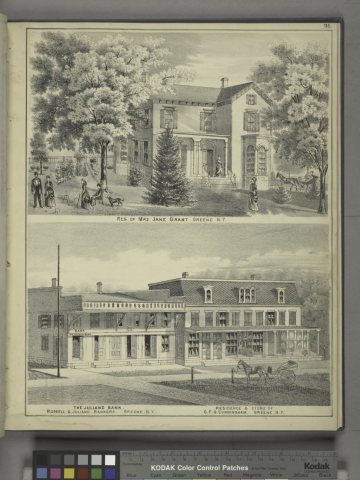 1875
 1890
 1900
 1900
 2007
 2007