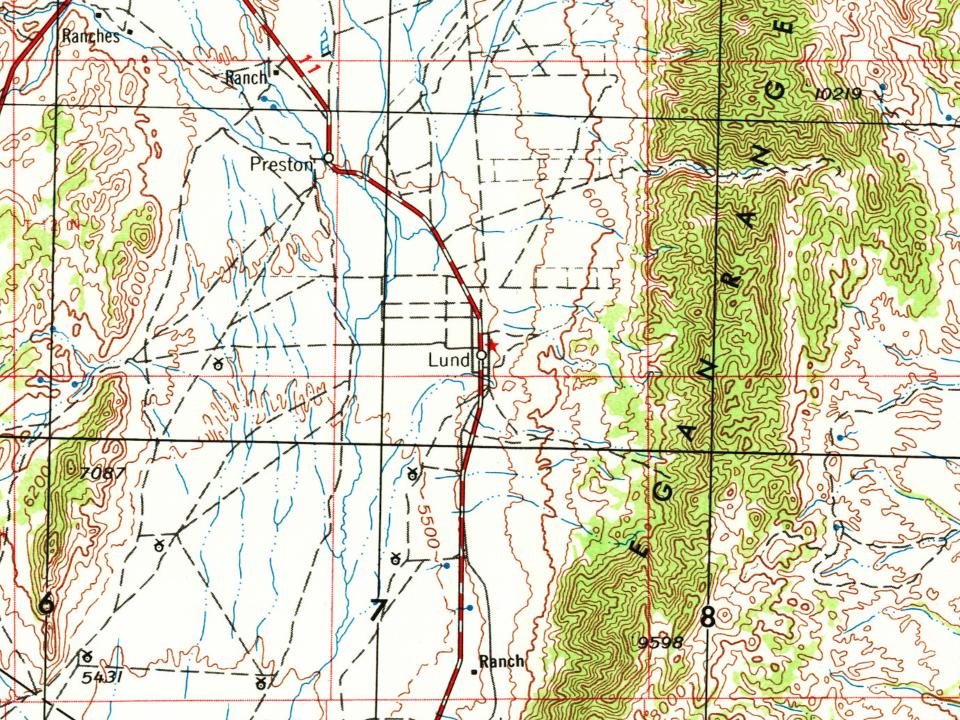
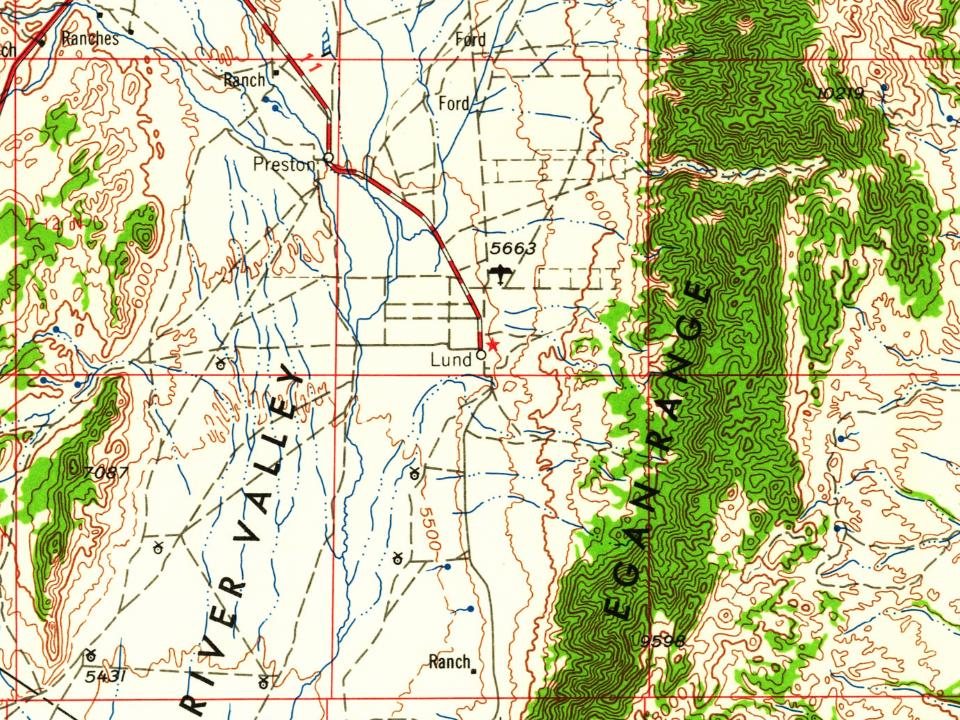
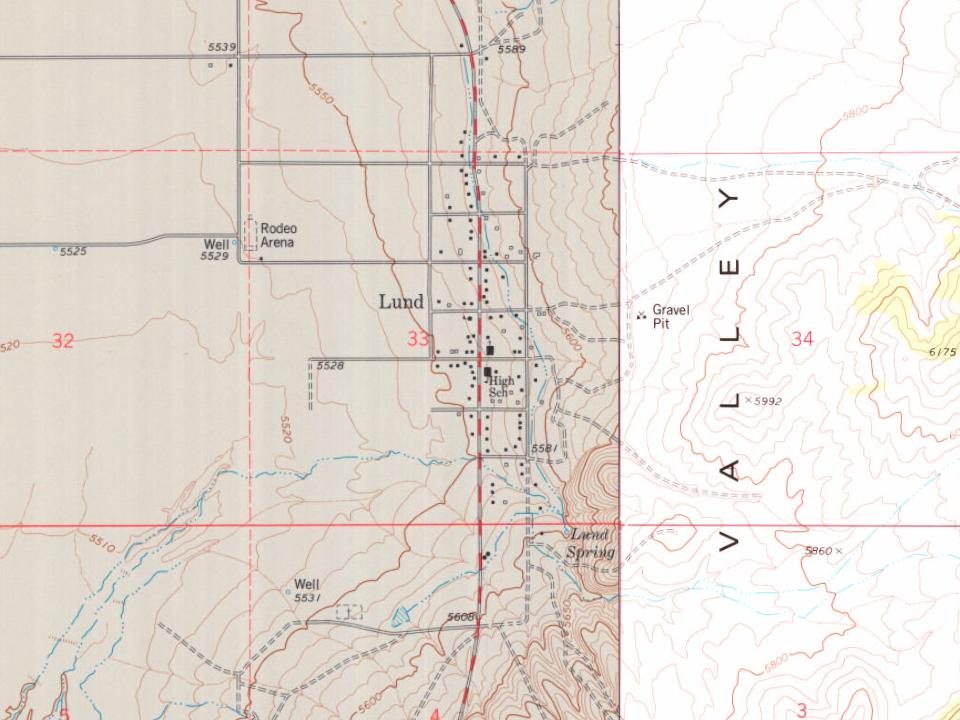
In the early 1870s, Tom Plane operated a ranch based near Lund Spring. He employed ranch hands that grew feed and food and raised live stock to support needs of the mining towns. His ranch house was a welcome respite for travelers on the Hamilton-Pioche road. Later, James R. Withington gained ownership of Tom Plane's ranch and built White Pine County's first flour mill at the Tom Plane's spring head.
Lund was settled in 1898 on land that the United States government had given the Church of Jesus Christ of Latter-day Saints (LDS Church) in lieu of land that had been confiscated under the Edmunds–Tucker Act. The first settlers were Latter-day Saints, and the LDS Church still has a ward in Lund.
Nothing in the archives for these yearsWeddings on Main Street, storms, parades, school pictures, the old store. If it’s in your family album, it belongs here.
Founding dates: Wikidata, Wikipedia, the U.S. post office records of Blevins & Helbock (CC0) and the Census. Homes by year built: Census ACS 2020–24. National Register of Historic Places: National Park Service (list of May 22, 2026). Old photos, postcards and papers: Wikimedia Commons, the Library of Congress and other public archives, credited on each item’s page. Maps: U.S. Geological Survey historical topographic maps (via Esri) and Sanborn fire-insurance maps (Library of Congress). History text and census tables: Wikipedia (CC BY-SA 4.0). Places that used to be: USGS Geographic Names Information System (2021). How TownRatings grades history →
From Wikimedia Commons (12), the National Register of Historic Places (1), Wikipedia, Wikidata and Wikipedia for famous people, U.S. Geological Survey historical maps, the US Post Offices dataset (Blevins & Helbock) and the USGS Geographic Names Information System. Archive images are copied here with their credits and licenses, shown on each photo’s page. Refreshed monthly.


 2018
 2018
 2014
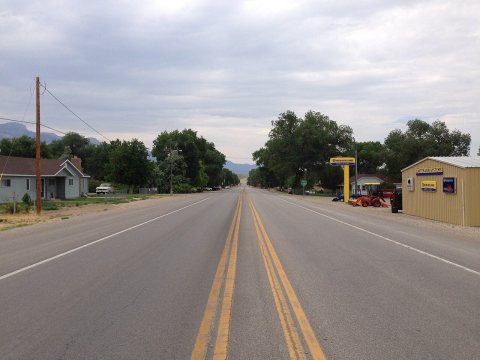 2014
 2014
 2014
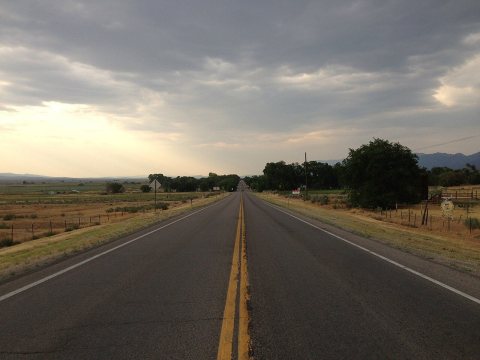 2014
 2014
 2008
 2007
 2007