Hamilton Township dates to 1813, and 4 of its places are on the National Register
More historic than 78% of U.S. towns · #135 of 468 in New Jersey. What drives it
Most of Hamilton Township was built recently: 6% of its homes predate 1940 and the median home dates from 1989. 4 places in town are on the National Register, among them a historic district with 259 buildings. Below: maps from 1890 on and the census since 1820.
Founding year: Wikidata; Wikipedia’s history section gives the same year. First post office: 1806.The full story ↓
History grade
What drives Hamilton Township’s History grade
On its age, its old homes and the National Register, Hamilton Township is more historic than 78% of U.S. towns, #135 of 468 in New Jersey. Its National Register listings hold the grade up; its share of homes from before 1940 pulls it down.
A−
HistoryA character grade: shown, never part of Hamilton Township’s overall grade.
New Jersey towns list more on the Register than most of the country (a typical New Jersey town has 3.7 per 10,000 residents, the U.S. 2.4), so Hamilton Township’s 92.5 sits above most of its state (86% of New Jersey towns have fewer) while its 261 historic buildings outnumber those of 95% of U.S. towns.
How sure. Graded on any two of the three inputs instead, the letter would range from B− to A. The pre-1940 share (±1.7 points) is firm at this size. Two sources give 1813.
Founding year: Wikidata (other dates in Quick answers). Homes: Census ACS 2020–24. National Register: National Park Service, May 2026 list; each listing counted once (boundary changes and added documentation belong to their listing), and a historic district counts its contributing buildings. How TownRatings grades history →
What stands out about Hamilton Township’s past
Read from the archive, the National Register and the record. The page puts what stands out first.
Hamilton Township's origins are directly tied to the Great Egg Harbor River and its tributaries which run through it. George May, after whom the village of Mays Landing was named, built a shipyard and trading post near Babcock Creek in 1756. By the mid 19th century, Mays Landing reached the height of its shipbuilding.
From 1830 to 1880, more than 200 vessels were built along the Great Egg Harbor River with lumber from native forests and iron from Weymouth foundries. Half of them were produced at Mays Landing. But by the end of the century, wood shipbuilding began to disappear due to the lack of suitable timber. Iron was then substituted for hull construction.
Passages that mention Hamilton Township, cut from the printed page as they were published.
Early history of Atlantic County, New Jersey1915 · page 86Read the page →
Read the text
mately that portion northeast of the Camden and Atlantic Railroad. Then Weymouth Township in 1798, which took that portion between the Tuckahoe River and the Great Egg Harbor River. Then Hamilton Township in 1813, which took that portion northwest of Miry Run. Mullica was formed from Galloway in 1838, and since, the Cities and Boroughs along the beach and Shore Road, leaving in the Township at the present time the strip of meadow land between Absecon Beach and the Shore
Text read by machine from the scan; it may contain errors.
Scans and text from the Internet Archive. Books published in 1930 or earlier, which are in the public domain.
Timeline
Hamilton Township, 1806 to 2020
Woven from the archive, old maps, post office records, the National Register and the people born here.
Every edition of the U.S. Geological Survey’s map of Hamilton Township. Tap a year, or press play to watch the town change.
1890Great Egg Harbor sheet · 1:62,500
U.S. Geological Survey historical topographic maps (public domain), via Esri’s collection of the scans. The red ring marks the center of Hamilton Township.
People over time
Hamilton Township, census by census
Lost a third of its people between 1850 and 1870, then grew more than tenfold.
21 censuses, 1820–2020.
U.S. Census Bureau decennial counts, from the census table on Hamilton Township’s Wikipedia page.
Stories next door
History across the town line
Each neighbor’s History grade, on the same three inputs.
In 1813, according to Wikidata and Wikipedia’s history of the town. Hamilton Township’s post office opened in 1806, and the census of 1820 counted 877 people here.
How does Hamilton Township rank for history?
Hamilton Township is more historic than 78% of U.S. towns, #135 of 468 in New Jersey. The History grade combines the town’s founding era, the share of homes built before 1940 and its National Register listings. It’s a character grade, so it isn’t part of the overall grade. How it works.
What is on the National Register in Hamilton Township?
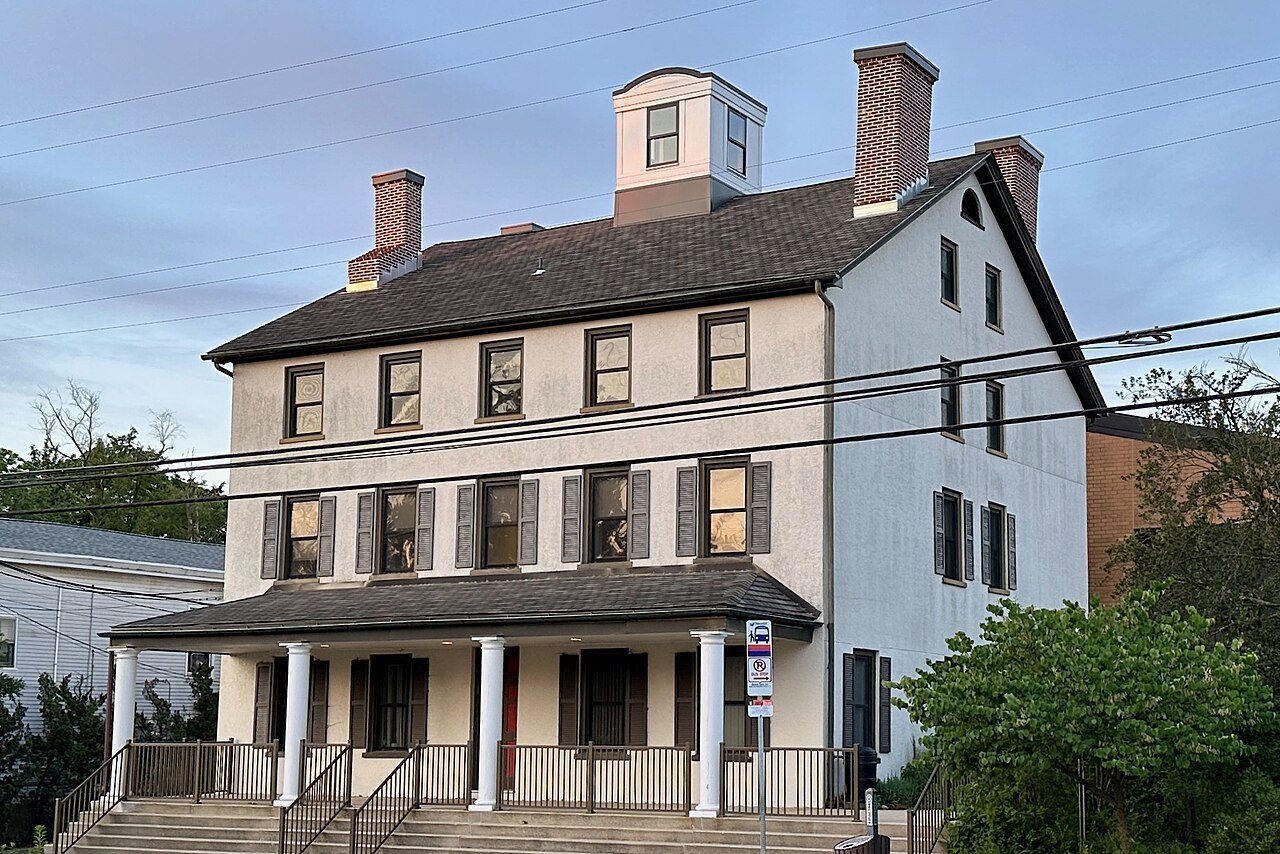
4 listings: 2 buildings, among them the Richards, Samuel, Hotel (listed 1979, the first), 1 historic district, the Mays Landing Historic District, with 259 contributing buildings, and 1 structure. 261 historic buildings in all.
How old are the homes in Hamilton Township?
6% of Hamilton Township’s homes were built before 1940 (Census estimate, ±1.7 points), against a typical 15% for a New Jersey town; the median home was built in 1989.
Founding dates: Wikidata, Wikipedia, the U.S. post office records of Blevins & Helbock (CC0) and the Census. Homes by year built: Census ACS 2020–24. National Register of Historic Places: National Park Service (list of May 22, 2026). Old photos, postcards and papers: Wikimedia Commons, the Library of Congress and other public archives, credited on each item’s page. Maps: U.S. Geological Survey historical topographic maps (via Esri) and Sanborn fire-insurance maps (Library of Congress). History text and census tables: Wikipedia (CC BY-SA 4.0). Places that used to be: USGS Geographic Names Information System (2021).
From Wikimedia Commons (17), Wikidata (1), the National Register of Historic Places (4), Wikipedia, U.S. Geological Survey historical maps, U.S. Census counts (via Wikipedia), the US Post Offices dataset (Blevins & Helbock), the USGS Geographic Names Information System and old county and town histories (Internet Archive). Archive images are copied here with their credits and licenses, shown on each photo’s page. Refreshed monthly.




 2025
 2024
 2021
 2021
 2021
 2020
 2015
 2015
 2015
 2015
 2015
 2015
 2014
 2014
 2014
 2012
 2005


