On its age, its old homes and the National Register, Wakefield is more historic than 62% of U.S. towns. Its share of homes from before 1940 holds the grade up; its age pulls it down.
B
HistoryA character grade: shown, never part of Wakefield’s overall grade.
Nebraska towns list more on the Register than most of the country (a typical Nebraska town has 16.3 per 10,000 residents, the U.S. 2.4), so Wakefield’s 7.7 sits near the middle of its state (45% of Nebraska towns have fewer) while its 1 listings outnumber those of 51% of U.S. towns.
How sure. Graded on any two of the three inputs instead, the letter would range from C to A−. The pre-1940 share is a Census survey estimate (±7.9 points). The founding year is the first post office, not a stated founding date.
Founding year: the first post office (other dates in Quick answers). Homes: Census ACS 2020–24. National Register: National Park Service, May 2026 list; each listing counted once (boundary changes and added documentation belong to their listing), and a historic district counts its contributing buildings. How TownRatings grades history →
What stands out about Wakefield’s past
Read from the archive, the National Register and the record. The page puts what stands out first.
Fire insurance maps drew every building, what it was made of and what it was used for, so insurers could price the risk of fire. Pick a year, then a sheet.
1900Sheet 1 of 1
Edition
Sheets
BrickWoodStone
Sanborn Map Company, via the Library of Congress. Editions published in 1930 or earlier, which are in the public domain.
Wakefield got its start in the year 1881, following construction of the Chicago, St. Paul, Minneapolis and Omaha Railway through the territory. It was named for L. W. Wakefield, a railroad engineer. Wakefield was incorporated in 1883.
Passages that mention Wakefield, cut from the printed page as they were published.
History of Dixon County, Nebraska. Its pioneers, settlement, growth and development, and its present condition--its villages, townships, enterprises and leading citizens, together with portraits and biographical sketches of some of its prominent men, inci1896 · page 257Read the page →
Read the text
The village of Wakefield was incorporated in the summer of '83, having at that time more than two hundred inhabitants. The prime movers in the incorporation were Philo Graves the town site proprietor, and George W. Waite, at that time manager of the flouring mills, and a leading business man of the town, but now a live stock dealer in Sioux Citv.
Text read by machine from the scan; it may contain errors.
History of Dixon County, Nebraska. Its pioneers, settlement, growth and development, and its present condition--its villages, townships, enterprises and leading citizens, together with portraits and biographical sketches of some of its prominent men, inci1896 · page 258Read the page →
Read the text
The C, St. P., M. .V O. railroad reached Wakefield late in the summer of '81 ; hut ere its arrival the first enterprising comers were already erecting buildings. The town site was surveyed by Engineer Wakefield of Sioux City, whence the town derives its name, as well as from its wide awake people.
Text read by machine from the scan; it may contain errors.
Scans and text from the Internet Archive. Books published in 1930 or earlier, which are in the public domain.
Timeline
Wakefield, 1881 to 1967
Woven from the archive, old maps, post office records, the National Register and the people born here.
Nothing in the archives for these yearsWeddings on Main Street, storms, parades, school pictures, the old store. If it’s in your family album, it belongs here.
National Park Service, National Register of Historic Places. Photos from Wikimedia Commons, credited on each place’s page.
People over time
Wakefield, census by census
Grew from 755 people in 1900 to 1,522 in 2020.
13 censuses, 1900–2020.
U.S. Census Bureau decennial counts, from the census table on Wakefield’s Wikipedia page.
Places that used to be
Old corners and places now gone
Wakefield’s post office has been open since 1881.
Hamlets and corners on the map
Saint Johns Trailer Court
Gone or out of use
Wakefieldlocale
US Post Offices dataset (Blevins & Helbock, CC0). Places and cemeteries from the USGS Geographic Names Information System (2021).
Questions about Wakefield’s history
What year was Wakefield founded?
The Wakefield post office opened in 1881, the earliest record of the town by name (U.S. post office records).
How does Wakefield rank for history?
Wakefield is more historic than 62% of U.S. towns. The History grade combines the town’s founding era, the share of homes built before 1940 and its National Register listings. It’s a character grade, so it isn’t part of the overall grade. How it works.
What is on the National Register in Wakefield?
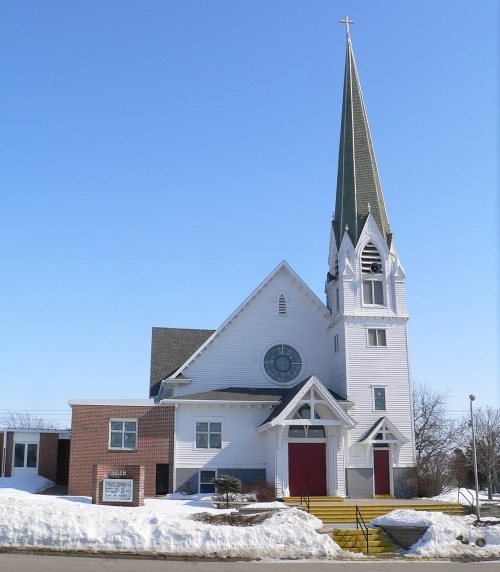
One place: the Swedish Evangelical Lutheran Salem Church (listed 1983).
How old are the homes in Wakefield?
31% of Wakefield’s homes were built before 1940 (Census estimate, ±7.9 points), against a typical 18% for a Nebraska town; the median home was built in 1957.
Founding dates: Wikidata, Wikipedia, the U.S. post office records of Blevins & Helbock (CC0) and the Census. Homes by year built: Census ACS 2020–24. National Register of Historic Places: National Park Service (list of May 22, 2026). Old photos, postcards and papers: Wikimedia Commons, the Library of Congress and other public archives, credited on each item’s page. Maps: U.S. Geological Survey historical topographic maps (via Esri) and Sanborn fire-insurance maps (Library of Congress). History text and census tables: Wikipedia (CC BY-SA 4.0). Places that used to be: USGS Geographic Names Information System (2021).
From Wikimedia Commons (2), the Library of Congress (2), the National Register of Historic Places (1), Wikipedia, U.S. Geological Survey historical maps, U.S. Census counts (via Wikipedia), the US Post Offices dataset (Blevins & Helbock), the USGS Geographic Names Information System, Sanborn fire insurance maps (Library of Congress) and old county and town histories (Internet Archive). Archive images are copied here with their credits and licenses, shown on each photo’s page. Refreshed monthly.


 1910
 2010
 2005