Boone’s post office opened in 1850, and 5 of its places are on the National Register
More historic than 33% of U.S. towns · #169 of 290 in North Carolina. What drives it
Most of Boone was built recently: 2% of its homes predate 1940 and the median home dates from 1985. Below: maps from 1928 on and the census since 1880.
The Boone post office opened in 1850, the earliest record of the town by name. Wikidata gives 1872. Two smaller post offices, Councill's Store (1823) and Hodges Gap (1922), opened inside today’s town and later closed.
First census: 167 in 18802020 census: 19,092176 years
How historic is Boone?
C
More historic than 33% of U.S. towns, on its age, its old homes and the National Register.
Founding year: the first Boone post office (Blevins & Helbock, CC0). Wikidata: 1872.The full story ↓
History grade
What drives Boone’s History grade
On its age, its old homes and the National Register, Boone is more historic than 33% of U.S. towns, #169 of 290 in North Carolina. Its National Register listings hold the grade up; its share of homes from before 1940 pulls it down.
C
HistoryA character grade: shown, never part of Boone’s overall grade.
North Carolina towns list more on the Register than most of the country (a typical North Carolina town has 12.5 per 10,000 residents, the U.S. 2.4), so Boone’s 6.5 sits near the middle of its state (49% of North Carolina towns have fewer) while its 13 historic buildings outnumber those of 77% of U.S. towns.
How sure. Graded on any two of the three inputs instead, the letter would range from C− to B−. The pre-1940 share (±1.4 points) is firm at this size. The founding year is the first post office, not a stated founding date; Wikidata’s 1872 falls in the same era, so the grade doesn’t depend on which one is used.
Founding year: the first post office (other dates in Quick answers). Homes: Census ACS 2020–24. National Register: National Park Service, May 2026 list; each listing counted once (boundary changes and added documentation belong to their listing), and a historic district counts its contributing buildings. How TownRatings grades history →
What stands out about Boone’s past
Read from the archive, the National Register and the record. The page puts what stands out first.
Boone took its name from the famous pioneer and explorer Daniel Boone, who on several occasions camped at a site generally agreed to be within the present city limits. Daniel's nephews, Jesse and Jonathan (sons of brother Israel Boone), were members of the town's first church, Three Forks Baptist, still in existence today.
Boone was served by the narrow-gauge East Tennessee and Western North Carolina Railroad (nicknamed "Tweetsie") until the flood of 1940. The flood washed away much of the tracks and it was decided not to replace them.
+84 Mary (Polly) Boone. 85 Levi Boone. In the Draper Collection of Manuscripts there is a letter from Samuel Boone (nephew of Daniel) stating that his uncle Samuel Boone (brother of Daniel) left three sons, Samuel, Squire and Levi, (m) There is also an entry in Daniel Boone's account book against Samuel, Thomas a,nd Levi Boone for surveying, (ret) Levi must have left some estate and possibly a family, for in the Fayette Circuit Court of Kentucky, June Term, 1826, there was a Complaint in Chancery brought by
Text read by machine from the scan; it may contain errors.
of his wounds, (c) William Hays was enrolled as a pioneer soldier of Kentucky, on June 10, 1779, in Capt. John Holder's company, at Boonesborough. (m) From 1779 to 1783, Hays was a Captain at Bryan's Station under Colonels Levi Todd and Daniel Boone. (/) When on Aug. 15, 1782, the Indians attacked Bryan's Station, Captain William Hays raised, probably on the second day of the siege, a party of about twelve men at Boone's Station, and hurried to their relief, (c, i & k) Somewhere on the way they met the men from Lexington, and all went on to
Text read by machine from the scan; it may contain errors.
Life and times of Colonel Daniel Boone1859 · page 57Read the page →
Read the text
Arrival of Squire Boone and a companion at tlie camp of Dauid Boone— Joyful meeting — News from home, and hunting resumed— Daniel Boone and Stuart surprised bj the Indians, Stuart killed — Escape of Boone, and his return to camp- Squire Boone's companion lost in the woods — Residence of Daniel Boone and Squire Boone in the wilderness — Squire returns to North Carolina, obtains a fresh supply of ammunition, and again rejoins his brother at the old camp — Daniel
Text read by machine from the scan; it may contain errors.
Life and times of Colonel Daniel Boone1859 · page 81Read the page →
Read the text
I>aniel Boone sets out for Kentucky with his family and his brother Squire Boone — Is joined by five families and forty men at Powell's Valley — The party is attacked by Indians and Daniel Boone's oldest son is killed — The party return to the settlements on Clinch River — Boone, at the request of Governor Dunmore, goes to the West and conducts a party of surveyors to Virginia — Boone receives the command of three garrisons and the commission of Captain — He takes a part in the
Text read by machine from the scan; it may contain errors.
Scans and text from the Internet Archive. Books published in 1930 or earlier, which are in the public domain.
Timeline
Boone, 1823 to 1980
Woven from the archive, old maps, post office records, the National Register and the people born here.
The Boone post office opened in 1850, the earliest record of the town by name (U.S. post office records). Wikidata gives 1872.
How does Boone rank for history?
Boone is more historic than 33% of U.S. towns, #169 of 290 in North Carolina. The History grade combines the town’s founding era, the share of homes built before 1940 and its National Register listings. It’s a character grade, so it isn’t part of the overall grade. How it works.
What is on the National Register in Boone?
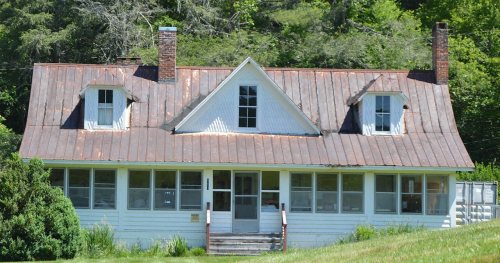
5 listings: 5 buildings, among them the Daniel Boone Hotel (listed 1982, the first). 13 historic buildings in all.
How old are the homes in Boone?
2% of Boone’s homes were built before 1940 (Census estimate, ±1.4 points), against a typical 4.1% for a North Carolina town; the median home was built in 1985.
Founding dates: Wikidata, Wikipedia, the U.S. post office records of Blevins & Helbock (CC0) and the Census. Homes by year built: Census ACS 2020–24. National Register of Historic Places: National Park Service (list of May 22, 2026). Old photos, postcards and papers: Wikimedia Commons, the Library of Congress and other public archives, credited on each item’s page. Maps: U.S. Geological Survey historical topographic maps (via Esri) and Sanborn fire-insurance maps (Library of Congress). History text and census tables: Wikipedia (CC BY-SA 4.0). Places that used to be: USGS Geographic Names Information System (2021).
From Wikimedia Commons (10), Wikidata (2), the National Register of Historic Places (5), Wikipedia, Wikidata and Wikipedia for famous people, U.S. Geological Survey historical maps, U.S. Census counts (via Wikipedia), the US Post Offices dataset (Blevins & Helbock), the USGS Geographic Names Information System, Sanborn fire insurance maps (Library of Congress) and old county and town histories (Internet Archive). Archive images are copied here with their credits and licenses, shown on each photo’s page. Refreshed monthly.




 2017
 2017
 2017
 2016
 2014
 2014
 2014
 2014
 2014
 2009


