Guest, Sign inJoin

Post to Asheville

We’ll email a one-tap link to publish your post. No password, and nothing is public until you click it.
Already a member? Sign in
AHistory
History · Asheville

Asheville dates to 1797, and 19% of its homes were built before 1940

More historic than 91% of U.S. towns · #9 of 290 in North Carolina. What drives it

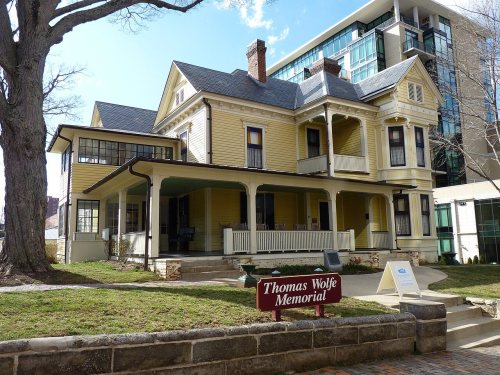
90 places in town are on the National Register, among them the Thomas Wolfe House, a National Historic Landmark, and ten historic districts with 1,782 buildings between them. Below: 5 old photos and papers, maps from 1885 on, and the census since 1800.

1797founded
90on the National Register
19%homes built before 1940
5old photos & papers
46famous people
From Asheville’s archive · credits on each photo
Quick answers

How Asheville began

When was Asheville founded?

1797

Asheville dates its founding to 1797 (Wikidata). The census first counted it in 1800.

First census: 38 in 18002020 census: 94,589229 years

How historic is Asheville?

A

More historic than 91% of U.S. towns, on its age, its old homes and the National Register.

What drives the grade ↓
Founding year: Wikidata. First post office: 1801.The full story ↓
History grade

What drives Asheville’s History grade

On its age, its old homes and the National Register, Asheville is more historic than 91% of U.S. towns, #9 of 290 in North Carolina. All 3 inputs are above most U.S. towns; its National Register listings ranks highest and its share of homes from before 1940 lowest.

A
HistoryA character grade: shown, never part of Asheville’s overall grade.
All U.S. towns we grade (21,289)Ahead of 91%
NewerOlder
North Carolina towns of 2,500+ (290)Ahead of 97%

North Carolina towns list more on the Register than most of the country (a typical North Carolina town has 12.5 per 10,000 residents, the U.S. 2.4), so Asheville’s 210 sits above most of its state (85% of North Carolina towns have fewer) while its 1,983 historic buildings outnumber those of 99% of U.S. towns.

NoteThe founding year comes from Wikidata alone; no second source gives 1797.
How sure. Graded on any two of the three inputs instead, the letter would range from A− to A. The pre-1940 share (±1.4 points) is firm at this size.

Founding year: Wikidata (other dates in Quick answers). Homes: Census ACS 2020–24. National Register: National Park Service, May 2026 list; each listing counted once (boundary changes and added documentation belong to their listing), and a historic district counts its contributing buildings. How TownRatings grades history →

What stands out about Asheville’s past

Read from the archive, the National Register and the record. The page puts what stands out first.

★ What stands out · On the National Register

90 listings protect 1,983 historic buildings

The country’s official list of buildings and places worth saving. One is a National Historic Landmark, the highest tier. Boundary changes and added documentation are counted with their listing.

places listed
90
National Historic Landmark
1
Thomas Wolfe House
historic buildings protected
1,983
each building in a district counts
first listed
1971
Thomas Wolfe House
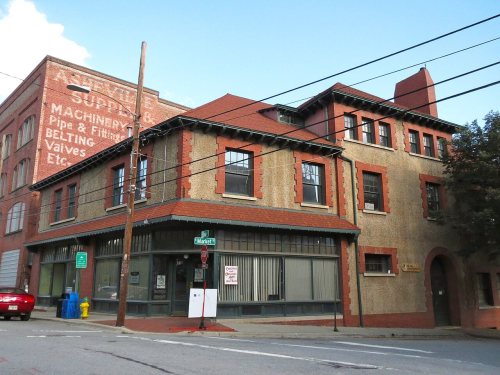
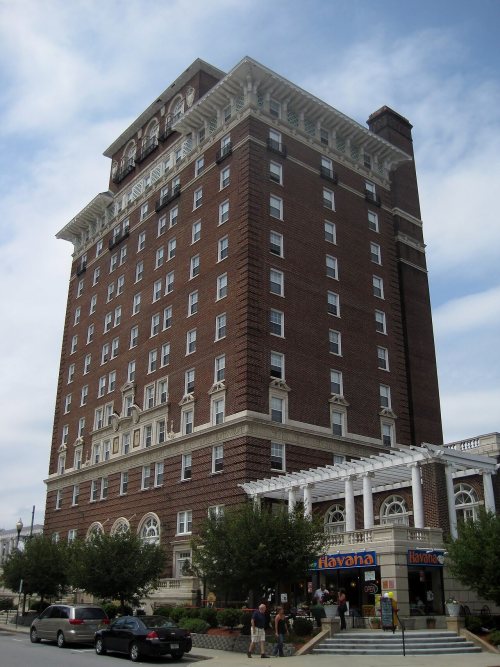
Grove Park Inn, built 1913Smith-McDowell HouseArcade BuildingFirst Baptist ChurchAsheville City Hall, built 1928ZealandiaS And W CafeteriaBattery Park Hotel, built 1924Young Men's Institute Building, built 1893Richmond Hill House, built 1889Montford Area Historic DistrictManor and CottagesChurch of St. Lawrence, built 1905Ravenscroft SchoolAsheville Transfer and Storage Company BuildingB & B Motor Company BuildingBuilding at 130-132 Biltmore AvenueBuilding at 134-136 1/2 Biltmore AvenueBuilding at 140 Biltmore AvenueConabeer Chrysler BuildingDowntown Asheville Historic DistrictE. D. Latta Nurses' ResidenceGeorge A. Mears HouseRichbourg Motors BuildingSawyer Motor Company BuildingBuncombe County CourthouseSt. Matthias Episcopal ChurchAll Souls Episcopal Church and Parish HouseBarker, Clarence, Memorial HospitalBiltmore Estate OfficeBiltmore Shoe StoreBiltmore Village Commercial BuildingsBiltmore Village Cottage DistrictBiltmore Village CottagesBiltmore-Oteen Bank BuildingMcGeahy BuildingSamuel Harrison Reed HouseSouthern Railway Passenger DepotBiltmore Industries, Inc.William E. Breese Sr. HouseOverlook, built 1914Demens-Rumbough-Crawley HouseDr. Carl V. Reynolds HouseChestnut Hill Historic DistrictWilliam Jennings Bryan House, built 1917Oteen Veterans Administration Hospital Historic District, built 1918Douglas Ellington HouseOttari SanitariumGrove Park Historic District, built 1913Mrs. Minnie Alexander CottageClaxton SchoolThomas Jarrett HouseSt. Mary's ChurchSt. Luke's Episcopal Church, built 1894Spinning WheelFire Station Number 4Kenilworth Inn, built 1918Bledsoe BuildingBiltmore Hardware Building, built 1927Clingman Avenue Historic DistrictRiverside Industrial Historic DistrictMunicipal Golf CourseWhitford G. Smith HouseBiltmore HospitalWest Asheville End of Car Line Historic DistrictProximity Park Historic DistrictRichard Sharp Smith HouseBlake HouseElmore, Bruce A. and June L., Lustron House, built 1949Seven OaksFoster's Log Cabin CourtJames Madison and Leah Arcouet Chiles HouseSchoenberger HallEliada HomeBent Creek Campus of the Appalachian Forest Experiment StationAsheville High School, built 1929Asheville School, built 1900Buncombe County Boys' Training School, (Former)Rice-Cornell-Brown HouseBroadway Market BuildingSunset Terrace Historic DistrictWest Asheville-Aycock School Historic DistrictNorwood Park Historic DistrictSouth Asheville Cemetery and St. John ‘A’ Baptist ChurchShiloh African Methodist Episcopal Zion ChurchBoyce K. and Kitzi McLamb Miller HouseWalton Street Park and PoolHopkins Chapel A.M.E. Zion ChurchHans Rees' Sons Tannery Historic DistrictThomas Wolfe House★
BuildingsDistrictsSites★ landmark

Architectural styles listings

Queen Anne12
Tudor Revival9
Art Deco9
Colonial Revival8
Craftsman8
Bungalow7
All 90 listings
Battery Park HotelBuilding · listed 1977Young Men's Institute BuildingBuilding · listed 1977Richmond Hill HouseBuilding · listed 1977Montford Area Historic DistrictDistrict · listed 1977Manor and CottagesDistrict · listed 1978Church of St. LawrenceBuilding · listed 1978Ravenscroft SchoolBuilding · listed 1978Asheville Transfer and Storage Company BuildingBuilding · listed 1979B & B Motor Company BuildingBuilding · listed 1979Building at 130-132 Biltmore AvenueBuilding · listed 1979Building at 134-136 1/2 Biltmore AvenueBuilding · listed 1979Building at 140 Biltmore AvenueBuilding · listed 1979Conabeer Chrysler BuildingBuilding · listed 1979Downtown Asheville Historic DistrictDistrict · listed 1979E. D. Latta Nurses' ResidenceBuilding · listed 1979George A. Mears HouseBuilding · listed 1979Richbourg Motors BuildingBuilding · listed 1979Sawyer Motor Company BuildingBuilding · listed 1979Buncombe County CourthouseBuilding · listed 1979St. Matthias Episcopal ChurchBuilding · listed 1979All Souls Episcopal Church and Parish HouseBuilding · listed 1979Barker, Clarence, Memorial HospitalBuilding · listed 1979Biltmore Estate OfficeBuilding · listed 1979Biltmore Shoe StoreBuilding · listed 1979Biltmore Village Commercial BuildingsBuilding · listed 1979Biltmore Village Cottage DistrictDistrict · listed 1979Biltmore Village CottagesBuilding · listed 1979Biltmore-Oteen Bank BuildingBuilding · listed 1979McGeahy BuildingBuilding · listed 1979Samuel Harrison Reed HouseBuilding · listed 1979Southern Railway Passenger DepotBuilding · listed 1979Biltmore Industries, Inc.Building · listed 1980William E. Breese Sr. HouseBuilding · listed 1980OverlookBuilding · listed 1980Demens-Rumbough-Crawley HouseBuilding · listed 1982Dr. Carl V. Reynolds HouseBuilding · listed 1982Chestnut Hill Historic DistrictDistrict · listed 1983William Jennings Bryan HouseBuilding · listed 1983Oteen Veterans Administration Hospital Historic DistrictDistrict · listed 1985Douglas Ellington HouseBuilding · listed 1986Ottari SanitariumBuilding · listed 1986Grove Park Historic DistrictDistrict · listed 1989Mrs. Minnie Alexander CottageBuilding · listed 1989Claxton SchoolBuilding · listed 1992Thomas Jarrett HouseBuilding · listed 1994St. Mary's ChurchBuilding · listed 1994St. Luke's Episcopal ChurchBuilding · listed 1997Spinning WheelBuilding · listed 1999Fire Station Number 4Building · listed 2000Kenilworth InnBuilding · listed 2001Bledsoe BuildingBuilding · listed 2003Biltmore Hardware BuildingBuilding · listed 2003Clingman Avenue Historic DistrictDistrict · listed 2004Riverside Industrial Historic DistrictDistrict · listed 2004Municipal Golf CourseDistrict · listed 2005Whitford G. Smith HouseBuilding · listed 2005Biltmore HospitalBuilding · listed 2005West Asheville End of Car Line Historic DistrictDistrict · listed 2006Proximity Park Historic DistrictDistrict · listed 2008Richard Sharp Smith HouseBuilding · listed 2009Blake HouseBuilding · listed 2010Elmore, Bruce A. and June L., Lustron HouseBuilding · listed 2013Seven OaksBuilding · listed 2015Foster's Log Cabin CourtBuilding · listed 2017James Madison and Leah Arcouet Chiles HouseBuilding · listed 2018Schoenberger HallBuilding · listed 1979Eliada HomeDistrict · listed 1993Bent Creek Campus of the Appalachian Forest Experiment StationDistrict · listed 1993Asheville High SchoolDistrict · listed 1996Asheville SchoolDistrict · listed 1996Buncombe County Boys' Training School, (Former)Building · listed 1997Rice-Cornell-Brown HouseBuilding · listed 1998Broadway Market BuildingBuilding · listed 2005Sunset Terrace Historic DistrictDistrict · listed 2005West Asheville-Aycock School Historic DistrictDistrict · listed 2006Norwood Park Historic DistrictDistrict · listed 2008South Asheville Cemetery and St. John ‘A’ Baptist ChurchDistrict · listed 2021Shiloh African Methodist Episcopal Zion ChurchBuilding · listed 2022Boyce K. and Kitzi McLamb Miller HouseBuilding · listed 2023Walton Street Park and PoolSite · listed 2023Hopkins Chapel A.M.E. Zion ChurchBuilding · listed 2024Hans Rees' Sons Tannery Historic DistrictDistrict · listed 2025

National Park Service, National Register of Historic Places. Photos from Wikimedia Commons, credited on each place’s page.

Places that used to be

Lost post offices, old corners, places now gone and burying grounds

13 other post offices opened and closed inside today’s town.

Ashville
1801–today
Sulphur Springs
1832–1866
Riverside
1869–1877
Busbee
1873–1902
Sand Hill
1873–1874
Deaver's View
1874–1875
Arden
1878–today
Hawkins
1883–1887
Ramoth
1888–1893
Grace
1889–1902
18001910today
Hamlets and corners on the map
AlbemarleArdenAzaleaBeverly HillsBiltmoreBoswellBroadviewBuena VistaBusbeeCamelotDeaver ViewDogwood GroveEast BiltmoreEcho HillsEnkaEnka VillageGraceHaw CreekHawthorneHazel GreenHighland GateHillcrest AptsKenilworthLee Walker Hots
Gone or out of use
Appalachian Hall HospitalhospitalBusbee Post Officepost officeHighland Hospitalhospital
11cemeteries and burying grounds inside Asheville
Green HillsHarkinsLewis MemorialNew Salem Baptist ChurchOld AcademyRichRiversideSouth AshevilleSunsetWest ChapelWoodlawn

US Post Offices dataset (Blevins & Helbock, CC0). Places and cemeteries from the USGS Geographic Names Information System (2021).

The story

How Asheville came to be

From Wikipedia’s history of Asheville.

Read it all →

Before the arrival of the European Colonists, the land where Asheville now exists lay within the boundaries of the Cherokee Nation, which had homelands in modern western North and South Carolina, southeastern Tennessee, and northeastern Georgia. A town at the site of the river confluence was recorded as Guaxule by Spanish explorer Hernando de Soto during his 1540 expedition through this area. His expedition comprised the first European visitors, who carried endemic Eurasian infectious diseases that killed much of the native population.

Text from Wikipedia, licensed CC BY-SA 4.0.

Timeline

Asheville, 1793 to 1971

Woven from the archive, old maps, post office records, the National Register and the people born here.

  1. 18th century
  2. 1793In the archiveAsheville-original-plan-tn1
  3. 1797
    FoundingAsheville is established
  4. 19th century
  5. 1801Post officeThe Ashville post office opens
  6. 1832Post officeThe Sulphur Springs post office opens
  7. 1866Post officeThe Sulphur Springs post office closes
  8. 1869Post officeThe Riverside post office opens
  9. 1877Post officeThe Riverside post office closes
  10. 1890In the archiveHall Residence on French Broad Avenue
  11. 1893BuiltYoung Men's Institute Building is built
  12. 20th century
  13. 1900In the archiveOld Asheville Train Depot
  14. 1900Born hereThomas Wolfe is born here
  15. 1913BuiltGrove Park Inn is built
  16. 1924BuiltBattery Park Hotel is built
  17. 1924Born hereKenneth Noland is born here
  18. 1928BuiltAsheville City Hall is built
  19. 1938In the archiveMiss Margot Mayo (cropped)
  20. 1970Born hereBellamy Young is born here
  21. 1971LandmarkThomas Wolfe House named a National Historic Landmark
By decade

Asheville, decade by decade

4 decades in the archive, from the 1790s to the 1930s. Scroll each row; tap a photo for its story.

1940s–1990snothing yet
Nothing in the archives for these yearsWeddings on Main Street, storms, parades, school pictures, the old store. If it’s in your family album, it belongs here.
Add from your album
Every building

Asheville, building by building, 1885–1917

Fire insurance maps drew every building, what it was made of and what it was used for, so insurers could price the risk of fire. Pick a year, then a sheet.

Asheville fire insurance map, 1885, sheet 11885Sheet 1 of 2
Edition
BrickWoodStone

Sanborn Map Company, via the Library of Congress. Editions published in 1930 or earlier, which are in the public domain.

Then & now

Stand where they stood

No then-and-now pairs yet. Take a photo from the same spot as an old one and they appear here side by side.

Hall Residence on French Broad Avenue
Retake this viewHall Residence on French Broad Avenue, c. 1890

Find the spot, match the angle, and add your photo. It becomes the first then-and-now pair on Asheville’s page.

Retake this view · +15
People over time

Asheville, census by census

020,00040,00060,00080,000100,0001800185019001950200094,589

Grew from 38 people in 1800 to 94,589 in 2020, more than tenfold.

18 censuses, 1800–2020.

U.S. Census Bureau decennial counts, from the census table on Asheville’s Wikipedia page.

Famous people

46 famous people were born in Asheville

Writers, athletes, leaders and more, ranked by how widely they’re known.

See all →
Help out

Finish Asheville’s story

Most archives stop around 1920. The photos from after that are in family albums, not libraries.

Decades since 1900 with photos
00s10s20s30s40s50s60s70s80s90s
2 of 10 decades. The empty ones are waiting for someone’s album.
Stories next door

History across the town line

Each neighbor’s History grade, on the same three inputs.

Questions about Asheville’s history

What year was Asheville founded?

In 1797, according to Wikidata. Asheville’s post office opened in 1801, and the census of 1800 counted 38 people here.

How does Asheville rank for history?

Asheville is more historic than 91% of U.S. towns, #9 of 290 in North Carolina. The History grade combines the town’s founding era, the share of homes built before 1940 and its National Register listings. It’s a character grade, so it isn’t part of the overall grade. How it works.

What is on the National Register in Asheville?

90 listings: 68 buildings, among them the Thomas Wolfe House (a National Historic Landmark since 1971), 21 historic districts with 1,782 contributing buildings, and 1 site. 1,983 historic buildings in all.

How old are the homes in Asheville?

19% of Asheville’s homes were built before 1940 (Census estimate, ±1.4 points), against a typical 4.1% for a North Carolina town; the median home was built in 1982.

Memory lane

What the archives can’t tell you, neighbors can.

Town Square →
Start a conversation
Sources

Where this page comes from

Founding dates: Wikidata, Wikipedia, the U.S. post office records of Blevins & Helbock (CC0) and the Census. Homes by year built: Census ACS 2020–24. National Register of Historic Places: National Park Service (list of May 22, 2026). Old photos, postcards and papers: Wikimedia Commons, the Library of Congress and other public archives, credited on each item’s page. Maps: U.S. Geological Survey historical topographic maps (via Esri) and Sanborn fire-insurance maps (Library of Congress). History text and census tables: Wikipedia (CC BY-SA 4.0). Places that used to be: USGS Geographic Names Information System (2021).

From Wikimedia Commons (6), Wikidata (10), the National Register of Historic Places (90), Wikipedia, Wikidata and Wikipedia for famous people, U.S. Census counts (via Wikipedia), the US Post Offices dataset (Blevins & Helbock), the USGS Geographic Names Information System and Sanborn fire insurance maps (Library of Congress). Archive images are copied here with their credits and licenses, shown on each photo’s page. Refreshed monthly.