127 years in pictures
Census counts: 221 in 1910, 5,265 in 2020. The archive holds 1 old photo or paper going back to 1892.
1 place on the National Register of Historic Places.
- 1899Angier is settled
Each edition grades its towns against each other only.

A town of 9,410, settled in 1899. Public schools that outperform most of North Carolina.
Trash day: look up yoursAngier is a solid, middle-of-the-road choice. It grades C overall, 172nd of 286 graded towns in North Carolina, with no subject far below average. Its best mark is schools: its schools outperform 72% of the state's. Its lowest everyday mark is in health: residents are less healthy than 71% of U.S. towns on CDC estimates. A typical home there costs about $331K, 4.6 years of the Anderson Creek area’s $71K median household income. Angier’s mean commuting time is 35 minutes, above both North Carolina’s towns (24 minutes) and U.S. towns (25 minutes). Angier's civic life (library use, community groups, volunteering) trails 90% of U.S. towns. Williams Grove School is on the National Register of Historic Places.
Where Angier beats most towns.
4,350 counted in 2010 and 5,265 in 2020; an estimated 9,410 in 2025.
Growth hasn’t slowed: 75.4% since 2020, after 21% in the decade before.
U.S. Census 2010 & 2020 counts · Census Bureau estimate, July 1, 2025
Each subject compared with towns across the country (schools within North Carolina), ordered by how far Angier is from typical.
How TownRatings grades towns →
Census counts: 221 in 1910, 5,265 in 2020. The archive holds 1 old photo or paper going back to 1892.
1 place on the National Register of Historic Places.
Who provides power, water and the rest in Angier, and how to reach them.
EPA SDWIS (Oct 9, 2026) · HIFLD + EIA-861 2025 · Census 2020 ZCTAs · NCES 2024–25 · registration: vote.gov, updated Nov 18, 2024.
Ordered by what stands out in Angier.
Angier is healthier than towns with similar incomes, but it has commutes longer than most of North Carolina and has many renters stretched by housing costs.
The average commute for its 2,922 working residents takes 35.2 minutes, against 25.1 across North Carolina. Jobs based here grew from 996 in 2013 to 1,655.
Jobs in Angier grew by 659 from 2013 to 2023, reaching 1,655. Most people who work leave Angier to do it: just 3% work in town. Its income of the median household is $52,000. The top destinations are Raleigh (21%), Cary (9%) and Fuquay-Varina (6%).
| Angier | North Carolina towns | U.S. towns | |
|---|---|---|---|
| Median household income | $52,000 | $69,000 | $80,000 |
| Working residents who work in town | 3.3% | 6.8% | 8% |
| Below the poverty line | 11% | 13% | 9.6% |
Census LEHD 2023 · ACS
One of its 3 schools is below, with the reason it’s listed. Public school enrollment in Angier: 1,158 students across 2 schools.
| School | Level | Students | Letter |
|---|---|---|---|
| Carolina Charter AcademyLargest public elementary schoolGrades K–8 | Grades K–8 | 782 | B− |
NCES · EDFacts · graded within NC on state tests and graduation
37% of Angier’s expected losses from natural hazards come from inland flooding, followed by tornadoes at 21%. On expected storm and flood damage, Angier sits below just over three quarters of U.S. communities. Federal disaster aid has reached households in Angier after 7 declared disasters, most recently in 2018.
FEMA disaster declarations and aid · FEMA National Risk Index · OpenFEMA
Against the 6,532 U.S. towns with household incomes like Angier’s, it is healthier than 60%, so that grade isn’t only a matter of income.
For adults in Angier, the share who feel lonely is 34%. 24% of adults in Angier say their health is fair or poor; 29% get no exercise outside work.
| Angier | North Carolina towns | U.S. towns | |
|---|---|---|---|
| No health insurance, 18–64 (CDC PLACES) | 15% | 10% | 8.1% |
| Food insecurity (CDC PLACES) | 21% | 15% | 14% |
| Fair or poor health (CDC PLACES) | 24% | 19% | 19% |
| Get no exercise (CDC PLACES) | 29% | 24% | 25% |
| What stands out | Angier | NC |
|---|---|---|
| More uninsured adults | 15% | 10.4% |
| More adults facing food insecurity | 20.8% | 15.2% |
| More adults facing a utility shut-off | 10.8% | 8.1% |
CDC PLACES 2025 · modeled estimates for adults · CMS · HRSA
NOAA U.S. Climate Normals, 1991–2020
16 violent crimes were reported in 2025. The property offense rate in Angier is 7.9 per 1,000 residents. Angier's reported crime rate is well below North Carolina's. Most reported incidents are property crimes, mainly thefts.
| Angier | North Carolina towns | U.S. towns | |
|---|---|---|---|
| Property crimes per 1,000 (2025) | 7.9 per 1,000 residents | 21.8 | 9.9 |
| Violent crimes per 1,000 (2025) | 1.8 per 1,000 residents | 3.2 | 1.6 |
FBI crime data, 2025 · crimes reported to police
Nearly a third of adults 25 and older hold at least a bachelor’s degree, against 36% across North Carolina. Every broad age group is within 4 points of the North Carolina average. Angier has grown 75% since 2020, to 9,410 residents in the Census Bureau’s 2025 estimate. The share of residents in Angier who are under 18: 20%.
| Angier | North Carolina towns | U.S. towns | |
|---|---|---|---|
| Under 18 | 20% | 22% | 22% |
| Bachelor’s degree or more, 25+ | 32% | 29% | 29% |
| Aged 65 or older | 17% | 18% | 18% |
57% women, 43% men
About 75 men for every 100 women (the survey’s margin: ±3.7 points). Across North Carolina, 51.1% of residents are women.
| Angier | NC | U.S. | |
|---|---|---|---|
| Under 10 | 12.4% | 11.6% | 11.6% |
| 10 to 17 | 7.9% | 10.2% | 10.3% |
| 18 to 24 | 6.2% | 9.5% | 9.1% |
| 25 to 34 | 14.6% | 13.4% | 13.7% |
| 35 to 44 | 12.5% | 12.8% | 13.2% |
| 45 to 54 | 12.5% | 12.6% | 12.2% |
| 55 to 64 | 16.9% | 12.8% | 12.7% |
| 65 to 74 | 8.2% | 10.3% | 10.2% |
| 75 and older | 8.8% | 6.9% | 7% |
| No diploma | 16.4% | 9.9% | 10.4% |
| High school | 22% | 24.8% | 26% |
| Some college | 18.7% | 19.6% | 19.1% |
| Associate’s | 10.9% | 10.1% | 8.8% |
| Bachelor’s | 18.6% | 22.2% | 21.6% |
| Graduate | 13.3% | 13.5% | 14.1% |
Census population estimates, 2025 · U.S. Census Bureau · ACS 2020-2024 5-year estimates
The trail network density for Angier comes to 0.1 miles per square mile. Across 2 parks and preserves: 0.3 miles of trail. The biggest park or preserve is Jack Marley Park, at 28 acres.
| Angier | North Carolina towns | U.S. towns | |
|---|---|---|---|
| Miles of trail per square mile | 0.1 miles per square mile | 0.2 | 0.4 |
| Conserved land | 4.7% | 3.4% | 4.3% |
| Biggest places to walk | Trails | Acres |
|---|---|---|
| 1. Jack Marley Park | — | 28 |
| 2. Depot Square | — | 1 |
Trails & parks © OpenStreetMap contributors · Conserved land: USGS PAD-US
65.4% of renter households pay 30% or more of their income for housing, against 48.9% across North Carolina.
A home in Angier typically sold within 66 days of listing. Homes locally are typically worth about $331,000, down 1.2% in a year, close to the North Carolina typical home. In Angier, the typical sale closed at 99.3% of the list price.
Zillow Home Value Index · Redfin Data Center
Museums, parks, gardens and other places to visit around Angier. Close and well known come first.
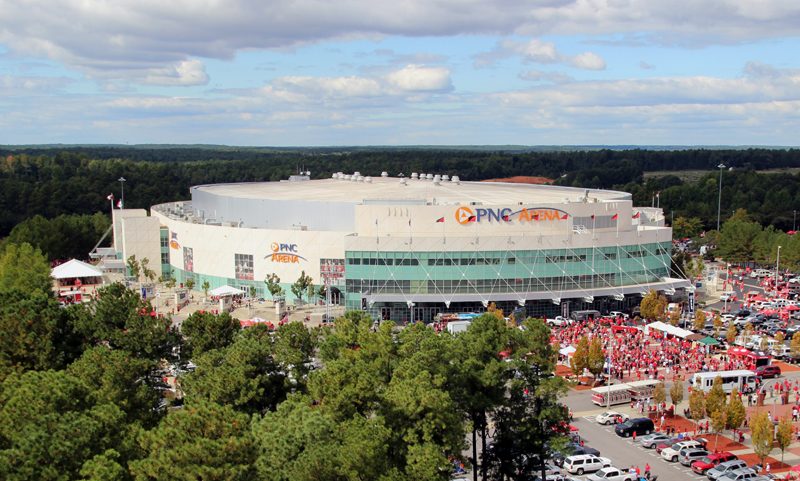
20 mi Stadium & arenaLenovo Center
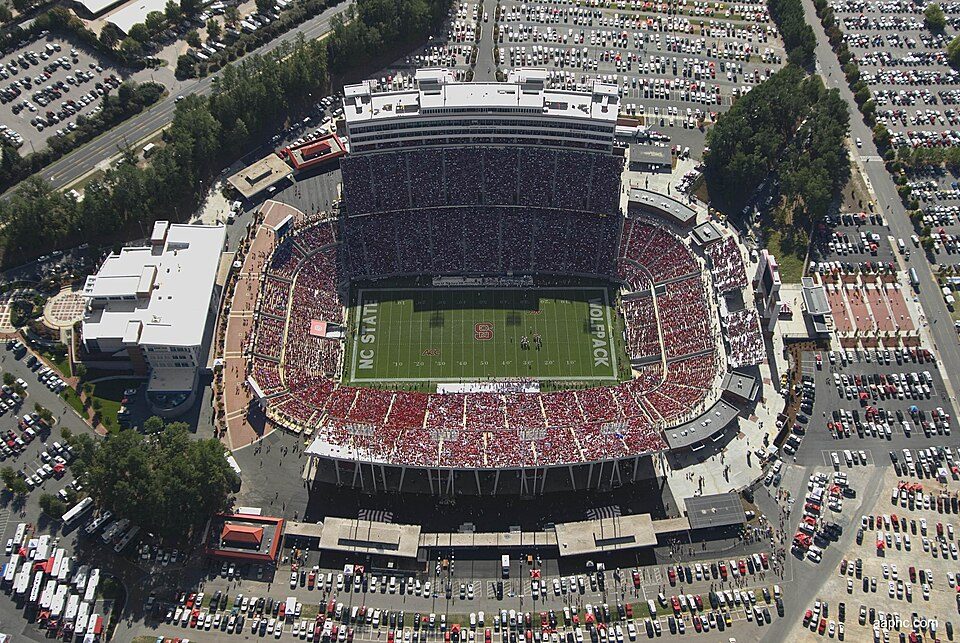
20 mi Stadium & arenaCarter–Finley Stadium
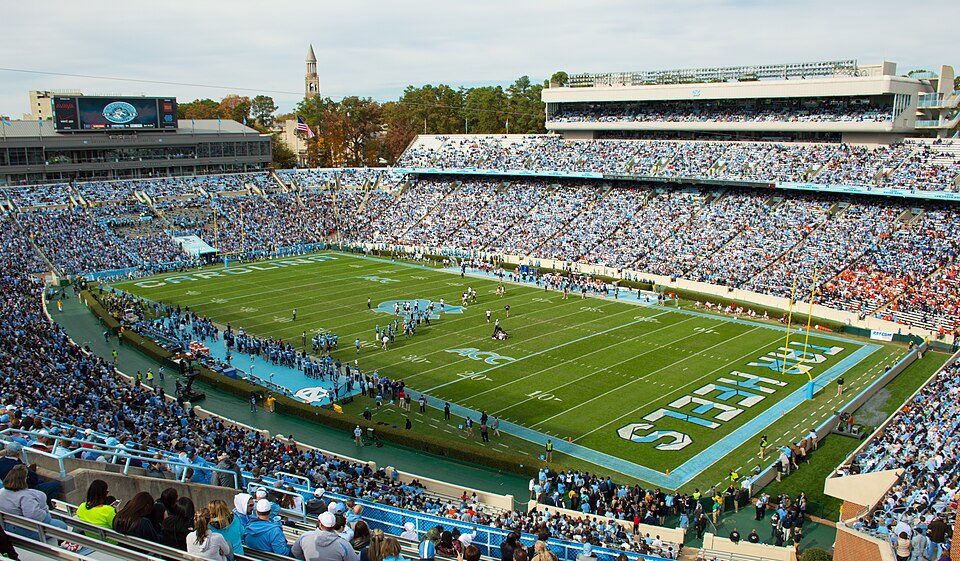
32 mi Stadium & arenaKenan Memorial Stadium
19 mi Stadium & arenaWakeMed Soccer Park
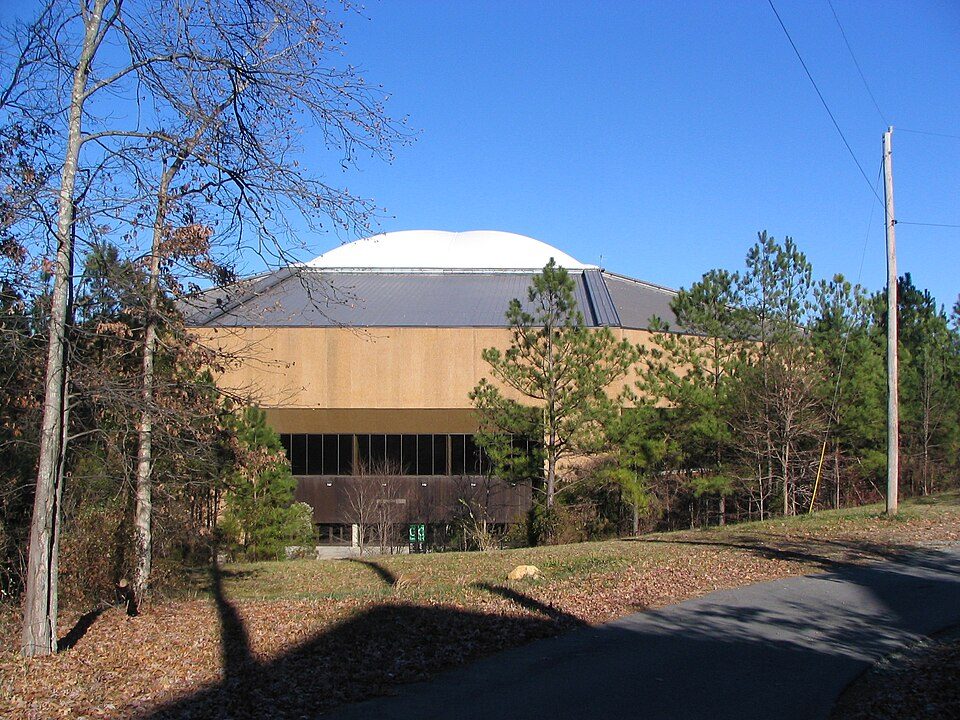
32 mi Stadium & arenaDean Smith Center
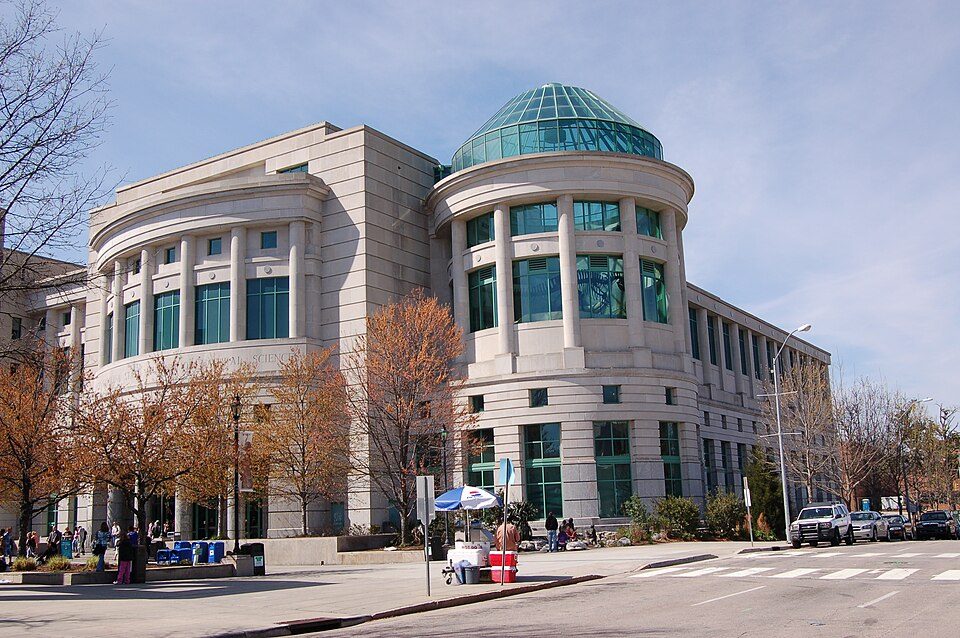
20 mi MuseumNorth Carolina Museum of Natural SciencesLenovo Center: Edward T. Funkhouser, CC BY-SA 3.0 · Carter–Finley Stadium: SMaloney, CC BY 3.0 · Kenan Memorial Stadium: Yeungb, CC BY 3.0 · WakeMed Soccer Park: Hameltion, CC BY-SA 4.0 · Dean Smith Center: No machine-readable author provided. Snargle~commonswiki assumed (based on copyr, Public domain · North Carolina Museum of Natural Sciences: Jmturner, Public domain
2 within 15 miles of the center of Angier
About 3 of every 100 Angier residents are enrolled in college, against 6 across North Carolina.
Where Angier’s working residents go each day. Line width shows the share.
Census LEHD 2023
Town in North Carolina, United States
Angier ( AN-jur) is a town in the Black River Township of Harnett County, North Carolina, United States. As of the 2020 census, Angier had a population of 5,265. Angier is a part of the greater Raleigh–Durham–Cary Combined Statistical Area (CSA) as defined by the United States Census Bureau.
From Wikipedia, licensed CC BY-SA 4.0 · facts via Wikidata (CC0)
Short answers, built from the data on this page.
Angier grades C overall, better than 25% of U.S. towns and #172 of 286 in North Carolina. It grades C for health and B+ for schools. Walkability is its weak spot, with a C−.
Cost of living, which also weighs rents, property taxes and how many households pay 30% or more of their income for housing, grades C+.
2 notable people were born here, including Franklin Taylor Dupree Jr. and James Archibald Campbell.