Founding year: the first Raymond post office (Blevins & Helbock, CC0). Wikidata: 1829.The full story ↓
History grade
What drives Raymond’s History grade
On its age, its old homes and the National Register, Raymond is more historic than 88% of U.S. towns. All 3 inputs are above most U.S. towns; its National Register listings ranks highest and its share of homes from before 1940 lowest.
A
HistoryA character grade: shown, never part of Raymond’s overall grade.
Mississippi towns list more on the Register than most of the country (a typical Mississippi town has 71.9 per 10,000 residents, the U.S. 2.4), so Raymond’s 589 sits above most of its state (91% of Mississippi towns have fewer) while its 98 historic buildings outnumber those of 89% of U.S. towns.
How sure. Graded on any two of the three inputs instead, the letter would range from B+ to A. The pre-1940 share is a Census survey estimate (±8.1 points). The founding year is the first post office, not a stated founding date; Wikidata’s 1829 falls in the same era, so the grade doesn’t depend on which one is used.
Founding year: the first post office (other dates in Quick answers). Homes: Census ACS 2020–24. National Register: National Park Service, May 2026 list; each listing counted once (boundary changes and added documentation belong to their listing), and a historic district counts its contributing buildings. How TownRatings grades history →
What stands out about Raymond’s past
Read from the archive, the National Register and the record. The page puts what stands out first.
In 1829, three commissioners, including John B. Peyton, were appointed by U.S. President Andrew Jackson to find a place near the center of Hinds County for the county seat. The current location of Raymond is a ridge about a mile from the center of the county, and was selected because the actual center was low and subject to flooding. The town of Raymond received its charter from the Mississippi legislature on December 15, 1830. Because of its status as a seat of justice and its proximity to the Natchez Trace, Raymond developed quickly into a prosperous small town whose prosperity and small size have continued to this day.
Passages that mention Raymond, cut from the printed page as they were published.
History of Hinds County, Mississippi, 1821-19221922Read the page →
Read the text
Raymond, one of the county seats, is an old place of much historical importance and interest. It is a station on the Natchez branch of the Yazoo and Mississippi Valley Railroad and was the scene of the first battle in Grant's and Sherman's march from Port Gibson.
Text read by machine from the scan; it may contain errors.
History of Hinds County, Mississippi, 1821-1922. Published in commemoration of the centenary of the city of Jackson ... by Mrs. Dunbar Rowland (Eron O. Rowland)1922Read the page →
Read the text
Raymond, one of the county seats, is an old place of much historical importance and interest. It is a station on the Natchez branch of the Yazoo and Mississippi Valley Railroad and was the scene of the first battle in Grant’s and Sherman’s march from Port Gibson.
Text read by machine from the scan; it may contain errors.
History of Hinds County, Mississippi, 1821-1922. Published in commemoration of the centenary of the city of Jackson ... by Mrs. Dunbar Rowland (Eron O. Rowland)1922 · page 15Read the page →
Read the text
locate a site for the courthouse, and} they were directed to place it in Clinton or within two miles of the center of the county. The center, however, was found within two miles of Raymond and this was marked by a large stone. The following year by act of the Legislature Raymond was made the county seat, its prestige causing the remark that Raymond was the seat of justice, Clinton, of learning, and Amsterdam, of commerce. Clinton has made good her title,
Text read by machine from the scan; it may contain errors.
History of Hinds County, Mississippi, 1821-19221922Read the page →
Read the text
uplands lying between Jackson and Vicksburg in Hinds and Warren counties were the scene of action after the destructive march northward from Bruinsburg and Port Gibson The battle near Raymond, the burning of Jackson, the battles of Champion Hill and Baker's creek, the one of Big Black bridge, and the stubborn resistance of Vicksburg, form the memorable campaign that wrecked the Confederacy in the
Text read by machine from the scan; it may contain errors.
Scans and text from the Internet Archive. Books published in 1930 or earlier, which are in the public domain.
Timeline
Raymond, 1828 to 1984
Woven from the archive, old maps, post office records, the National Register and the people born here.
The Raymond post office opened in 1828, the earliest record of the town by name (U.S. post office records). Wikidata gives 1829.
How does Raymond rank for history?
Raymond is more historic than 88% of U.S. towns. The History grade combines the town’s founding era, the share of homes built before 1940 and its National Register listings. It’s a character grade, so it isn’t part of the overall grade. How it works.
What is on the National Register in Raymond?
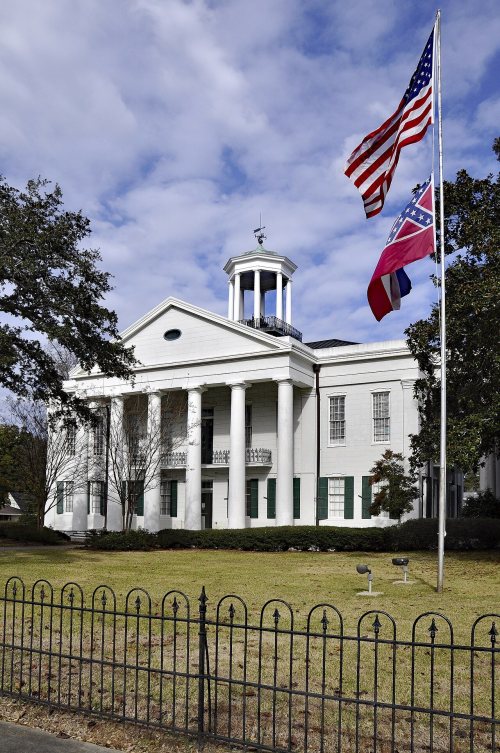
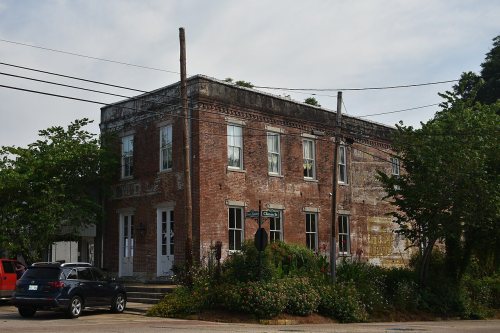
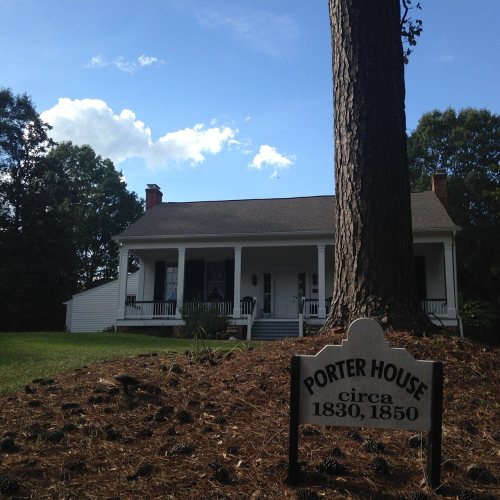
14 listings: 13 buildings, among them the Peyton House (listed 1973, the first), and 1 historic district, the Raymond Historic District, with 85 contributing buildings. 98 historic buildings in all.
How old are the homes in Raymond?
15% of Raymond’s homes were built before 1940 (Census estimate, ±8.1 points), against a typical 4.5% for a Mississippi town; the median home was built in 1964.
Founding dates: Wikidata, Wikipedia, the U.S. post office records of Blevins & Helbock (CC0) and the Census. Homes by year built: Census ACS 2020–24. National Register of Historic Places: National Park Service (list of May 22, 2026). Old photos, postcards and papers: Wikimedia Commons, the Library of Congress and other public archives, credited on each item’s page. Maps: U.S. Geological Survey historical topographic maps (via Esri) and Sanborn fire-insurance maps (Library of Congress). History text and census tables: Wikipedia (CC BY-SA 4.0). Places that used to be: USGS Geographic Names Information System (2021).
From Wikimedia Commons (7), the Library of Congress (4), Wikidata (7), the National Register of Historic Places (14), Wikipedia, Wikidata and Wikipedia for famous people, U.S. Geological Survey historical maps, U.S. Census counts (via Wikipedia), the US Post Offices dataset (Blevins & Helbock), the USGS Geographic Names Information System and old county and town histories (Internet Archive). Archive images are copied here with their credits and licenses, shown on each photo’s page. Refreshed monthly.






 2016
 2016
 2016
 2016
 2016
 2016
 2016
 2015
 2014
 2009
 2006


