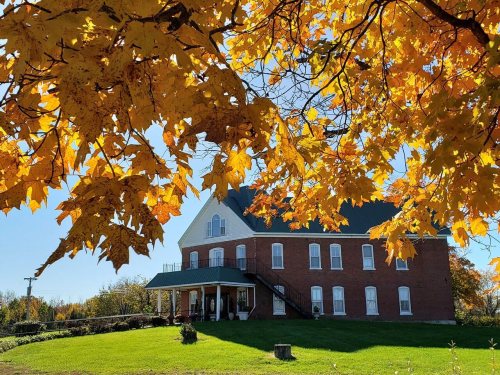
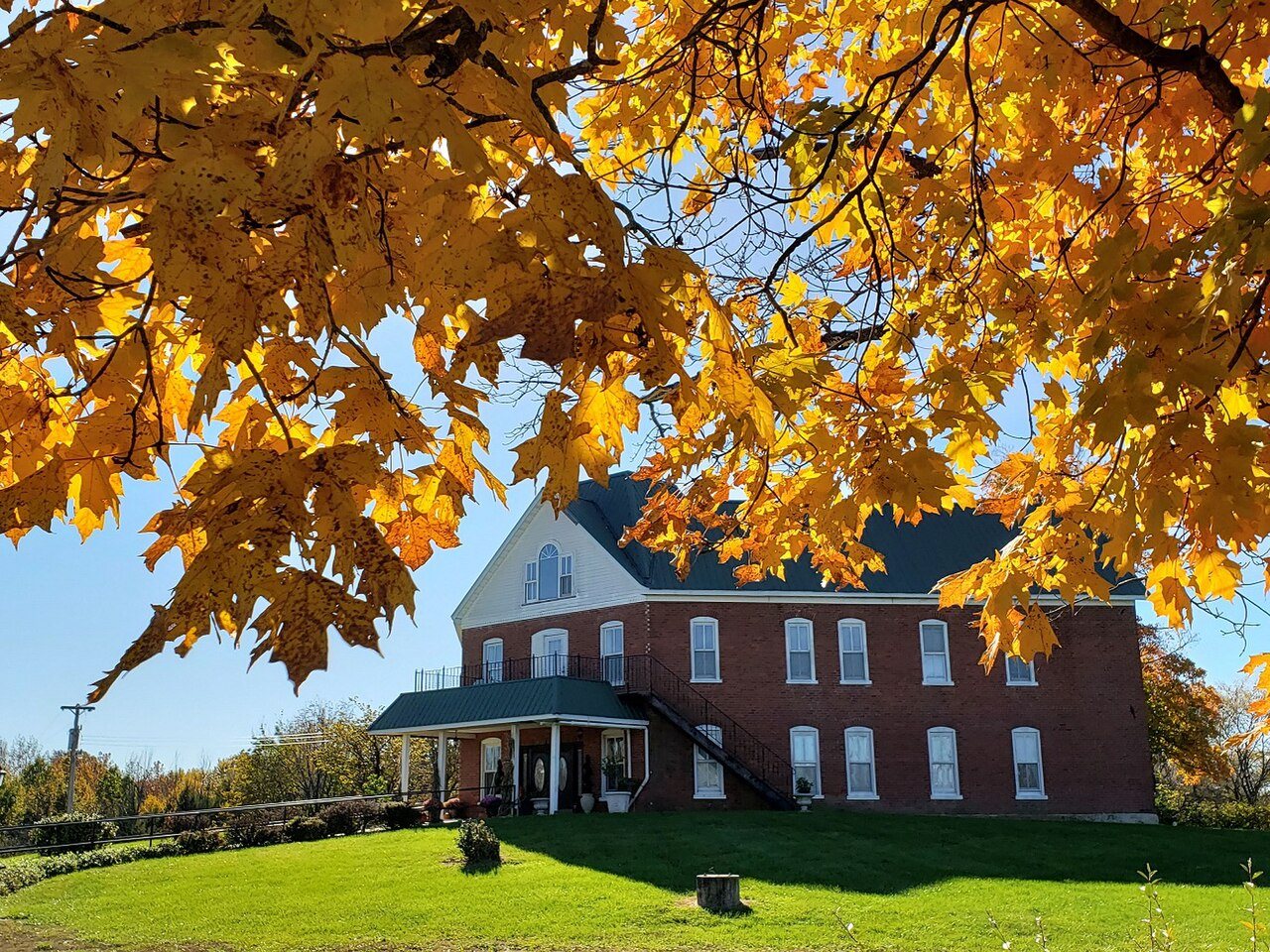
183 years in pictures
Census counts: 491 in 1900, 1,350 in 2020. The archive holds 3 old photos and papers going back to 2004 and 2 maps from 1942 on.
2 places on the National Register of Historic Places.
- 1843Linn is platted
Each edition grades its towns against each other only.

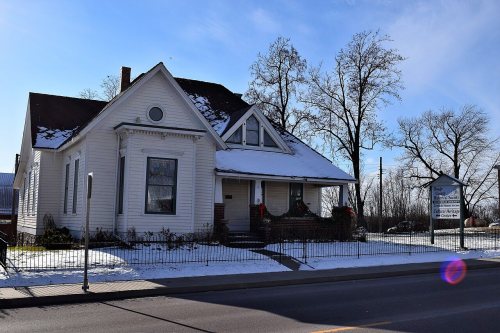
The best of Linn’s subject grades are an A− for cost of living and walkability; the weakest is a D− for incomes. On the outdoors, just 18 of Missouri’s 419 towns do worse. Linn has 2 places on the National Register of Historic Places, among them Sacred Heart Catholic Church and Parsonage and Osage County Poorhouse. Linn has fewer than 2,500 residents, so it gets subject grades but no overall grade.
Where Linn beats most towns.
Osage County PoorhouseIn a town this size, neighbors are the best guide. Ask them anything.
Each subject compared with towns across the country (schools within Missouri), ordered by how far Linn is from typical.
How TownRatings grades towns →
Census counts: 491 in 1900, 1,350 in 2020. The archive holds 3 old photos and papers going back to 2004 and 2 maps from 1942 on.
2 places on the National Register of Historic Places.
Who provides power, water and the rest in Linn, and how to reach them.
EPA SDWIS (Oct 9, 2026) · HIFLD + EIA-861 2025 · Census 2020 ZCTAs · NCES 2024–25 · registration: vote.gov, updated Nov 18, 2024.
Ordered by what stands out in Linn.
Among residents in Linn, 26% live below the poverty line, above both the Missouri town median (14%) and the median of U.S. towns (9.6%). Just 16% of the town’s working residents have a job in town. Its typical household income comes in at $36,000. Jobs based in Linn grew to 975 in 2023, 263 more than in 2013.
| Linn | Missouri towns | U.S. towns | |
|---|---|---|---|
| Below the poverty line | 26% | 14% | 9.6% |
| Median household income | $36,000 | $62,000 | $80,000 |
| Working residents who work in town | 16% | 13% | 8% |
| Average trip to work | 23 minutes | 22 minutes | 25 minutes |
Census LEHD 2023 · ACS
| School | Level | Students | Letter |
|---|---|---|---|
| St. George School PrivateLargest elementary schoolGrades PK–8 | Grades PK–8 | 181 | – |
NCES · EDFacts · graded within MO on state tests and graduation
The age of the median resident in Linn is 30.7 years. Adults 35 to 64 are 28% of residents (37% statewide); adults 18 to 34 are 29% of residents (22% statewide). Since 2020, Linn has grown 4.9%, to 1,453 residents in the Census Bureau’s 2025 estimate. 24% of adults 25 and older hold at least a bachelor’s degree, against 32% across Missouri.
| Linn | Missouri towns | U.S. towns | |
|---|---|---|---|
| Median age | 30.7 years | 38.5 years | 40.5 years |
| Under 18 | 26% | 23% | 22% |
| Bachelor’s degree or more, 25+ | 24% | 22% | 29% |
| Aged 65 or older | 17% | 17% | 18% |
49% women, 51% men
That’s an even split within the survey’s margin of ±3.9 points. Across Missouri, 50.7% of residents are women. Among residents 18 to 24, 70% are men (MO 51%).
| Linn | MO | U.S. | |
|---|---|---|---|
| Under 10 | 12% | 11.9% | 11.6% |
| 10 to 17 | 14.3% | 10.4% | 10.3% |
| 18 to 24 | 12.9% | 9.1% | 9.1% |
| 25 to 34 | 16% | 13.2% | 13.7% |
| 35 to 44 | 9.4% | 12.8% | 13.2% |
| 45 to 54 | 10.7% | 11.6% | 12.2% |
| 55 to 64 | 8% | 13% | 12.7% |
| 65 to 74 | 9.1% | 10.6% | 10.2% |
| 75 and older | 7.6% | 7.3% | 7% |
| No diploma | 12.5% | 8.1% | 10.4% |
| High school | 34.9% | 30.2% | 26% |
| Some college | 11.4% | 20.8% | 19.1% |
| Associate’s | 17.6% | 8.4% | 8.8% |
| Bachelor’s | 15.2% | 19.8% | 21.6% |
| Graduate | 8.4% | 12.6% | 14.1% |
Census population estimates, 2025 · U.S. Census Bureau · ACS 2020-2024 5-year estimates · in a town of 1,500, single groups can be off by several points
July afternoons reach 88°, January nights drop to 22° and about 11 inches of snow falls in a winter.
NOAA U.S. Climate Normals, 1991–2020
The property offense rate for Linn comes to 8.3 per 1,000 residents, against 12.5 in Missouri’s towns and 9.9 across U.S. towns. This Missouri town reports less crime per resident than 62% of the U.S. towns and cities we grade.
| Linn | Missouri towns | U.S. towns | |
|---|---|---|---|
| Violent crimes per 1,000 (2025) | 0 per 1,000 residents | 2.2 | 1.6 |
| Property crimes per 1,000 (2025) | 8.3 per 1,000 residents | 12.5 | 9.9 |
FBI crime data, 2025 · crimes reported to police
Linn: just over three quarters of adults had a checkup this year. The share of adults in Linn who binge drink: 18%.
| Linn | Missouri towns | U.S. towns | |
|---|---|---|---|
| Binge drink (CDC PLACES) | 18% | 16% | 16% |
| Yearly checkup (CDC PLACES) | 76% | 78% | 79% |
| Depression (CDC PLACES) | 26% | 25% | 23% |
| Sleep under 7 hours (CDC PLACES) | 39% | 38% | 36% |
| What stands out | Linn | MO |
|---|---|---|
| Fewer adults getting cholesterol checked | 81% | 84.5% |
CDC PLACES 2025 · modeled estimates for adults · CMS · HRSA
Households in Linn have drawn federal disaster aid in 5 declared disasters, most recently in 2017. Expected damage from storms and floods is higher here than in 58% of U.S. communities.
FEMA disaster declarations and aid · FEMA National Risk Index · OpenFEMA
Nearly half of households own their home in Linn. For Linn, the rent at the middle of the market is $714 a month.
| Linn | Missouri towns | U.S. towns | |
|---|---|---|---|
| Households that own their home | 49% | 64% | 73% |
| Median rent | $714 a month | $971 a month | $1,185 a month |
Census ACS, 2020–24 · Zillow Home Value Index · Redfin Data Center
1 within 15 miles of the center of Linn
About 11 of every 100 Linn residents are enrolled in college, against 6 across Missouri.
Where Linn’s working residents go each day. Line width shows the share.
Census LEHD 2023
2 places in Linn on the National Register of Historic Places.
City in Missouri, U.S.
Linn is a city in and the county seat of Osage County, Missouri, United States. The population was 1,350 at the 2020 census. Linn is part of the Jefferson City, Missouri Metropolitan Area.
From Wikipedia, licensed CC BY-SA 4.0 · facts via Wikidata (CC0)
Short answers, built from the data on this page.
Not for the area. Cost of living, which also weighs rents, property taxes and how many households pay 30% or more of their income for housing, grades A−.