Fayette dates to 1823, and 31% of its homes were built before 1940
More historic than 97% of U.S. towns · #4 of 247 in Missouri. What drives it
11 places in town are on the National Register, among them four historic districts with 375 buildings between them. Below: maps from 1885 on and the census since 1860.
Founding year: Wikidata; Wikipedia’s history section gives the same year. First post office: 1817.The full story ↓
History grade
What drives Fayette’s History grade
On its age, its old homes and the National Register, Fayette is more historic than 97% of U.S. towns, #4 of 247 in Missouri. All 3 inputs are above most U.S. towns; its National Register listings ranks highest and its age lowest.
A+
HistoryA character grade: shown, never part of Fayette’s overall grade.
Missouri towns list about as much on the Register as the country (a typical Missouri town has 2.4 per 10,000 residents, the U.S. 2.4), so Fayette’s 1,389 sits above most of its state (100% of Missouri towns have fewer) while its 389 historic buildings outnumber those of 96% of U.S. towns.
How sure. Graded on any two of the three inputs instead, the letter would range from A to A+. The pre-1940 share is a Census survey estimate (±8.6 points). Two sources give 1823.
Founding year: Wikidata (other dates in Quick answers). Homes: Census ACS 2020–24. National Register: National Park Service, May 2026 list; each listing counted once (boundary changes and added documentation belong to their listing), and a historic district counts its contributing buildings. How TownRatings grades history →
What stands out about Fayette’s past
Read from the archive, the National Register and the record. The page puts what stands out first.
Fire insurance maps drew every building, what it was made of and what it was used for, so insurers could price the risk of fire. Pick a year, then a sheet.
Fayette was laid out in 1823. The community was named after Gilbert du Motier, Marquis de Lafayette. A post office has been in operation at Fayette since 1824.
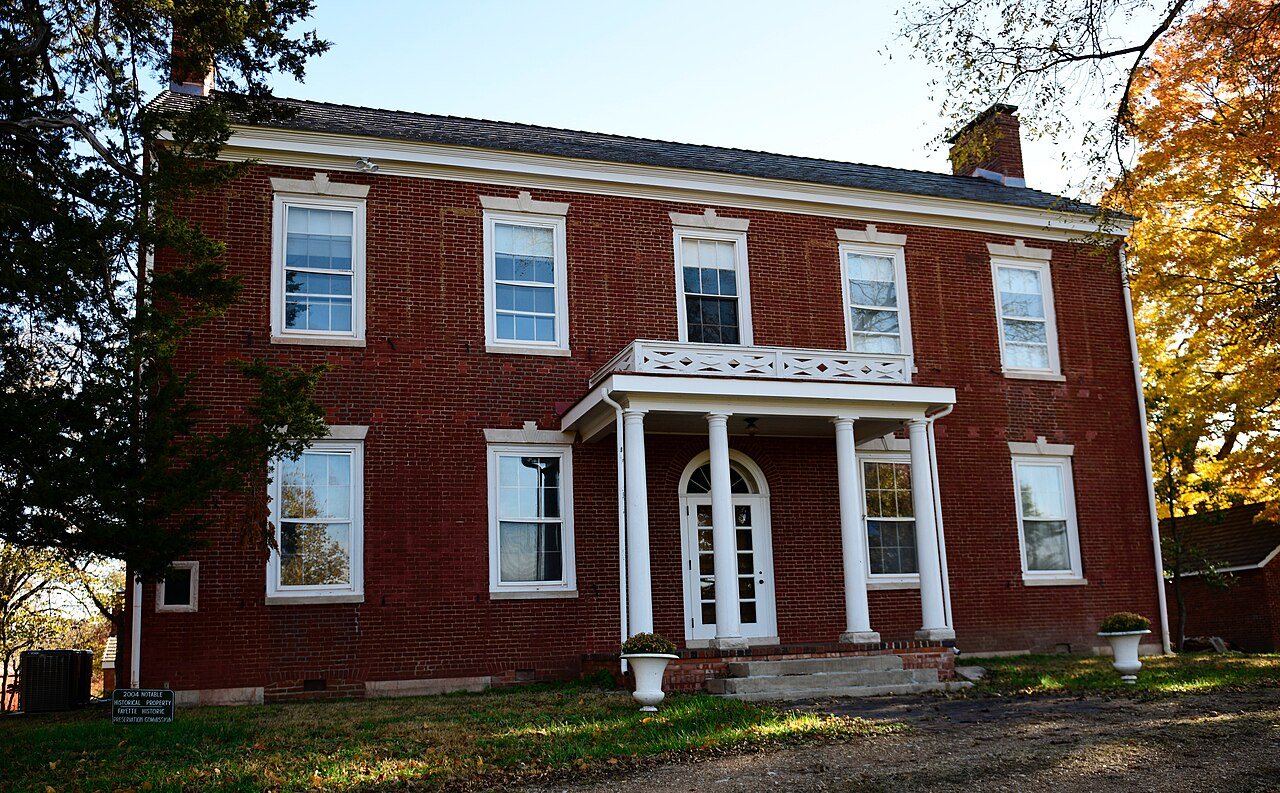
The Edwin and Nora Payne Bedford House, Central Methodist College Campus Historic District, Coleman Hall, Fayette City Park Swimming Pool, Fayette Courthouse Square Historic District, Fayette Residential Historic District, Greenwood, Prior Jackson Homeplace, Alfred W. Morrison House, Oakwood, St. Mary's Episcopal Church, South Main Street Historic District, and Dr. Uriel S. Wright Office are listed on the National Register of Historic Places.
this they worsQipped until 1869 when they went back to the College chapel which they continued to use until Centenary chapel was completed in 1884. At this time the membership was about two hundred and fifty. Fayette did not become a station until 18(i!l. Pi-ior to that date it had been on the Fayette circuit. Many good men made their itinerant rounds in all those years, among them being .John Travis, Joseph Figgott, Jesse Walker, John Scripps,
Text read by machine from the scan; it may contain errors.
cream at Fritzy's" are e.xpressions often heard amontr the i Mr. Heist handles the best all-round line of confections students and always sifrnify a pleasant time. Mr. Buhr- | in town. His store is headquarters tor the best California meister has always been liberal with the students and. it is ' fruits, nuts, po])corn. citrar-s, tobacco and pipes. His slock said, that he never refuses to contribute money toward the of smoker's supplies is perhaps the most complete in Fayette, supixjrt of the football team, or aid in any of theother college Oysters are served in season and this is a popular place for enterprises, when called upon. Mr. Buhrmeister who has been in business in Fayette for ten years is well-known among the citizens and draws business alike from all classes.
Text read by machine from the scan; it may contain errors.
Scans and text from the Internet Archive. Books published in 1930 or earlier, which are in the public domain.
Timeline
Fayette, 1817 to 1953
Woven from the archive, old maps, post office records, the National Register and the people born here.
Lost post offices, places now gone and burying grounds
Fayette’s post office has been open since 1824. Two other post offices opened and closed inside today’s town.
Howard Court House
1817–1821
Richmond
1820–1824
Fayette
1824–today
18101920today
Gone or out of use
Fayette Schoolschool
1cemetery inside Fayette
Fayette City
US Post Offices dataset (Blevins & Helbock, CC0). Places and cemeteries from the USGS Geographic Names Information System (2021).
Questions about Fayette’s history
What year was Fayette founded?
In 1823, according to Wikidata and Wikipedia’s history of the town. Fayette’s post office opened in 1817, and the census of 1860 counted 647 people here.
How does Fayette rank for history?
Fayette is more historic than 97% of U.S. towns, #4 of 247 in Missouri. The History grade combines the town’s founding era, the share of homes built before 1940 and its National Register listings. It’s a character grade, so it isn’t part of the overall grade. How it works.
What is on the National Register in Fayette?
11 listings: 7 buildings, among them the Alfred W. Morrison House (listed 1969, the first), and 4 historic districts with 375 contributing buildings. 389 historic buildings in all.
How old are the homes in Fayette?
31% of Fayette’s homes were built before 1940 (Census estimate, ±8.6 points), against a typical 8.4% for a Missouri town; the median home was built in 1956.
Founding dates: Wikidata, Wikipedia, the U.S. post office records of Blevins & Helbock (CC0) and the Census. Homes by year built: Census ACS 2020–24. National Register of Historic Places: National Park Service (list of May 22, 2026). Old photos, postcards and papers: Wikimedia Commons, the Library of Congress and other public archives, credited on each item’s page. Maps: U.S. Geological Survey historical topographic maps (via Esri) and Sanborn fire-insurance maps (Library of Congress). History text and census tables: Wikipedia (CC BY-SA 4.0). Places that used to be: USGS Geographic Names Information System (2021).
From Wikimedia Commons (10), Wikidata (2), the National Register of Historic Places (11), Wikipedia, Wikidata and Wikipedia for famous people, U.S. Geological Survey historical maps, U.S. Census counts (via Wikipedia), the US Post Offices dataset (Blevins & Helbock), the USGS Geographic Names Information System, Sanborn fire insurance maps (Library of Congress) and old county and town histories (Internet Archive). Archive images are copied here with their credits and licenses, shown on each photo’s page. Refreshed monthly.






 2013
 2013
 2013
 2013
 2013
 2013
 2013
 2013
 2013
 2013


