Clinton dates to 1836, and 11% of its homes were built before 1940
More historic than 83% of U.S. towns · #32 of 247 in Missouri. What drives it
6 places in town are on the National Register, among them a historic district with 62 buildings. Below: 10 old photos and papers, maps from 1885 on, and the census since 1870.
Founding year: Wikidata; Wikipedia’s history section gives the same year. First post office: 1836.The full story ↓
History grade
What drives Clinton’s History grade
On its age, its old homes and the National Register, Clinton is more historic than 83% of U.S. towns, #32 of 247 in Missouri. Its National Register listings hold the grade up; its share of homes from before 1940 pulls it down.
A−
HistoryA character grade: shown, never part of Clinton’s overall grade.
Missouri towns list about as much on the Register as the country (a typical Missouri town has 2.4 per 10,000 residents, the U.S. 2.4), so Clinton’s 75.0 sits above most of its state (91% of Missouri towns have fewer) while its 68 historic buildings outnumber those of 87% of U.S. towns.
How sure. Graded on any two of the three inputs instead, the letter would range from B to A. The pre-1940 share is a Census survey estimate (±3.3 points). Two sources give 1836.
Founding year: Wikidata (other dates in Quick answers). Homes: Census ACS 2020–24. National Register: National Park Service, May 2026 list; each listing counted once (boundary changes and added documentation belong to their listing), and a historic district counts its contributing buildings. How TownRatings grades history →
What stands out about Clinton’s past
Read from the archive, the National Register and the record. The page puts what stands out first.
National Park Service, National Register of Historic Places. Photos from Wikimedia Commons, credited on each place’s page.
Every building
Clinton, building by building, 1885–1918
Fire insurance maps drew every building, what it was made of and what it was used for, so insurers could price the risk of fire. Pick a year, then a sheet.
Clinton was laid out in 1836. The city was named for New York Governor DeWitt Clinton, a key promoter of the Erie Canal. A post office called Clinton has been in operation since 1850. The railroad reached Clinton in 1870, when the Census put the population at 840.
Clinton was incorporated as the least-populous type of city in Missouri, a fourth-class city, in 1878. All but one voter voted in favor of incorporation. Resident Banton G. Boone, a Democrat, was Speaker of the Missouri House of Representatives, 1875–1877, and Missouri Attorney General, 1885–1889.
Piped water, electricity, and macadam roads were brought in during the 1880s, and a telephone system in the 1890s.
Passages that mention Clinton, cut from the printed page as they were published.
History of Clinton and Caldwell Counties, Missouri1923 · page 438Read the page →
Read the text
Railroad land was sold in Clinton County as late as 1879 for ten dollars per acre, and many pioneers who homes were mortgaged, lost their farms and bought new land from the railroad.
Text read by machine from the scan; it may contain errors.
History of Clinton and Caldwell Counties, Missouri1923 · page 137Read the page →
Read the text
Clinton County has breathed a college atmosphere for much of its history, and its people easily bear living testimony to the effect. In Platte County, at Weston, is the Missouri Christian College for Young Women, instituted in 1849, and at Parkville there is Parkville College (1875), owned by the Presbyterian Board, coeducational. In Clay County, William Jewell (1851) Baptist, at Liberty, coeducational since the destruction of Liberty Ladies’ College by fire a few years ago. There have been other colleges at Stewartsville, Weston, Platte City and Camden Point, small of
Text read by machine from the scan; it may contain errors.
Scans and text from the Internet Archive. Books published in 1930 or earlier, which are in the public domain.
Timeline
Clinton, 1836 to 1964
Woven from the archive, old maps, post office records, the National Register and the people born here.
Nothing in the archives for these yearsWeddings on Main Street, storms, parades, school pictures, the old store. If it’s in your family album, it belongs here.
In 1836, according to Wikidata and Wikipedia’s history of the town. Clinton’s post office opened in 1836, and the census of 1870 counted 610 people here.
How does Clinton rank for history?
Clinton is more historic than 83% of U.S. towns, #32 of 247 in Missouri. The History grade combines the town’s founding era, the share of homes built before 1940 and its National Register listings. It’s a character grade, so it isn’t part of the overall grade. How it works.
What is on the National Register in Clinton?
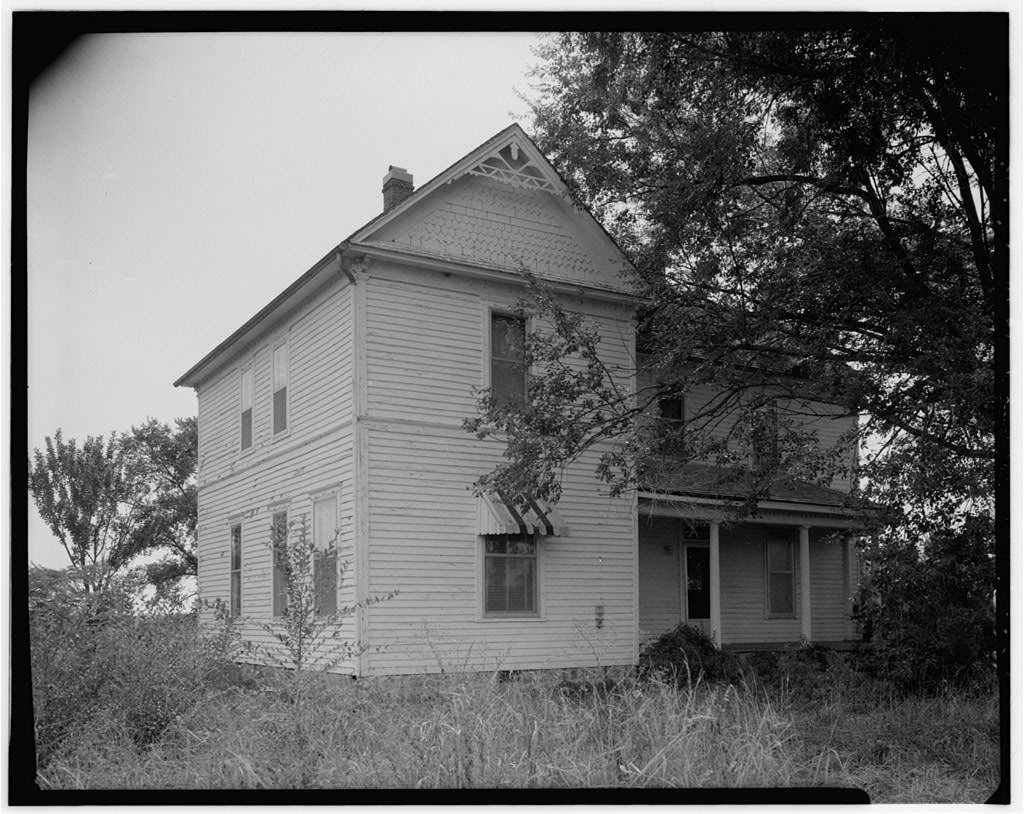
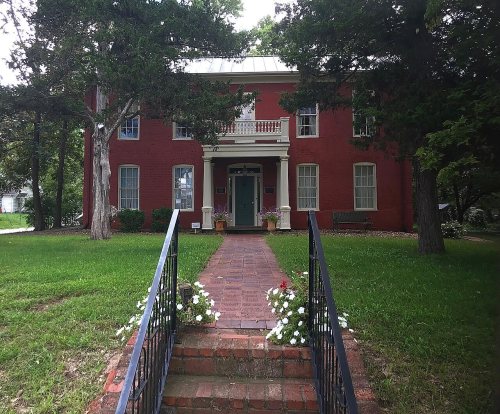
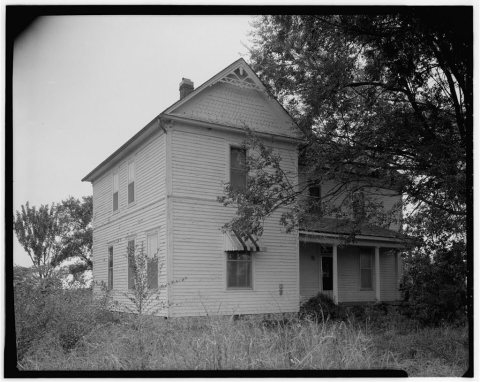
6 listings: 5 buildings, among them the C. C. Williams House (listed 1982, the first), and 1 historic district, the Clinton Square Historic District, with 62 contributing buildings. 68 historic buildings in all.
How old are the homes in Clinton?
11% of Clinton’s homes were built before 1940 (Census estimate, ±3.3 points), against a typical 8.4% for a Missouri town; the median home was built in 1976.
Founding dates: Wikidata, Wikipedia, the U.S. post office records of Blevins & Helbock (CC0) and the Census. Homes by year built: Census ACS 2020–24. National Register of Historic Places: National Park Service (list of May 22, 2026). Old photos, postcards and papers: Wikimedia Commons, the Library of Congress and other public archives, credited on each item’s page. Maps: U.S. Geological Survey historical topographic maps (via Esri) and Sanborn fire-insurance maps (Library of Congress). History text and census tables: Wikipedia (CC BY-SA 4.0). Places that used to be: USGS Geographic Names Information System (2021).
From Wikimedia Commons (6), the Library of Congress (6), the National Register of Historic Places (6), Wikipedia, Wikidata and Wikipedia for famous people, U.S. Geological Survey historical maps, U.S. Census counts (via Wikipedia), the US Post Offices dataset (Blevins & Helbock), the USGS Geographic Names Information System, Sanborn fire insurance maps (Library of Congress) and old county and town histories (Internet Archive). Archive images are copied here with their credits and licenses, shown on each photo’s page. Refreshed monthly.





 Date?
 Date?
 Date?
 Date?
 Date?
 Date?
 Date?
 2019
 2007


