Founding year: Wikidata. First post office: 1848.The full story ↓
History grade
What drives Sparta’s History grade
On its age, its old homes and the National Register, Sparta is more historic than 69% of U.S. towns, #210 of 701 in Michigan. Its share of homes from before 1940 holds the grade up; its National Register listings pull it down.
B+
HistoryA character grade: shown, never part of Sparta’s overall grade.
Few Michigan towns list much on the Register (a typical Michigan town has 0.0 per 10,000 residents, the U.S. 2.4), so Sparta’s 0.0 sits below most of its state (32% of Michigan towns have fewer) while its 0 listings outnumber those of 23% of U.S. towns.
How sure. Graded on any two of the three inputs instead, the letter would range from B− to A. The pre-1940 share is a Census survey estimate (±7.1 points). Two sources give 1846.
Founding year: Wikidata (other dates in Quick answers). Homes: Census ACS 2020–24. National Register: National Park Service, May 2026 list; each listing counted once (boundary changes and added documentation belong to their listing), and a historic district counts its contributing buildings. How TownRatings grades history →
What stands out about Sparta’s past
Read from the archive, the National Register and the record. The page puts what stands out first.
Fire insurance maps drew every building, what it was made of and what it was used for, so insurers could price the risk of fire. Pick a year, then a sheet.
The Sparta area was first settled in 1844, with the township formally organized in 1846. The first settler in what is now the village was Jonathan Nash in 1846. Calling the place Nashville, he built a sawmill on Lick Creek. Subsequently, he changed the name of the creek to Nash Creek. Seeing as there was already a Nashville in Michigan, the state legislature suggested Sparta. The village was platted in 1867 and incorporated in 1883.
Passages that mention Sparta, cut from the printed page as they were published.
History and directory of Kent County, Michigan1870 · page 93Read the page →
Read the text
The village of Sparta, not yet incorporated, is a flourishing little town of about 200 inhabitants, located on Nash Creek, one mile east of the geographical center of the township, and 15 miles from Grand Rapids. This place was first settled by J. E. Nash, in 1846, and for some time known as Nashville. It now contains a Post-office, known as Sparta Center, two churches — Baptist and Methodist Episcopal— both of which were erected in 1866, at a cost of about $3,000 each, a good steam saw mill, five stores, two blacksmith shops, and one wagon shop ; also a very good hotel, known as the Sparta House, and kept by John M. Balcom. But
Text read by machine from the scan; it may contain errors.
History and directory of Kent County, Michigan1870 · page 91Read the page →
Read the text
This family took a large tract of land in the east part of Sparta, where they have engaged quite extensively in lumbering, especially Hiram, John and Myron Balcom near the centre of the township, and William Blackall and family southwest of the center. Myron Balcom is now in Missouri, and John, commonly known as Deacon Balcom, is now living in the village of Sparta. William Blackall has long been laid beneath the sod ; but his sons, Benjamin and Charles, still remain.
Text read by machine from the scan; it may contain errors.
Scans and text from the Internet Archive. Books published in 1930 or earlier, which are in the public domain.
Timeline
Sparta, 1846 to 1920
Woven from the archive, old maps, post office records, the National Register and the people born here.
In 1846, according to Wikidata. Sparta’s post office opened in 1848, and the census of 1880 counted 507 people here.
How does Sparta rank for history?
Sparta is more historic than 69% of U.S. towns, #210 of 701 in Michigan. The History grade combines the town’s founding era, the share of homes built before 1940 and its National Register listings. It’s a character grade, so it isn’t part of the overall grade. How it works.
How old are the homes in Sparta?
26% of Sparta’s homes were built before 1940 (Census estimate, ±7.1 points), against a typical 12% for a Michigan town; the median home was built in 1965.
Founding dates: Wikidata, Wikipedia, the U.S. post office records of Blevins & Helbock (CC0) and the Census. Homes by year built: Census ACS 2020–24. National Register of Historic Places: National Park Service (list of May 22, 2026). Old photos, postcards and papers: Wikimedia Commons, the Library of Congress and other public archives, credited on each item’s page. Maps: U.S. Geological Survey historical topographic maps (via Esri) and Sanborn fire-insurance maps (Library of Congress). History text and census tables: Wikipedia (CC BY-SA 4.0). Places that used to be: USGS Geographic Names Information System (2021).
From Wikimedia Commons (6), Wikipedia, Wikidata and Wikipedia for famous people, U.S. Geological Survey historical maps, U.S. Census counts (via Wikipedia), Sanborn fire insurance maps (Library of Congress) and old county and town histories (Internet Archive). Archive images are copied here with their credits and licenses, shown on each photo’s page. Refreshed monthly.


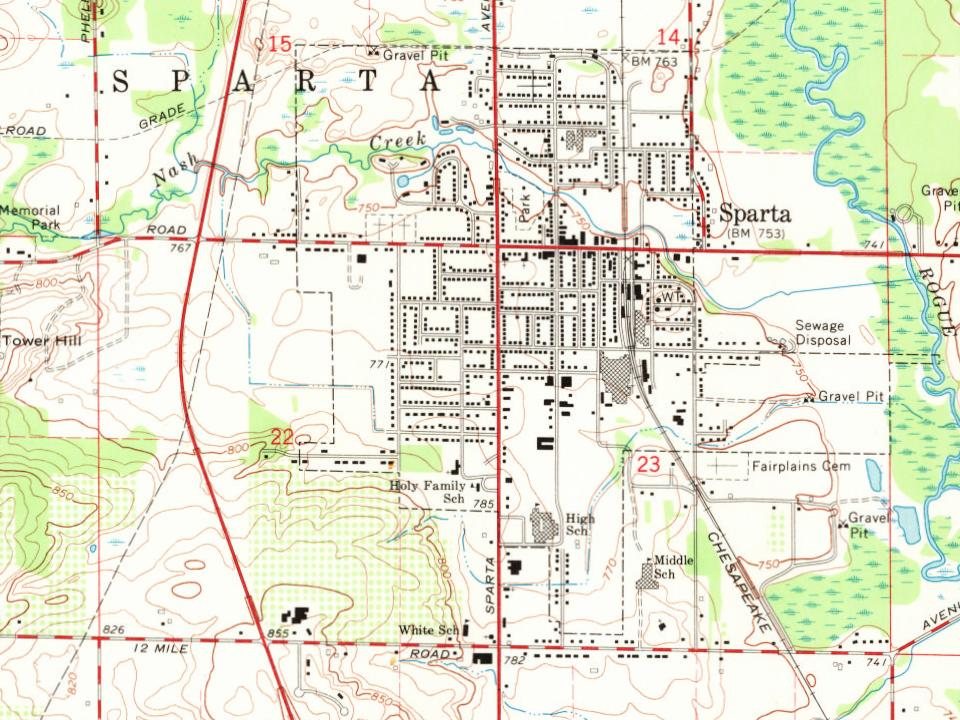
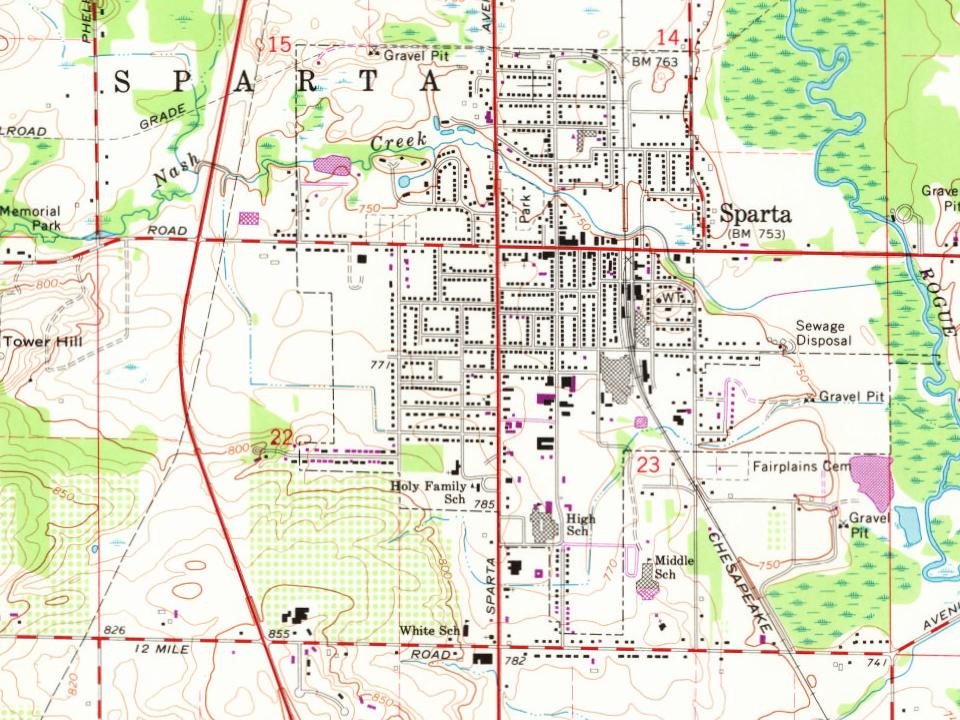


 2013
 2010
 2009
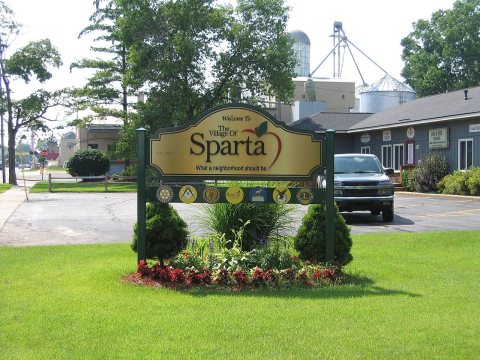 2008
 2006
 2005