Founding year: the first Oxford post office (Blevins & Helbock, CC0).The full story ↓
History grade
What drives Oxford’s History grade
On its age, its old homes and the National Register, Oxford is more historic than 92% of U.S. towns, #53 of 701 in Michigan. All 3 inputs are above most U.S. towns; its National Register listings ranks highest and its share of homes from before 1940 lowest.
A
HistoryA character grade: shown, never part of Oxford’s overall grade.
Few Michigan towns list much on the Register (a typical Michigan town has 0.0 per 10,000 residents, the U.S. 2.4), so Oxford’s 97.9 sits above most of its state (94% of Michigan towns have fewer) while its 34 historic buildings outnumber those of 82% of U.S. towns.
How sure. Graded on any two of the three inputs instead, the letter would range from A− to A. The pre-1940 share is a Census survey estimate (±6.7 points). The founding year is the first post office, not a stated founding date.
Founding year: the first post office (other dates in Quick answers). Homes: Census ACS 2020–24. National Register: National Park Service, May 2026 list; each listing counted once (boundary changes and added documentation belong to their listing), and a historic district counts its contributing buildings. How TownRatings grades history →
What stands out about Oxford’s past
Read from the archive, the National Register and the record. The page puts what stands out first.
Fire insurance maps drew every building, what it was made of and what it was used for, so insurers could price the risk of fire. Pick a year, then a sheet.
During the early 19th century the northeast Oakland County area was largely avoided by the early settlers because it was believed to be nothing but impenetrable swamp land. The area was, at that time, nicknamed "The Barren Plains of Oxford." It was called this primarily because of a report made in 1812 by the U.S. Surveyor General that described the area as a poor, barren, sandy land, on which scarcely any vegetation could grow with the exception of some very small scrubby oaks. It was concluded in the surveyors' report there was one acre out of one hundred that appeared to be eligible for cultivation. Any hope for crop production was thought to be preposterous. At this point, the area was deemed worthless, and discouragement of any hope for development by forthcoming settlers was inevitable.
Passages that mention Oxford, cut from the printed page as they were published.
A dictionary of modern slang, cant, and vulgar words, used at the present day in the streets of London1860 · page 65Read the page →
Read the text
to scrutinise, or a prying old fellow ; and ROW, a noisy disturbance. The Slang words in use at Oxford and Cambridge would alone fill a volume. As examples I may instance SCOUT, which at Oxford refers to an undergraduate's valet, whilst the same menial at Cambridge is termed a GYP, — popularly derived by the Cantabs from the Greek, GYPS (yvip), a vulture; SCULL, the head, or master of a
Text read by machine from the scan; it may contain errors.
A dictionary of modern slang, cant, and vulgar words, used at the present day in the streets of London1860 · page 244Read the page →
Read the text
WATERMAN, a light blue silk handkerchief. The Oxford and Cambridge boats' crews always wear these— light blue for Cambridge, and a darker shade for Oxford.
Text read by machine from the scan; it may contain errors.
Scans and text from the Internet Archive. Books published in 1930 or earlier, which are in the public domain.
By decade
Oxford, decade by decade
One decade in the archive so far: the 1920s. Scroll each row; tap a photo for its story.
Nothing in the archives for these yearsWeddings on Main Street, storms, parades, school pictures, the old store. If it’s in your family album, it belongs here.
The Oxford post office opened in 1839, the earliest record of the town by name (U.S. post office records).
How does Oxford rank for history?
Oxford is more historic than 92% of U.S. towns, #53 of 701 in Michigan. The History grade combines the town’s founding era, the share of homes built before 1940 and its National Register listings. It’s a character grade, so it isn’t part of the overall grade. How it works.
How old are the homes in Oxford?
23% of Oxford’s homes were built before 1940 (Census estimate, ±6.7 points), against a typical 12% for a Michigan town; the median home was built in 1978.
Founding dates: Wikidata, Wikipedia, the U.S. post office records of Blevins & Helbock (CC0) and the Census. Homes by year built: Census ACS 2020–24. National Register of Historic Places: National Park Service (list of May 22, 2026). Old photos, postcards and papers: Wikimedia Commons, the Library of Congress and other public archives, credited on each item’s page. Maps: U.S. Geological Survey historical topographic maps (via Esri) and Sanborn fire-insurance maps (Library of Congress). History text and census tables: Wikipedia (CC BY-SA 4.0). Places that used to be: USGS Geographic Names Information System (2021).
From Wikimedia Commons (12), Wikipedia, Wikidata and Wikipedia for famous people, U.S. Geological Survey historical maps, U.S. Census counts (via Wikipedia), Sanborn fire insurance maps (Library of Congress) and old county and town histories (Internet Archive). Archive images are copied here with their credits and licenses, shown on each photo’s page. Refreshed monthly.


 2010
 2007
 2007
 2007
 2007
 2007
 2007
 2007
 2007
 2007
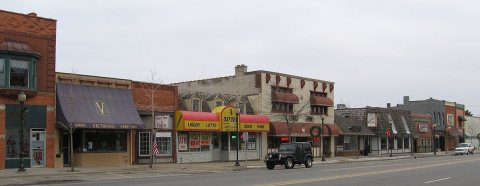 2007


