Linden dates to 1835, and 14% of its homes were built before 1940
More historic than 86% of U.S. towns · #95 of 701 in Michigan. What drives it
2 places in town are on the National Register, among them a historic district with 35 buildings. Below: 3 old photos and papers, maps from 1893 on, and the census since 1860.
Founding year: Wikipedia. First post office: 1851.The full story ↓
History grade
What drives Linden’s History grade
On its age, its old homes and the National Register, Linden is more historic than 86% of U.S. towns, #95 of 701 in Michigan. All 3 inputs are above most U.S. towns; its National Register listings ranks highest and its share of homes from before 1940 lowest.
A
HistoryA character grade: shown, never part of Linden’s overall grade.
Few Michigan towns list much on the Register (a typical Michigan town has 0.0 per 10,000 residents, the U.S. 2.4), so Linden’s 86.5 sits above most of its state (93% of Michigan towns have fewer) while its 36 historic buildings outnumber those of 83% of U.S. towns.
How sure. Graded on any two of the three inputs instead, the letter would range from B+ to A. The pre-1940 share is a Census survey estimate (±6.1 points). Two sources give 1835.
Founding year: Wikipedia (other dates in Quick answers). Homes: Census ACS 2020–24. National Register: National Park Service, May 2026 list; each listing counted once (boundary changes and added documentation belong to their listing), and a historic district counts its contributing buildings. How TownRatings grades history →
What stands out about Linden’s past
Read from the archive, the National Register and the record. The page puts what stands out first.
National Park Service, National Register of Historic Places. Photos from Wikimedia Commons, credited on each place’s page.
Every building
Linden, building by building, 1893–1908
Fire insurance maps drew every building, what it was made of and what it was used for, so insurers could price the risk of fire. Pick a year, then a sheet.
1893Sheet 1 of 1
Edition
Sheets
BrickWoodStone
Sanborn Map Company, via the Library of Congress. Editions published in 1930 or earlier, which are in the public domain.
Linden was settled in late 1835 by two brothers, Richard and Perry Lamb. Perry Lamb provided housing for travelers. The village of Linden subdivision was platted by Consider Warner and Eben Harris in 1840. Warner and Harris also built the Springer's Hotel hostelry that same year.
On September 23, 1851, the Linden post office was opened. North Linden village was platted in the northwest corner of section 20 along the railroad on January 31, 1857. Linden was incorporated as a village in 1871 by an act of the Legislature.
In 1974, the community began to hold its Summer Happening festival. In 1988, Linden changed its incorporated status from village to city.
Passages that mention Linden, cut from the printed page as they were published.
History of Genesee county Michigan1916 · page 679Read the page →
Read the text
only twenty acres, which join the village of Linden. He has a patent from the government for the old home place in Oakland county. He engaged in the general hardware business in Linden for a period of twenty years, then was burned, out. From 1884 to 1900 he engaged in the manufacture of wagons under the firm name of the Linden Wagon Company, enjoying a large business, owing to the excellent quality and workmanship of his wagons, which found a very ready market all over this part of the country.
Text read by machine from the scan; it may contain errors.
History of Genesee county Michigan1916 · page 551Read the page →
Read the text
Fred Judson received his education in the Linden public and high schools and the Michigan Agricultural College. \VhiIe a student there he belonged to the Phi Delta Theta fraternity. Returning to Linden, he taught school in this vicinity for some time, then went into the produce business with two brothers, operating large establishments at Linden, Gaines and Durand. He and his brother George devote their attention to the Gaines and Linden branches, which were started in 1902. He has been very successful in this line of endeavor. He is also actively interested in agricul-
Text read by machine from the scan; it may contain errors.
Scans and text from the Internet Archive. Books published in 1930 or earlier, which are in the public domain.
Timeline
Linden, 1835 to 1982
Woven from the archive, old maps, post office records, the National Register and the people born here.
Nothing in the archives for these yearsWeddings on Main Street, storms, parades, school pictures, the old store. If it’s in your family album, it belongs here.
Nothing in the archives for these yearsWeddings on Main Street, storms, parades, school pictures, the old store. If it’s in your family album, it belongs here.
Grew from 271 people in 1860 to 4,142 in 2020, more than tenfold.
17 censuses, 1860–2020.
U.S. Census Bureau decennial counts, from the census table on Linden’s Wikipedia page.
Questions about Linden’s history
What year was Linden founded?
In 1835, according to Wikipedia’s history of the town. Linden’s post office opened in 1851, and the census of 1860 counted 271 people here.
How does Linden rank for history?
Linden is more historic than 86% of U.S. towns, #95 of 701 in Michigan. The History grade combines the town’s founding era, the share of homes built before 1940 and its National Register listings. It’s a character grade, so it isn’t part of the overall grade. How it works.
What is on the National Register in Linden?
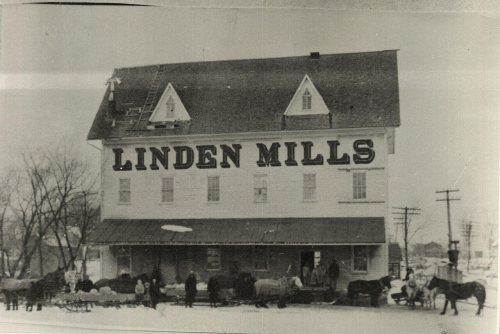
Two places: the Linden Mill (listed 1972) and the Bridge Street-Broad Street Historic District (1982).
How old are the homes in Linden?
14% of Linden’s homes were built before 1940 (Census estimate, ±6.1 points), against a typical 12% for a Michigan town; the median home was built in 1990.
Founding dates: Wikidata, Wikipedia, the U.S. post office records of Blevins & Helbock (CC0) and the Census. Homes by year built: Census ACS 2020–24. National Register of Historic Places: National Park Service (list of May 22, 2026). Old photos, postcards and papers: Wikimedia Commons, the Library of Congress and other public archives, credited on each item’s page. Maps: U.S. Geological Survey historical topographic maps (via Esri) and Sanborn fire-insurance maps (Library of Congress). History text and census tables: Wikipedia (CC BY-SA 4.0). Places that used to be: USGS Geographic Names Information System (2021).
From Wikimedia Commons (3), Wikidata (3), the National Register of Historic Places (2), Wikipedia, Wikidata and Wikipedia for famous people, U.S. Geological Survey historical maps, U.S. Census counts (via Wikipedia), the US Post Offices dataset (Blevins & Helbock), the USGS Geographic Names Information System, Sanborn fire insurance maps (Library of Congress) and old county and town histories (Internet Archive). Archive images are copied here with their credits and licenses, shown on each photo’s page. Refreshed monthly.




 1899


