On its age, its old homes and the National Register, Buckeystown is more historic than 95% of U.S. towns. All 2 inputs are above most U.S. towns; its National Register listings ranks highest and its share of homes from before 1940 lowest.
A+
HistoryA character grade: shown, never part of Buckeystown’s overall grade.
Few Maryland towns list much on the Register (a typical Maryland town has 0.9 per 10,000 residents, the U.S. 2.4), so Buckeystown’s 713 sits above most of its state (93% of Maryland towns have fewer) while its 85 historic buildings outnumber those of 88% of U.S. towns.
How sure. Graded on two of the three inputs, so a change in either one moves the letter more than it would with three. The pre-1940 share is a Census survey estimate (±13.5 points).
Founding year: our sources. Homes: Census ACS 2020–24. National Register: National Park Service, May 2026 list; each listing counted once (boundary changes and added documentation belong to their listing), and a historic district counts its contributing buildings. How TownRatings grades history →
What stands out about Buckeystown’s past
Read from the archive, the National Register and the record. The page puts what stands out first.
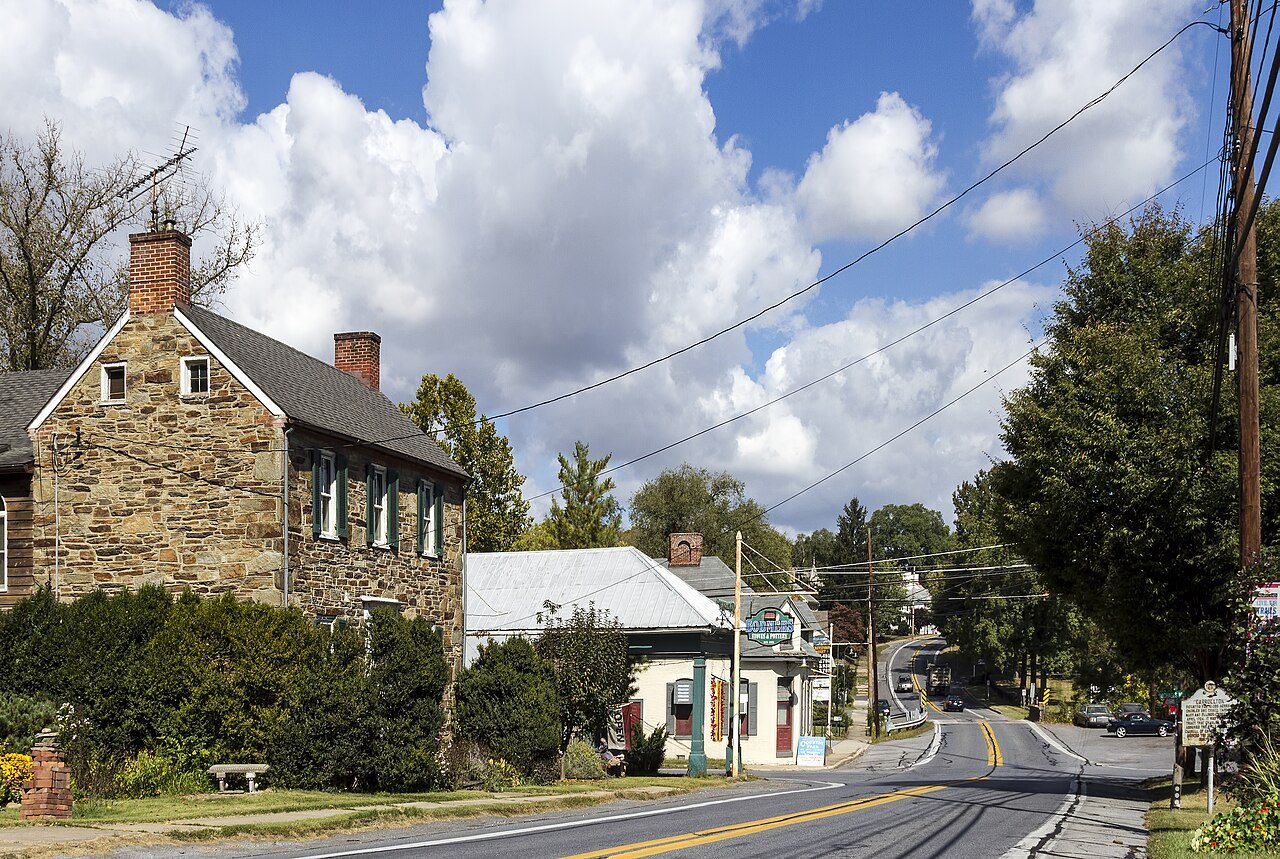
In 1731, Meridith Davis received a patent for a tract of land called “Good Luck” on which the future village of Buckeystown developed. The fertile, mostly flat land and Monocacy River were enticing to European immigrants and settlers moving west into the newly opened Monocacy Hundred territory. The river is a major tributary of the Potomac River that plays a significant role in the local Piedmont plateau ecosystem. Among these earliest settlers in the region were Henry Ballenger and Josiah Ballenger Sr., Quakers who moved into the Province of Maryland from the Colony of New Jersey. Members of the Ballenger family as well as the Davis Family who were also Quakers organized a Society of Friends at “Monoquesey” [Monocacy] and Meridith Davis donated land from his “Good Luck” tract on which to build a meetinghouse in 1739. Though the meeting at Monocacy was short-lived, with many of its earl…
Buckeystown is more historic than 95% of U.S. towns. The History grade combines the town’s founding era, the share of homes built before 1940 and its National Register listings. It’s a character grade, so it isn’t part of the overall grade. How it works.
What is on the National Register in Buckeystown?
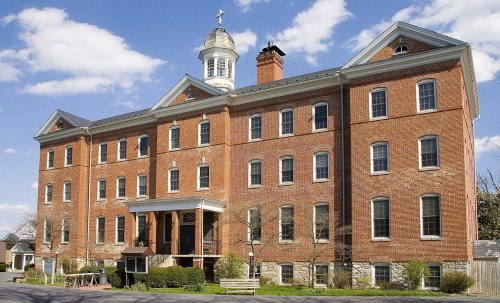
Two places: the Buckeystown Historic District (listed 1982) and the Buckingham House and Industrial School Complex (1982).
How old are the homes in Buckeystown?
24% of Buckeystown’s homes were built before 1940 (Census estimate, ±13.5 points), against a typical 3.3% for a Maryland town; the median home was built in 1994.
Founding dates: Wikidata, Wikipedia, the U.S. post office records of Blevins & Helbock (CC0) and the Census. Homes by year built: Census ACS 2020–24. National Register of Historic Places: National Park Service (list of May 22, 2026). Old photos, postcards and papers: Wikimedia Commons, the Library of Congress and other public archives, credited on each item’s page. Maps: U.S. Geological Survey historical topographic maps (via Esri) and Sanborn fire-insurance maps (Library of Congress). History text and census tables: Wikipedia (CC BY-SA 4.0). Places that used to be: USGS Geographic Names Information System (2021).
From Wikimedia Commons (6), the National Register of Historic Places (2), Wikipedia and the USGS Geographic Names Information System. Archive images are copied here with their credits and licenses, shown on each photo’s page. Refreshed monthly.

 2010
 2010
 2010
 2010
 2010
 2010