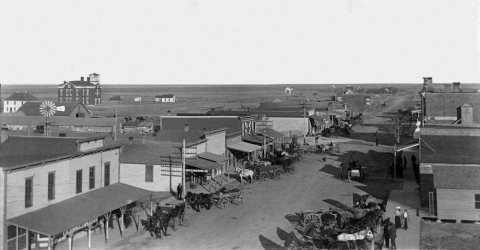
The Homestead Act of 1862 offered 160 acres (0.65 km2) of land in the American West, previously owned by railroads, to homesteaders who could live on the land for five years. Drawn west by the promise of free, fertile land, pioneer settlers arrived in Kansas starting in 1869. In 1879, W.A. Watson arrived at the town site, and a post office was established. In 1885, there were three houses and seven voters in town. Lane County became a county in 1886, with Dighton as its county seat. By 1900, the population was 194, and by 1910 it had grown to 370, and the town had banks; a flour mill; a grain elevator; two newspapers; public schools; a hotel; merchants; Baptist, Catholic, and Methodist churches; telegraph service; a band and telephones.
Nothing in the archives for these yearsWeddings on Main Street, storms, parades, school pictures, the old store. If it’s in your family album, it belongs here.
Founding dates: Wikidata, Wikipedia, the U.S. post office records of Blevins & Helbock (CC0) and the Census. Homes by year built: Census ACS 2020–24. National Register of Historic Places: National Park Service (list of May 22, 2026). Old photos, postcards and papers: Wikimedia Commons, the Library of Congress and other public archives, credited on each item’s page. Maps: U.S. Geological Survey historical topographic maps (via Esri) and Sanborn fire-insurance maps (Library of Congress). History text and census tables: Wikipedia (CC BY-SA 4.0). Places that used to be: USGS Geographic Names Information System (2021). How TownRatings grades history →
From Wikimedia Commons (4), Wikidata (1), the National Register of Historic Places (1), Wikipedia, Wikidata and Wikipedia for famous people, U.S. Geological Survey historical maps, U.S. Census counts (via Wikipedia), the US Post Offices dataset (Blevins & Helbock) and the USGS Geographic Names Information System. Archive images are copied here with their credits and licenses, shown on each photo’s page. Refreshed monthly.



 2026
 2026
 2025

