Washington dates to 1815, and 30% of its homes were built before 1940
More historic than 94% of U.S. towns · #98 of 593 in Indiana. What drives it
8 places in town are on the National Register, among them a historic district with 88 buildings. Below: 15 old photos and papers, maps from 1887 on, and the census since 1850.
Founding year: Wikidata; Wikipedia’s history section gives the same year. First post office: 1817. Name: Wikipedia, licensed CC BY-SA 4.0.The full story ↓
History grade
What drives Washington’s History grade
On its age, its old homes and the National Register, Washington is more historic than 94% of U.S. towns, #98 of 593 in Indiana. All 3 inputs are above most U.S. towns; its share of homes from before 1940 ranks highest and its age lowest.
A
HistoryA character grade: shown, never part of Washington’s overall grade.
Indiana towns list more on the Register than most of the country (a typical Indiana town has 7.9 per 10,000 residents, the U.S. 2.4), so Washington’s 79.2 sits above most of its state (79% of Indiana towns have fewer) while its 98 historic buildings outnumber those of 89% of U.S. towns.
How sure. Graded on any two of the three inputs instead, the letter would still be A. The pre-1940 share is a Census survey estimate (±5.3 points). Two sources give 1815.
Founding year: Wikidata (other dates in Quick answers). Homes: Census ACS 2020–24. National Register: National Park Service, May 2026 list; each listing counted once (boundary changes and added documentation belong to their listing), and a historic district counts its contributing buildings. How TownRatings grades history →
What stands out about Washington’s past
Read from the archive, the National Register and the record. The page puts what stands out first.
National Park Service, National Register of Historic Places. Photos from Wikimedia Commons, credited on each place’s page.
Every building
Washington, building by building, 1887–1921
Fire insurance maps drew every building, what it was made of and what it was used for, so insurers could price the risk of fire. Pick a year, then a sheet.
Nothing in the archives for these yearsWeddings on Main Street, storms, parades, school pictures, the old store. If it’s in your family album, it belongs here.
Washington was platted in 1815. It was named from Washington Township.
The railroad was built through Washington in 1857. By 1889, it was a major depot and repair yard for the Ohio and Mississippi Railroad. The Baltimore and Ohio Railroad took over the line in 1893. During this time, the railroad employed over 1,000 workers.
On November 17, 2013, an EF2 tornado tore through the western edge of the city destroying 20 homes and severely damaging 20 others.
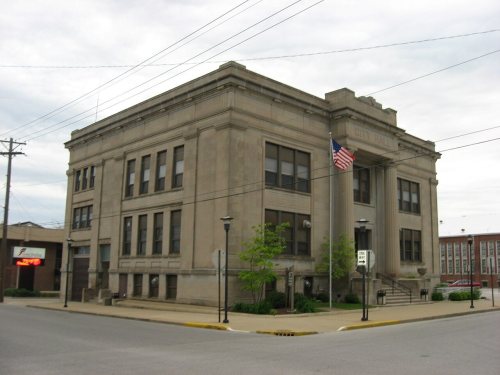
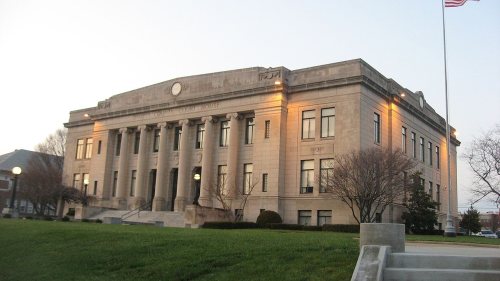
The Magnus J. Carnahan House, Daviess County Courthouse, Thomas Faith House, Robert C. Graham House, Dr. John A. Scudder House, Washington Commercial Historic District, and Dr. Nelson Wilson House are listed on the National Register of Historic Places.
Passages that mention Washington, cut from the printed page as they were published.
History of Dodge and Washington Counties, Nebraska, and their people1921 · page 313Read the page →
Read the text
Washington County was placed in a judicial district made up of Washington and Burt counties, with Judge James Bradley as presiding judge. This was in 1854, but in 1856 Washington County together with Douglas, Dodge, Washington, Dakota and Burt counties into one judicial district, presided over at first by Judge Fenner Ferguson.
Text read by machine from the scan; it may contain errors.
History of the Yakima Valley, Washington1919 · page 566Read the page →
Read the text
Knox College at Galesburg, from which he was graduated, and then became a student in the University of Chicago. Later he entered Columbia University and won his Ph. D. degree on graduating with the class of 1906. At that time he took up educational work and in 1913 he came to Washington as head of the department of botany in the State College. In 1914 he was made head of the Washington Agricultural Experiment Station and organized the county agricultural agent work of this state and also the Boys and Girls Club work of Washington. He also established a station for experiments in dry land problems at Lind, \\'ashington, and one for
Text read by machine from the scan; it may contain errors.
John Larmox, one of the best known men in Washington County, was born at Center Cambridge, May 5, 1829. Fie received his education at Cambridge Washington Academy and made the farm his home. While a young man he was elected Captain of a cavalry company in the Washington County Regiment, State Militia, serving as Captain in 1847-8-9.
Text read by machine from the scan; it may contain errors.
History of Dodge and Washington Counties, Nebraska, and their people1921 · page 455Read the page →
Read the text
who was state's representative in 1876 from Washington County. Bell's Washington County History, published in 1876, gives the best account extant of the first settlement in this township.
Text read by machine from the scan; it may contain errors.
Scans and text from the Internet Archive. Books published in 1930 or earlier, which are in the public domain.
Timeline
Washington, 1815 to 1944
Woven from the archive, old maps, post office records, the National Register and the people born here.
In 1815, according to Wikidata and Wikipedia’s history of the town. Washington’s post office opened in 1817, and the census of 1850 counted 675 people here.
How does Washington rank for history?
Washington is more historic than 94% of U.S. towns, #98 of 593 in Indiana. The History grade combines the town’s founding era, the share of homes built before 1940 and its National Register listings. It’s a character grade, so it isn’t part of the overall grade. How it works.
What is on the National Register in Washington?
8 listings: 7 buildings, among them the Robert C. Graham House (listed 1983, the first), and 1 historic district, the Washington Commercial Historic District, with 88 contributing buildings. 98 historic buildings in all.
How old are the homes in Washington?
30% of Washington’s homes were built before 1940 (Census estimate, ±5.3 points), against a typical 14% for an Indiana town; the median home was built in 1960.
Founding dates: Wikidata, Wikipedia, the U.S. post office records of Blevins & Helbock (CC0) and the Census. Homes by year built: Census ACS 2020–24. National Register of Historic Places: National Park Service (list of May 22, 2026). Old photos, postcards and papers: Wikimedia Commons, the Library of Congress and other public archives, credited on each item’s page. Maps: U.S. Geological Survey historical topographic maps (via Esri) and Sanborn fire-insurance maps (Library of Congress). History text and census tables: Wikipedia (CC BY-SA 4.0). Places that used to be: USGS Geographic Names Information System (2021).
From Wikimedia Commons (7), the Library of Congress (10), Wikidata (1), the National Register of Historic Places (8), Wikipedia, Wikidata and Wikipedia for famous people, U.S. Geological Survey historical maps, U.S. Census counts (via Wikipedia), the US Post Offices dataset (Blevins & Helbock), the USGS Geographic Names Information System, Sanborn fire insurance maps (Library of Congress) and old county and town histories (Internet Archive). Archive images are copied here with their credits and licenses, shown on each photo’s page. Refreshed monthly.





 1921
 1941
 1941
 1941
 1941
 1941
 1941
 1941
 1941
 1941
 1941
 1941
 1941
 1941
 Date?
 2024
 2024


