Newburgh was first counted by the census in 1850, and 14% of its homes were built before 1940
More historic than 64% of U.S. towns · #316 of 593 in Indiana. What drives it
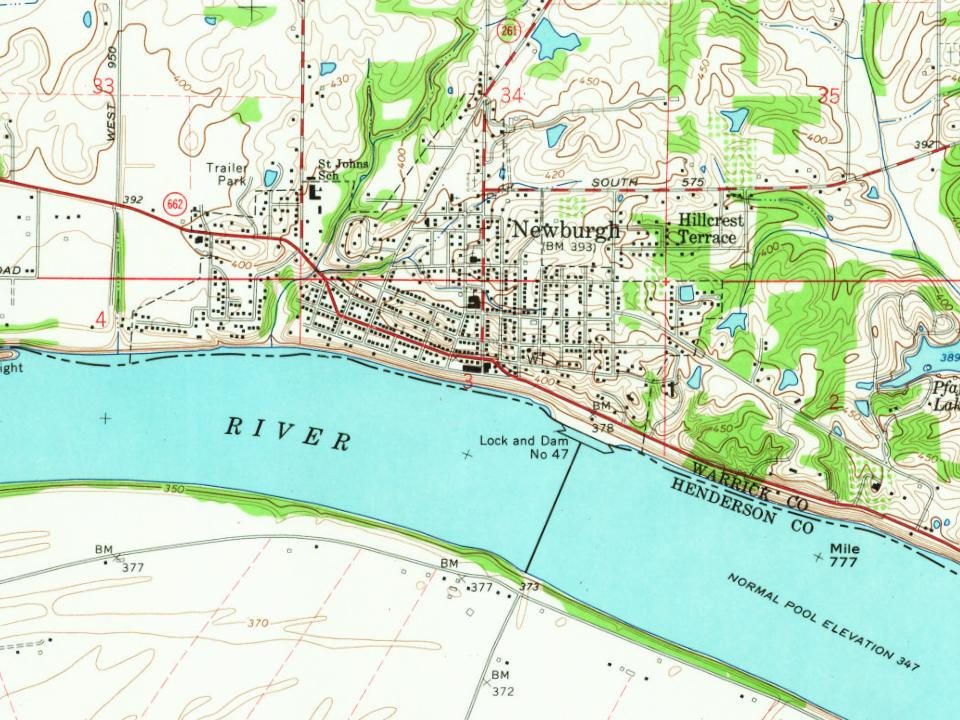
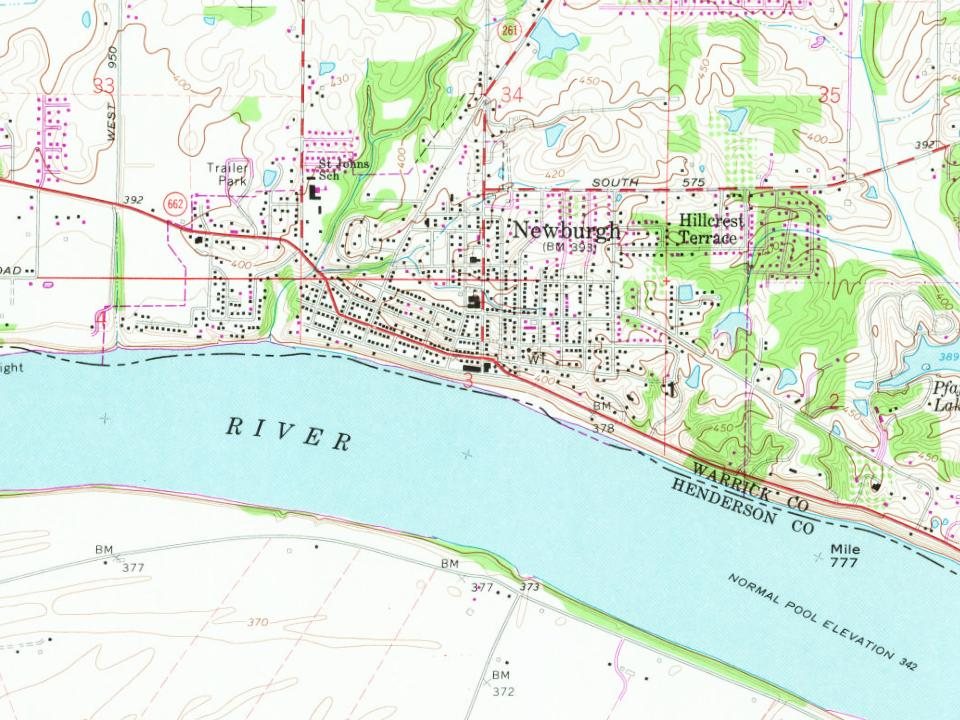
2 places in town are on the National Register, among them a historic district with 27 buildings. Below: 2 old photos and papers, maps from 1886 on, and the census since 1850.
On its age, its old homes and the National Register, Newburgh is more historic than 64% of U.S. towns, #316 of 593 in Indiana. Its National Register listings hold the grade up; its age pulls it down.
B
HistoryA character grade: shown, never part of Newburgh’s overall grade.
Indiana towns list more on the Register than most of the country (a typical Indiana town has 7.9 per 10,000 residents, the U.S. 2.4), so Newburgh’s 82.5 sits above most of its state (80% of Indiana towns have fewer) while its 28 historic buildings outnumber those of 81% of U.S. towns.
How sure. Graded on any two of the three inputs instead, the letter would range from C+ to A−. The pre-1940 share is a Census survey estimate (±6.7 points).
Founding year: the first census (other dates in Quick answers). Homes: Census ACS 2020–24. National Register: National Park Service, May 2026 list; each listing counted once (boundary changes and added documentation belong to their listing), and a historic district counts its contributing buildings. How TownRatings grades history →
What stands out about Newburgh’s past
Read from the archive, the National Register and the record. The page puts what stands out first.
National Park Service, National Register of Historic Places. Photos from Wikimedia Commons, credited on each place’s page.
Every building
Newburgh, building by building, 1886–1910
Fire insurance maps drew every building, what it was made of and what it was used for, so insurers could price the risk of fire. Pick a year, then a sheet.
1886Sheet 1 of 1
Edition
Sheets
BrickWoodStone
Sanborn Map Company, via the Library of Congress. Editions published in 1930 or earlier, which are in the public domain.
As a town situated on the fertile banks of the Ohio River, Newburgh has a long history of human activity. Western explorers first arrived in the area in the 17th century. For centuries prior to that, it had been inhabited by the Shawnee people and was near the center of prehistoric Mississippian culture as late as 1450 A.D. Evidence of this prehistoric society remains today at Angel Mounds, a National Historic Landmark, and Ellerbusch site, both approximately two miles west of Newburgh.
Passages that mention Newburgh, cut from the printed page as they were published.
History of the town of Newburgh1859 · page 90Read the page →
Read the text
— We have now traced the history of the town and village of Newburgh from the first settlement down to the close of the century; and have enumerated the leading events occuring in their progress. AVe have noted the settlement by the Palatines of the Parish of Quassaick — the transfer of the Patent to other settlers under the title of the Parish of Newburgh — the settlement of adjoining Patents and their incorporation in the Precinct of Highland — the erection of the Precinct and subsequently of
Text read by machine from the scan; it may contain errors.
History of the town of Newburgh1859 · page 142Read the page →
Read the text
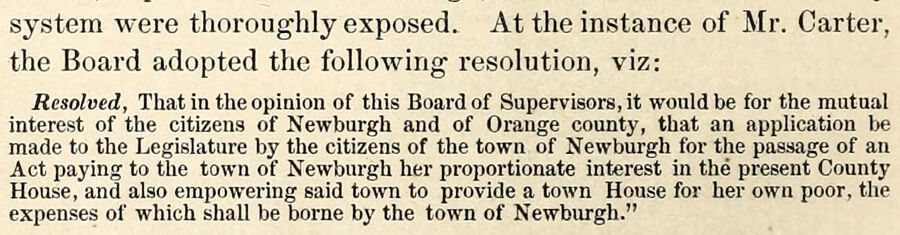
system were thoroughly exposed. At the instance of Mr. Carter, the Board adopted the following resolution, viz: Resolved, That in the opinion of this Board of Supervisors, it would be for the mutual interest of the citizens of Newburgh and of Orange county, that an application be made to the Legislature by the citizens of the town of Newburgh for the passage of an Act paying to the town of Newburgh her proportionate interest in the present County House, and also empowering said town to provide a town House for her own poor, the expenses of which shall be borne by the town of Newburgh.”
Text read by machine from the scan; it may contain errors.
the abuses of the county system were thoroughly exposed. At the instance of Mr. Carter, the board adopted the following resolution, viz: lUsolved That in the opinion of this Board of Supervisors, it would be for the mutual interest of the citizens of Newburgh and of Orange Countv, that an application be made to the Legislature by the citizens of the town of Newburgh for the passage of an Act Paving to the town of Newburgh her proportionate interest in the present county house •**«» also empowering said town to provide a town house for her own poor the expenses of which shall be borne by the town of Newburgh. ’ 1
Text read by machine from the scan; it may contain errors.
a joint meeting of the Trustees of what was then known as District Xo. 13 (Jloses H. Belknap, Nelson Haight and Robert Sterling) and ^JEWBURGH ACADEMY of the Town of Newburgh included within the bounds of the corporation of the Village of Newburgh shall hereafter constitute one common school district; " that as soon as possible after the passage of the act nine trustees should be elected who, with their successors in office, should constitute a body to be styled " The Board of Education
Text read by machine from the scan; it may contain errors.
Scans and text from the Internet Archive. Books published in 1930 or earlier, which are in the public domain.
Timeline
Newburgh, 1829 to 1999
Woven from the archive, old maps, post office records, the National Register and the people born here.
The Newburgh post office opened in 1850, the earliest record of the town by name (U.S. post office records).
How does Newburgh rank for history?
Newburgh is more historic than 64% of U.S. towns, #316 of 593 in Indiana. The History grade combines the town’s founding era, the share of homes built before 1940 and its National Register listings. It’s a character grade, so it isn’t part of the overall grade. How it works.
What is on the National Register in Newburgh?
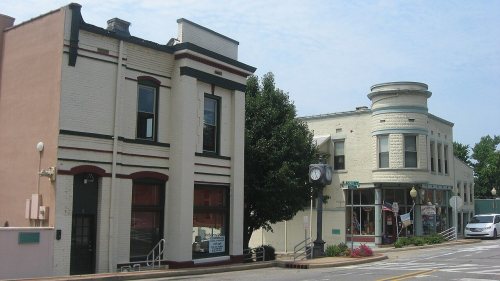
Two places: the Old Newburgh Presbyterian Church (listed 1978) and the Original Newburgh Historic District (1983).
How old are the homes in Newburgh?
14% of Newburgh’s homes were built before 1940 (Census estimate, ±6.7 points), against a typical 14% for an Indiana town; the median home was built in 1976.
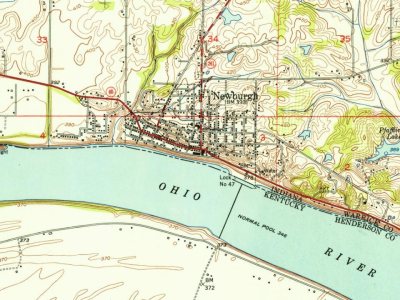
Founding dates: Wikidata, Wikipedia, the U.S. post office records of Blevins & Helbock (CC0) and the Census. Homes by year built: Census ACS 2020–24. National Register of Historic Places: National Park Service (list of May 22, 2026). Old photos, postcards and papers: Wikimedia Commons, the Library of Congress and other public archives, credited on each item’s page. Maps: U.S. Geological Survey historical topographic maps (via Esri) and Sanborn fire-insurance maps (Library of Congress). History text and census tables: Wikipedia (CC BY-SA 4.0). Places that used to be: USGS Geographic Names Information System (2021).
From Wikimedia Commons (8), the Library of Congress (2), the National Register of Historic Places (2), Wikipedia, Wikidata and Wikipedia for famous people, U.S. Geological Survey historical maps, U.S. Census counts (via Wikipedia), the US Post Offices dataset (Blevins & Helbock), the USGS Geographic Names Information System, Sanborn fire insurance maps (Library of Congress) and old county and town histories (Internet Archive). Archive images are copied here with their credits and licenses, shown on each photo’s page. Refreshed monthly.








 Date?
 Date?
 2016
 2016
 2016
 2016
 2012
 2011
 2010
 2010