On its age, its old homes and the National Register, Madison Township is more historic than 62% of U.S. towns. Its share of homes from before 1940 holds the grade up; its National Register listings pull it down.
B
HistoryA character grade: shown, never part of Madison Township’s overall grade.
Indiana towns list more on the Register than most of the country (a typical Indiana town has 7.9 per 10,000 residents, the U.S. 2.4), so Madison Township’s 0.0 sits below most of its state (22% of Indiana towns have fewer) while its 0 listings outnumber those of 23% of U.S. towns.
How sure. Graded on two of the three inputs, so a change in either one moves the letter more than it would with three. The pre-1940 share is a Census survey estimate (±8.0 points).
Founding year: our sources. Homes: Census ACS 2020–24. National Register: National Park Service, May 2026 list; each listing counted once (boundary changes and added documentation belong to their listing), and a historic district counts its contributing buildings. How TownRatings grades history →
What stands out about Madison Township’s past
Read from the archive, the National Register and the record. The page puts what stands out first.
Nothing in the archives for these yearsWeddings on Main Street, storms, parades, school pictures, the old store. If it’s in your family album, it belongs here.
The first white settlers in the land that would become Madison Township were Win Winship, Jacob Stettler, Charles Poulston and James Taylor, all of whom arrived in 1829. The first post office was at Winship's Mills with E. Winship as the first postmaster.
Passages that mention Madison Township, cut from the printed page as they were published.
History of Clinton County, Indiana. Together with sketches of its cities, villages and towns, educational, religious, civil, military, and political history, portraits of prominent persons, and biographies of representative citizens. Also a condensed hist1886 · page 279Read the page →
Read the text
Through the enterprising spirit of Mr. Underbill a saw-mill with corn-cracker attached was built in 1830, on the Middle Fork of the Wild Cat, in Ross Township. Thesameyear Win Winship built, in Madison Township, a saw-mill with corn-cracker attached. The first regular grist-mill was built by Jacob Anderson, in Washington Township, on what was afterward the Heavilon farm, and known as the "Spring Mills." The building of these mills was received with general rejoicing by the pioneers. Previous to this, it re-
Text read by machine from the scan; it may contain errors.
History of Madison Township, including Groveport and Canal Winchester, Franklin County, Ohio1902 · page 119Read the page →
Read the text
September 17, i860, a committee was appointed by the Board of Education of Madison Township consisting of Jacob Sarber, Wm. Perrin and Henry Long 'Tor the purpose of visiting the school houses in sub-district No. 18 to ascertain whether they have school room enough, and to report at the April meeting.” On April 15, 1861, this committee submitted a report which "was received and the committee discharged/’ and on
Text read by machine from the scan; it may contain errors.
History of Madison Township, including Groveport and Canal Winchester, Franklin County, Ohio1902 · page 76Read the page →
Read the text
We will supplement the list of township officers with a list of Madison Township citizens who have held county, state and other honorary positions. In October of 1827 John Swisher succeeded James Kilbourne as county assessor, and served until 1835.
Text read by machine from the scan; it may contain errors.
Scans and text from the Internet Archive. Books published in 1930 or earlier, which are in the public domain.
Timeline
Madison Township, 1863 to 1961
Woven from the archive, old maps, post office records, the National Register and the people born here.
Every edition of the U.S. Geological Survey’s map of Madison Township. Tap a year, or press play to watch the town change.
1961Mulberry sheet · 1:24,000
U.S. Geological Survey historical topographic maps (public domain), via Esri’s collection of the scans. The red ring marks the center of Madison Township.
Then & now
Stand where they stood
No then-and-now pairs yet. Take a photo from the same spot as an old one and they appear here side by side.
Retake this viewLieutenant Colonel William G. Mank provides the eulogy at the funeral of Lieutenant Colonel Jacob Glass, 1863
Find the spot, match the angle, and add your photo. It becomes the first then-and-now pair on Madison Township’s page.
Madison Township is more historic than 62% of U.S. towns. The History grade combines the town’s founding era, the share of homes built before 1940 and its National Register listings. It’s a character grade, so it isn’t part of the overall grade. How it works.
How old are the homes in Madison Township?
36% of Madison Township’s homes were built before 1940 (Census estimate, ±8.0 points), against a typical 14% for an Indiana town; the median home was built in 1962.
Founding dates: Wikidata, Wikipedia, the U.S. post office records of Blevins & Helbock (CC0) and the Census. Homes by year built: Census ACS 2020–24. National Register of Historic Places: National Park Service (list of May 22, 2026). Old photos, postcards and papers: Wikimedia Commons, the Library of Congress and other public archives, credited on each item’s page. Maps: U.S. Geological Survey historical topographic maps (via Esri) and Sanborn fire-insurance maps (Library of Congress). History text and census tables: Wikipedia (CC BY-SA 4.0). Places that used to be: USGS Geographic Names Information System (2021).
From Wikimedia Commons (1), the Library of Congress (22), Wikipedia, U.S. Geological Survey historical maps, the USGS Geographic Names Information System and old county and town histories (Internet Archive). Archive images are copied here with their credits and licenses, shown on each photo’s page. Refreshed monthly.


 1863
 1866
 1901
 1903
 Date?
 Date?
 Date?
 Date?
 Date?
 Date?
 Date?
 Date?
 Date?
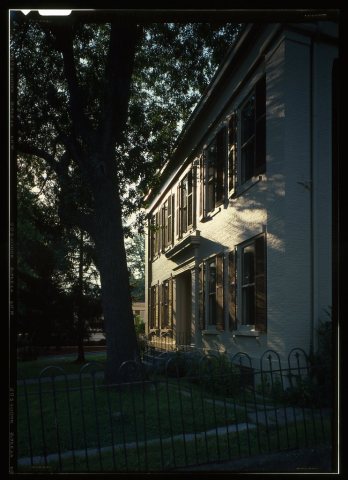 Date?
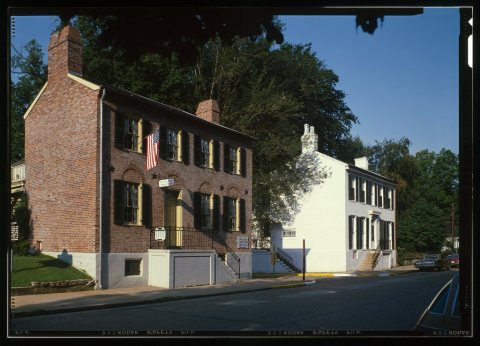 Date?
 Date?
 Date?
 Date?
 Date?
 Date?
 Date?
 Date?
 Date?


