Lake Bluff’s post office opened in 1882, and 5 of its places are on the National Register
More historic than 55% of U.S. towns · #364 of 768 in Illinois. What drives it
Most of Lake Bluff was built recently: 7% of its homes predate 1940 and the median home dates from 1980. 5 places in town are on the National Register, among them a historic district with 6 buildings. Below: maps from 1906 on and the census since 1900.
The Lake Bluff post office opened in 1882, the earliest record of the town by name. Wikidata gives 1895. Another post office, Lake Bluffs (1882), opened inside today’s town and later closed.
First census: 490 in 19002020 census: 5,616144 years
How historic is Lake Bluff?
B
More historic than 55% of U.S. towns, on its age, its old homes and the National Register.
Founding year: the first Lake Bluff post office (Blevins & Helbock, CC0). Wikidata: 1895.The full story ↓
History grade
What drives Lake Bluff’s History grade
On its age, its old homes and the National Register, Lake Bluff is more historic than 55% of U.S. towns, #364 of 768 in Illinois. Its National Register listings hold the grade up; its age pulls it down.
B
HistoryA character grade: shown, never part of Lake Bluff’s overall grade.
Few Illinois towns list much on the Register (a typical Illinois town has 0.5 per 10,000 residents, the U.S. 2.4), so Lake Bluff’s 28.1 sits above most of its state (89% of Illinois towns have fewer) while its 17 historic buildings outnumber those of 79% of U.S. towns.
How sure. Graded on any two of the three inputs instead, the letter would range from C to B+. The pre-1940 share (±2.3 points) is firm at this size. The founding year is the first post office, not a stated founding date; Wikidata’s 1895 falls in the same era, so the grade doesn’t depend on which one is used.
Founding year: the first post office (other dates in Quick answers). Homes: Census ACS 2020–24. National Register: National Park Service, May 2026 list; each listing counted once (boundary changes and added documentation belong to their listing), and a historic district counts its contributing buildings. How TownRatings grades history →
What stands out about Lake Bluff’s past
Read from the archive, the National Register and the record. The page puts what stands out first.
The first non-native settler family to claim land within the area now part of Lake Bluff arrived in 1836. John and Catherine Cloes claimed 100 acres of land extending from the lake west to the Green Bay Trail. In 1849, a few residents left to seek their fortune in the California gold rush. In 1837, William and Mary Dwyer claimed the land just north of the former Central School. They opened and operated a stage coach stop and tavern along the Green Bay Trail. Some of the other early settlers were Henry and Angeline Ostrander, James Cole and William Whitnell.
Passages that mention Lake Bluff, cut from the printed page as they were published.
The past and present of Lake County, Illinois, containing a history of the county ... a biographical directory ... war record ... early settlers ... statistics ... history of Illinois ... the Northwest ... etc., etc ..1877 · page 311Read the page →
Read the text
Lake Bluff, otherwise known as the Lake Bluff Camp Meeting enterprise, is situated in this township, on Lake Michigan, a short distance north of Lake Forest, east of Rockland Station, on the Northwestern Railroad. A plat of this place was laid out and completed February 24, 1877.
Text read by machine from the scan; it may contain errors.
Scans and text from the Internet Archive. Books published in 1930 or earlier, which are in the public domain.
Timeline
Lake Bluff, 1882 to 1931
Woven from the archive, old maps, post office records, the National Register and the people born here.
The Lake Bluff post office opened in 1882, the earliest record of the town by name (U.S. post office records). Wikidata gives 1895.
How does Lake Bluff rank for history?
Lake Bluff is more historic than 55% of U.S. towns, #364 of 768 in Illinois. The History grade combines the town’s founding era, the share of homes built before 1940 and its National Register listings. It’s a character grade, so it isn’t part of the overall grade. How it works.
What is on the National Register in Lake Bluff?
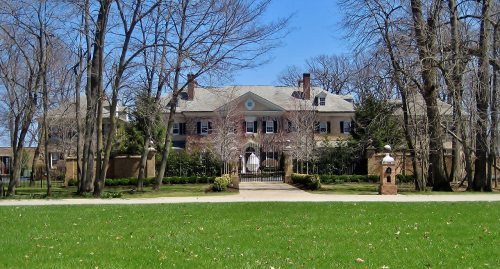
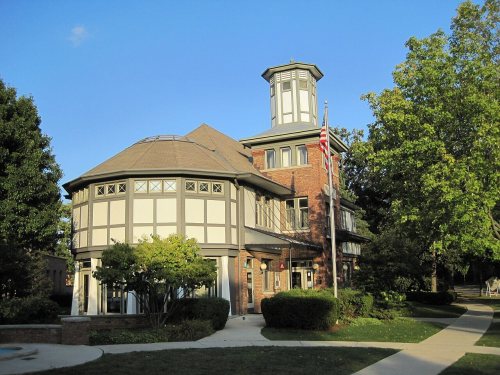
5 listings: 4 buildings, among them the Lester Armour House (listed 1984, the first), and 1 historic district, the Lake Bluff Uptown Commercial Historic District, with 6 contributing buildings. 17 historic buildings in all.
How old are the homes in Lake Bluff?
7% of Lake Bluff’s homes were built before 1940 (Census estimate, ±2.3 points), against a typical 11% for an Illinois town; the median home was built in 1980.
Founding dates: Wikidata, Wikipedia, the U.S. post office records of Blevins & Helbock (CC0) and the Census. Homes by year built: Census ACS 2020–24. National Register of Historic Places: National Park Service (list of May 22, 2026). Old photos, postcards and papers: Wikimedia Commons, the Library of Congress and other public archives, credited on each item’s page. Maps: U.S. Geological Survey historical topographic maps (via Esri) and Sanborn fire-insurance maps (Library of Congress). History text and census tables: Wikipedia (CC BY-SA 4.0). Places that used to be: USGS Geographic Names Information System (2021).
From Wikimedia Commons (9), Wikidata (3), the National Register of Historic Places (5), Wikipedia, Wikidata and Wikipedia for famous people, U.S. Geological Survey historical maps, U.S. Census counts (via Wikipedia), the US Post Offices dataset (Blevins & Helbock), the USGS Geographic Names Information System, Sanborn fire insurance maps (Library of Congress) and old county and town histories (Internet Archive). Archive images are copied here with their credits and licenses, shown on each photo’s page. Refreshed monthly.





 2026
 2026
 2025
 2025
 2025
 2016
 2016
 2014
 2012
