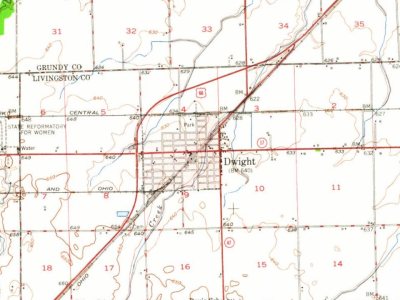
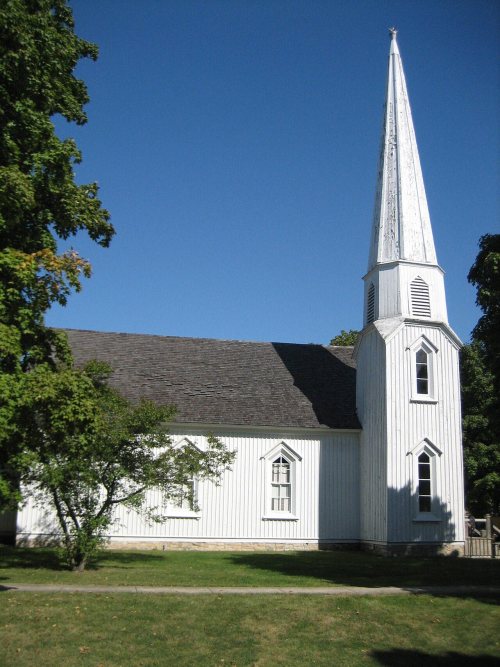
Founding year: the first Dwight post office (Blevins & Helbock, CC0).The full story ↓
History grade
What drives Dwight’s History grade
On its age, its old homes and the National Register, Dwight is more historic than 80% of U.S. towns, #173 of 768 in Illinois. Its share of homes from before 1940 holds the grade up; its age pulls it down.
A−
HistoryA character grade: shown, never part of Dwight’s overall grade.
Few Illinois towns list much on the Register (a typical Illinois town has 0.5 per 10,000 residents, the U.S. 2.4), so Dwight’s 15.5 sits above most of its state (86% of Illinois towns have fewer) while its 6 historic buildings outnumber those of 72% of U.S. towns.
How sure. Graded on any two of the three inputs instead, the letter would range from B to A. The pre-1940 share is a Census survey estimate (±7.1 points). The founding year is the first post office, not a stated founding date.
Founding year: the first post office (other dates in Quick answers). Homes: Census ACS 2020–24. National Register: National Park Service, May 2026 list; each listing counted once (boundary changes and added documentation belong to their listing), and a historic district counts its contributing buildings. How TownRatings grades history →
What stands out about Dwight’s past
Read from the archive, the National Register and the record. The page puts what stands out first.
Fire insurance maps drew every building, what it was made of and what it was used for, so insurers could price the risk of fire. Pick a year, then a sheet.
Nothing in the archives for these yearsWeddings on Main Street, storms, parades, school pictures, the old store. If it’s in your family album, it belongs here.
Dwight was laid out on January 30, 1854, by Richard Price Morgan Jr. (1828–1910), James C. Spencer (1828 – after 1890), and John Lathrop (1809 – 1870). Each of these three men took a quarter of the land. All were working as engineers for the Chicago and Mississippi Railroad. The final quarter was jointly owned by two Bloomington brothers, Jesse W. Fell (1808 – 1878) and Kersey H. Fell (1815 – 1893). All five men had links to the railroad which was to open from Bloomington to Joliet in 1854.
was dedicated by Mr, Morgan, and the plat admitted to record. The following are his dedicating words: "To be known as the town of Dwight, and the streets and alleys described on the town plat are hereby donated to the public." It was named for Henry Dwight, of Xevv York, who was a capitalist, and furnish-
Text read by machine from the scan; it may contain errors.
History of Dwight, from 1853 to 18941894 · page 17Read the page →
Read the text
The first house or cabin in the village of Dwight was built by a man from Morris, whose name is now forgotten. It was a frame building, 16x24 feet, one and a half stories high, erected on Lot 8, Block 18, in 1853, and was built originally for a store or a kind of supply depot for the railroad hands, and finally
Text read by machine from the scan; it may contain errors.
The History of Livingston County, Illinois1878 · page 446Read the page →
Read the text
These five families were the pioneers of Round Grove Township, and, until Stephen Potter settled in 1854, Avere the only residents here. They came before the railroad was built, when there was no Dwight or Odell, and when Pontiac was a place of small note, Avhose nearest railroad communication was Springfield, where was the old Northern Cross Railroad, the oldest in the State, and where, in 1851, the first railroad crossing in the State was made, when what is now the Chicao-o, Alton & St. Louis Railroad reached that city and crossed the old Northern Cross — now Toledo, Wabash & Western. The people of this part
Text read by machine from the scan; it may contain errors.
Scans and text from the Internet Archive. Books published in 1930 or earlier, which are in the public domain.
Timeline
Dwight, 1854 to 1948
Woven from the archive, old maps, post office records, the National Register and the people born here.
The Dwight post office opened in 1854, the earliest record of the town by name (U.S. post office records).
How does Dwight rank for history?
Dwight is more historic than 80% of U.S. towns, #173 of 768 in Illinois. The History grade combines the town’s founding era, the share of homes built before 1940 and its National Register listings. It’s a character grade, so it isn’t part of the overall grade. How it works.
What is on the National Register in Dwight?
4 listings: 3 buildings, among them the John R. Oughton House (listed 1980, the first), and 1 site. 6 historic buildings in all.
How old are the homes in Dwight?
35% of Dwight’s homes were built before 1940 (Census estimate, ±7.1 points), against a typical 11% for an Illinois town; the median home was built in 1957.
Founding dates: Wikidata, Wikipedia, the U.S. post office records of Blevins & Helbock (CC0) and the Census. Homes by year built: Census ACS 2020–24. National Register of Historic Places: National Park Service (list of May 22, 2026). Old photos, postcards and papers: Wikimedia Commons, the Library of Congress and other public archives, credited on each item’s page. Maps: U.S. Geological Survey historical topographic maps (via Esri) and Sanborn fire-insurance maps (Library of Congress). History text and census tables: Wikipedia (CC BY-SA 4.0). Places that used to be: USGS Geographic Names Information System (2021).
From Wikimedia Commons (19), the Library of Congress (10), Wikidata (1), the National Register of Historic Places (4), Wikipedia, Wikidata and Wikipedia for famous people, U.S. Geological Survey historical maps, U.S. Census counts (via Wikipedia), the US Post Offices dataset (Blevins & Helbock), the USGS Geographic Names Information System, Sanborn fire insurance maps (Library of Congress) and old county and town histories (Internet Archive). Archive images are copied here with their credits and licenses, shown on each photo’s page. Refreshed monthly.


 1880
 1893
 1900
 1900
 1900
 1900
 1909
 1909
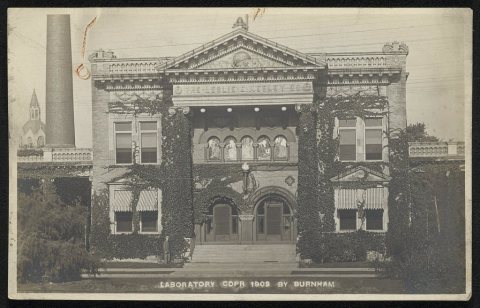 1909
 1909
 1909
 c. 1915
 2026
 2026
 2022
 2022
 2022
 2020
 2017
 2017
 2017
 2010
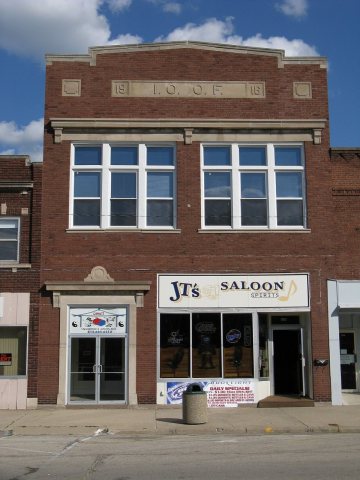 2008
 2007
 2007
 2007
 2007
 2006
 2006