Church / chapel · 1820–1880St. Mary's Catholic ChurchChapel Street, Castlefinn
 Photo: Kenneth Allen · CC BY-SA 2.0
11buildings on the National Inventory
History of Castlefinn · National Inventory of Architectural Heritage
Castlefinn: 11 buildings on the National Inventory
The Sites and Monuments Record marks Castlefinn as a historic town and lists 2 archaeological sites inside it. The earliest building recorded goes back to 1790. Of its homes, 6.2% were built before 1919, against 3.4% in the typical town.
On the National Inventory
11
Of national importance
0
NIAH National or International, and national monuments
Archaeological sites
2
Sites and Monuments Record
Oldest building
1790
the first date on its record
Homes built before 1919
6.2%
typical town: 3.4%
In pictures
Places to see in Castlefinn
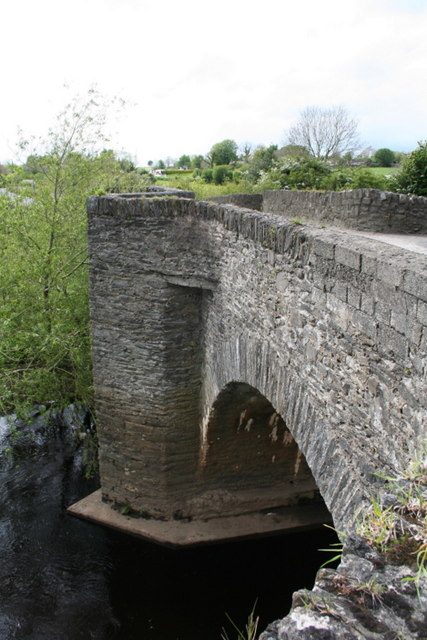
Pictured: Clady Bridge, on Castlefinn’s record.
Photos from Wikimedia Commons, copied to our own server, each credited to its photographer with its licence; names open the place’s page. Tap a photo to step through them full screen.
The map
Where Castlefinn’s history is
Every building and site on the record inside the town, by its rating.
Regional and other sites
Hover a dot for its name; tap one to open its page.
The 11, by rating
11 Regional and other sites
The National Inventory of Architectural Heritage is the State’s survey of buildings from 1700 to today, county by county; each record gives a rating, dates, a type and an appraisal. Being on it is not legal protection: that is each council’s Record of Protected Structures.
Points from the National Inventory of Architectural Heritage and the Sites and Monuments Record, Department of Housing, Local Government and Heritage (CC BY 4.0).
Regional and other sites
11 historic places in Castlefinn
Buildings rated Regional, of significance in their region, and archaeological monuments with an encyclopedia article.
Church / chapel · 1855–1885Castlefinn Congregational ChurchCastlefinn
Station master's house, worker's house · 1860–1870Castlefinn Railway Station (station master's house, worker's house)Castlefinn
Railway station, goods shed · 1860–1880Castlefinn Railway Station (railway station, goods shed)Castlefinn
RIC barracks, garda station / constabulary barracks · 1890–1910Red House Café/Stitched UpThe Diamond, Castlefinn
Church / chapel · 1970–1980Castlefinn Catholic ChurchCastlefinn
House · 1790–1830House, The Diamond, Castlefinn
Bridge · 1850–1870Bridge, Castlefinn
Gate lodge, sexton's house · 1860–1890Gate lodge, sexton's house, Chapel Street, Castlefinn
Water pump · 1870–1900Water pump, Castlefinn
Customs station, building misc · 1920–1940Customs station, building misc, Castlefinn
What’s recorded
Castlefinn’s record splits evenly at the top: 3 churches and chapels, 3 homes
Two of the highest-rated records are St. Mary's Catholic Church and Castlefinn Congregational Church. Nothing on Castlefinn’s record is rated of national importance. No fewer than 6 kinds of building are on Castlefinn’s record.
Churches and chapels3
Homes3
Mills, stations and works2
Walls, gates and bridges1
Public buildings1
Street furniture1
Types as the National Inventory records them, grouped; a building keeps the type it was built as.
How old
Most of Castlefinn’s dated buildings come from the 19th century
Each building by the first date on its record.
1500–1799 three centuries1
19th century 1800–18998
1900 and later to today2
1 of the 11 dated ones were built before 1800.
Archaeology and around
Archaeology in Castlefinn
The Sites and Monuments Record lists every known archaeological site; most are field monuments with little to see. By kind:
2 archaeological sites inside the town
Sites on the Record of Monuments and Places, the statutory list drawn from this record, are protected by law: anyone planning work at or near one must give the National Monuments Service two months’ notice.
| Historic town1 record |
| Market-house1 record |
Just outside Castlefinn: 17
| Clady BridgeNational rating (NIAH) · 2.6 km outside the town |
| St. Patrick's Church of Ireland ChurchRegional rating (NIAH) · 600 m outside the town |
| Donaghmore House (walled garden)Regional rating (NIAH) · 700 m outside the town |
| Donaghmore House (outbuilding)Regional rating (NIAH) · 500 m outside the town |
| Sexton's house, St. Patrick's Church of Ireland ChurchRegional rating (NIAH) · 700 m outside the town |
| Castlefinn BridgeRegional rating (NIAH) · 200 m outside the town |
| Magherycallaghan HouseRegional rating (NIAH) · 2.2 km outside the town |
| Donaghmore Parochial HallRegional rating (NIAH) · 600 m outside the town |
| Donaghmore House (conservatory)Regional rating (NIAH) · 500 m outside the town |
| Gortfad HouseRegional rating (NIAH) · 500 m outside the town |
| St. Columba's Catholic ChurchRegional rating (NIAH) · 2.4 km outside the town |
| Donaghmore House (country house)Regional rating (NIAH) · 500 m outside the town |
| Bridge, Carrick (Killygordon)Regional rating (NIAH) · 1.6 km outside the town |
| House, GortnamuckRegional rating (NIAH) · 2.8 km outside the town |
| Kiln, Breaghy (Castlefin)Regional rating (NIAH) · 1.3 km outside the town |
| Stables, CastlefinnRegional rating (NIAH) · 800 m outside the town |
| Outbuilding, CarnowenRegional rating (NIAH) · 2.6 km outside the town |
Homes by age
Since 2011, building in Castlefinn has been slow: 2.3% of its homes, the norm is 5.8%
No period built more of Castlefinn than from 1981 to 2000: 33% of its homes. Homes built between the wars make up 5.9% of Castlefinn’s, against 3.9% in the typical town. A full 32% of the homes in Castlefinn went up from 1946 to 1980, beyond the typical 24%.
6.2%
Before 1919
5.9%
1919–45
32%
1946–80
33%
1981–2000
21%
2001–10
2.3%
Since 2011
CastlefinnTypical town
Census 2022, households by the year their home was built (CSO, Small Area Population Statistics, CC BY 4.0); the typical town is the middle Irish town of 2,500 or more.
Neighbours
Castlefinn and its neighbours
| Town | People | National Inventory | National | Archaeological sites |
|---|---|---|---|---|
| Castlefinn | 730 | 11 | 0 | 2 |
| Lifford | 1,613 | 19 | 1 | 9 |
| Raphoe | 1,161 | 27 | 0 | 14 |
| Convoy | 1,702 | 13 | 0 | 4 |
| Ballybofey-Stranorlar | 5,406 | 27 | 0 | 8 |
In brief
Castlefinn in brief
More of Castlefinn’s homes are old than in most places: 6.2% were built before 1919, against 3.4% in the typical town. All told, the list holds 11 places on the record. Of the 11 with a date, 8 come from the 19th century. The oldest is St. Mary's Catholic Church, from 1820. Beyond that, Samuel O'Flaherty (1894) was born here before 1900; and it also has 2 archaeological sites.
How to read these numbers
What this data can and can’t tell you
- The National Inventory. The State’s survey of post-1700 buildings, made county by county since 1990 (NIAH); a few records are older. It records; it does not protect.
- Ratings. International and National: of significance across Ireland or beyond. Regional: in its region. Local and record-only buildings get no page here.
- Archaeology. The Sites and Monuments Record (National Monuments Service) lists known archaeological sites; the national monuments to visit and the sites with an encyclopedia article get pages here.
- Protection. Both registers are surveys, not protection: a building is protected by its council’s Record of Protected Structures, and no national open list joins the 31 councils’ records.
- The grade. Ireland’s History grade is not built yet: the page describes, and gives no grade.
Questions about Castlefinn’s history
How many historic buildings are recorded in Castlefinn?
11 buildings on the National Inventory, from the National Inventory of Architectural Heritage.
What is the oldest building in Castlefinn?
House, The Diamond, Castlefinn: the first date on its record is 1790.
Are there archaeological sites in Castlefinn?
Yes: the Sites and Monuments Record lists 2 archaeological sites inside Castlefinn.
How old are the homes in Castlefinn?
6.2% of its homes were built before 1919, against 3.4% in the typical town.
Are the buildings on this page protected?
Being on the National Inventory or the Sites and Monuments Record is a record, not protection by itself: buildings are protected by their council’s Record of Protected Structures, which each council keeps and no national open list gathers, so this page can’t say which are on it.
This page describes its history; it gives no grade.
Source: National Inventory of Architectural Heritage and Sites and Monuments Record, Department of Housing, Local Government and Heritage (CC BY 4.0); Wikidata (CC0).
Sources: National Inventory of Architectural Heritage (buildingsofireland.ie) · Sites and Monuments Record and the National Monuments Service’s monuments to visit · CSO Census 2022 (homes by the year built) · Photos: Wikimedia Commons, including the National Library of Ireland’s collections, each credited with its licence and copied to our own server · Wikidata and English Wikipedia for people born here · Wikidata (CC0) for other names and articles. Under Creative Commons Attribution 4.0 (CC BY 4.0).
Contains Central Statistics Office (CSO) data, Census 2022, and Tailte Éireann boundaries (CSO Urban Areas, Small Areas, local electoral areas, constituencies), under Creative Commons Attribution 4.0 (CC BY 4.0).