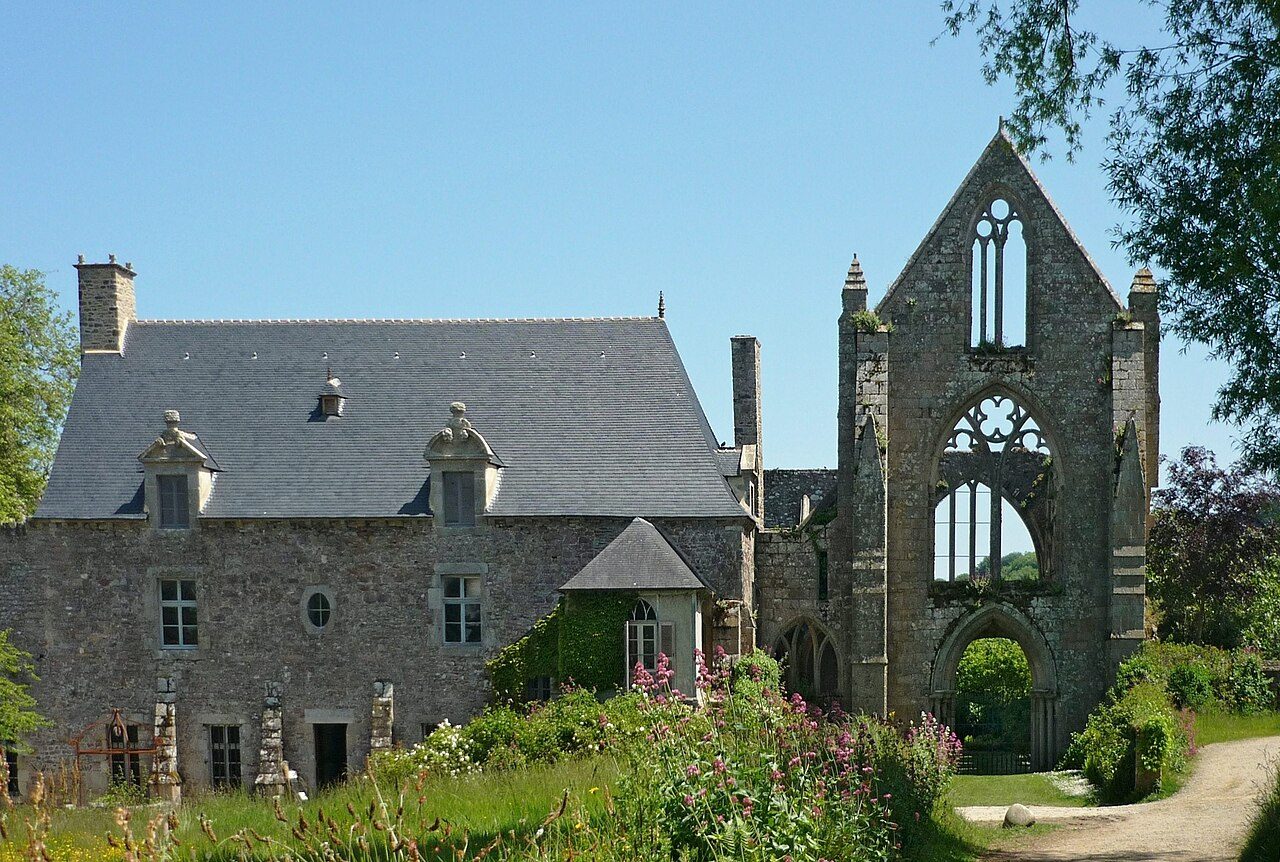
 Ruines de l'abbaye de Beauport · Photo: JLPC · CC BY-SA 3.0
13 historic monuments and a protected historic area since 2014
The Culture ministry lists 13 historic monuments in Paimpol: 2 classé (France’s highest heritage protection) and 11 inscrit (the second level). That’s 18 for every 10,000 residents, more per resident than 94% of compared French towns; the median compared French town has 2.5. The oldest date from the 13th century. We have photos of 13 of them.
median compared town 2.5
Paimpol in 13 photos
Tap a photo to step through them full screen.
 Ancienne égliseClassé
 Chapelle de LanvignecInscrit
 Manoir du Grand-PontébarInscrit
 Manoir de KerlouryInscrit
 Chapelle Notre-Dame de KergristInscrit+8See all photos
Photos from Wikimedia Commons, copied to our own server, each credited to its photographer with its license; names open the monument’s page.
Paimpol has had a protected historic area since 2014
Sites patrimoniaux remarquables on the Culture ministry’s list, with the plan in force.
| Area | Created as | Plan in force |
|---|---|---|
| SPR53-10 | AVAP February 3, 2014 | AVAP (heritage area rules) February 3, 2014 |
A site patrimonial remarquable protects a whole area rather than one building: inside it, building work follows the area’s own plan and needs the agreement of the architecte des Bâtiments de France.
The list gives no boundaries, so the map can’t show the area.
Where Paimpol’s monuments stand
Every monument with a point on the ministry’s list; the larger, darker dots are classé.
Tap a dot to open the monument’s page: its record, photo and the monuments around it.
Classé is the higher protection: any work on the building needs the State’s permission. Work on an inscrit building must be declared to the State in advance. Around both, building work in sight of the monument (usually within 500 m) needs the agreement of the architecte des Bâtiments de France.
Points as the ministry gives them: a monument spread over several plots has one point.
2 classé monuments in Paimpol
Classé is France’s highest protection for a building, held by about a third of the monuments on the list. 1 of the 2 is protected in part only (a façade, a roof, a room). Each card opens the monument’s page.
 Classé
 Classé
11 inscrit monuments in Paimpol
Inscrit is the second level of protection: the building is worth keeping, and any work on it must be declared.
 Inscrit
 Inscrit
 Inscrit
 Inscrit
 Inscrit
 Inscrit
 Inscrit
 Inscrit
 Inscrit
 Inscrit
 Inscrit
Most of Paimpol’s monuments are houses and homes
Each monument under the main domain Mérimée gives it.
Houses & homes: 8 of 13 monuments (62%). 5 are religious buildings, 2 of them classé.
Mérimée files each monument under one main domain: a château with its chapel counts once.
How old Paimpol’s monuments are
Each monument once, by the oldest part the list dates.
2 of 13 dated monuments have parts from before 1500. The oldest dated: Ruines de l'abbaye de Beauport (13th c.).
6 of Paimpol’s monuments were protected in 1964
Monuments by the year they were first protected.
First protected, in 1862: Ruines de l'abbaye de Beauport. 6 were protected in 1964 alone. None has been added since 2011.
15% of homes in Paimpol were built before 1919
Main homes by when they were finished, beside the median compared French town (the tick).
15% of its main homes were built before 1919; the median compared French town has 7.4%. More of them were finished between 1971 and 1990 than in any other period (27%).
INSEE, census 2023: main homes (résidences principales) only; second homes and empty homes aren’t dated.
13 people born in Paimpol before 1900
Their lives on one line.
Everyone born in Paimpol Birthplaces from Wikidata, checked against Wikipedia.
Paimpol has the most monuments of 41 towns its size
Compared French towns of 7,300 to 7,400 residents, by historic monuments.
The median town of these has 1. 8 of the 41 have none.
Historic monuments in the towns around Paimpol
| Town | Residents | Monuments | Classé | Protected area |
|---|---|---|---|---|
| Paimpol | 7,341 | 13 | 2 | Yes |
| Ploubazlanec | 2,932 | 5 | 2 | — |
| Plouézec | 3,147 | 1 | 0 | — |
| Plouha | 4,634 | 4 | 1 | — |
| La Roche-Jaudy | 2,629 | 4 | 1 | Yes |
| Penvénan | 2,584 | 7 | 3 | — |
| Saint-Quay-Portrieux | 3,224 | 2 | 0 | — |
Paimpol in brief
For its size, Paimpol has more historic monuments than 94% of compared French towns. All told, the list holds 13 historic monuments, 2 of them classé. No town its size has more historic monuments: it leads the 41 nearest in population. Of its homes, 15% were built before 1919, against 7.4% in the median compared French town.
Part of it has been a site patrimonial remarquable since 2014. Most entries on the list, 62%, are houses and homes. Of the 13 with a date, 11 come from the 16th to 18th centuries.
What this data can and can’t tell you
- Monuments historiques. France protects buildings at two levels. Classé, the higher (about a third of the list), means any work needs the State’s permission; inscrit means work must be declared to the State in advance. The Culture ministry’s Mérimée base lists every protected building, and this page counts them.
- Partly protected. Many entries protect part of a building only (its façades and roofs, a staircase, a painted room). Each counts as one monument, like a fully protected one.
- Where a monument is counted. In the commune named on its protection, moved to today’s commune where communes have since merged. A monument listed for several communes counts in each.
- Sites patrimoniaux remarquables. Since 2016 France’s protected historic areas (the former secteurs sauvegardés, ZPPAUP and AVAP) share one name. Inside one, building work follows the area’s plan and needs the agreement of the architecte des Bâtiments de France.
- What isn’t here. Protected objects (furniture, organs, paintings), old buildings with no protection, UNESCO World Heritage listings and labels such as “Plus Beaux Villages de France” aren’t on this list, so this page doesn’t count them.
- No History Grade yet. Everything on this page is described, not graded: France’s History Grade isn’t built yet.
Questions about the history of Paimpol
How many historic monuments are there in Paimpol?
The Culture ministry lists 13 historic monuments in Paimpol: 2 classé and 11 inscrit.
Which monuments in Paimpol are classé?
2, among them Ruines de l'abbaye de Beauport and Ancienne église.
How old are the monuments of Paimpol?
The oldest parts of its listed monuments date from the 13th century.
Is Paimpol a protected historic area?
Yes: part of Paimpol has been a site patrimonial remarquable since 2014.
When were monuments in Paimpol first protected?
The first in 1862, the latest in 1971.
How old are the homes in Paimpol?
15% of its main homes were built before 1919 (median compared French town: 7.4%).
France has no History Grade yet: this page describes, it doesn’t grade.
Sources: Ministère de la Culture, Mérimée base on POP (immeubles protégés au titre des monuments historiques), October 2026 · Ministère de la Culture, sites patrimoniaux remarquables, October 2026 · INSEE, census 2023 (main homes by build period) · Wikidata and Wikipedia (people born here) · Wikimedia Commons and Wikidata (photos of the monuments, each with its own credit and license) · IGN Admin Express (boundaries) · Medians and percentiles: TownRatings, over compared French towns, updated November 4, 2026. Under the Licence Ouverte / Open Licence 2.0 (Etalab).
Contains public sector information under the Licence Ouverte / Open Licence 2.0 (Etalab): INSEE, DGFiP, the Interior Ministry’s statistics service (SSMSI), the Ministry of Education (DEPP), the Health Ministry’s statistics service (DREES) and the Housing Ministry (Carte des loyers). Commune boundaries: IGN Admin Express.