Melbourne dates to 1867, and 3 of its places are on the National Register
More historic than 33% of U.S. towns · #148 of 638 in Florida. What drives it
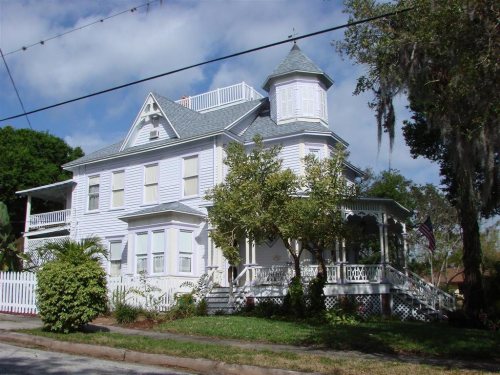
Most of Melbourne was built recently: 1% of its homes predate 1940 and the median home dates from 1985. Its Register listings are the William H. Gleason House, the James Wadsworth Rossetter House and the Green Gables. Its Register listings are the William H. Gleason House, the James Wadsworth Rossetter House and the Green Gables. Below: 9 old photos and papers, maps from 1920 on, and the census since 1890.
Founding year: Wikidata. First post office: 1871.The full story ↓
History grade
What drives Melbourne’s History grade
On its age, its old homes and the National Register, Melbourne is more historic than 33% of U.S. towns, #148 of 638 in Florida. Its National Register listings hold the grade up; its share of homes from before 1940 pulls it down.
C
HistoryA character grade: shown, never part of Melbourne’s overall grade.
Few Florida towns list much on the Register (a typical Florida town has 0.0 per 10,000 residents, the U.S. 2.4), so Melbourne’s 0.3 sits above most of its state (68% of Florida towns have fewer) while its 3 listings outnumber those of 65% of U.S. towns.
How sure. Graded on any two of the three inputs instead, the letter would range from C− to B−. The pre-1940 share (±0.4 points) is firm at this size. Two sources give 1867.
Founding year: Wikidata (other dates in Quick answers). Homes: Census ACS 2020–24. National Register: National Park Service, May 2026 list; each listing counted once (boundary changes and added documentation belong to their listing), and a historic district counts its contributing buildings. How TownRatings grades history →
What stands out about Melbourne’s past
Read from the archive, the National Register and the record. The page puts what stands out first.
Lost post offices, old corners, places now gone and burying grounds
Melbourne’s post office has been open since 1880. Another post office, Eau Gallie, opened and closed inside today’s town.
Eau Gallie
1871–1970
Melbourne
1880–today
18701950today
Hamlets and corners on the map
Aurora Park Mobile Home ParkBroadview Mobile Home ParkEau GallieEau Gallie Estates Mobile Home ParkGroveland Mobile Home ParkHollandale Mobile Home ParkLakewood Village Mobile Home CommunityLantern Village Mobile Home ParkRocky Water Park Mobile Home ParkShady Oak Mobile Home ParkShearer Trailer ParkSherman ParkTan Tara Mobile Home ParkTrailer Haven Mobile Home ParkWest Eau Gallie
Gone or out of use
Naval Air Station Melbournemilitary
1cemetery inside Melbourne
Fountainhead Memorial Park
US Post Offices dataset (Blevins & Helbock, CC0). Places and cemeteries from the USGS Geographic Names Information System (2021).
Famous people
31 famous people were born in Melbourne
Writers, athletes, leaders and more, ranked by how widely they’re known.
Evidence for the presence of Paleo-Indians in the Melbourne area during the late Pleistocene epoch was uncovered during the 1920s. C. P. Singleton, a Harvard University zoologist, discovered the bones of a mammoth (Mammuthus columbi) on his property along Crane Creek, 1.5 miles (2.4 km) from Melbourne, and brought in Amherst College paleontologist Frederick B. Loomis to excavate the skeleton. Loomis found a second elephant, with a "large, rough, flint instrument" among fragments of the elephant's ribs. Loomis found in the same stratum mammoth, mastodon, horse, ground sloth, tapir, peccary, camel, and sabertooth cat bones, all extinct in Florida since the end of the Pleistocene 10,000–8,000 BCE. At a nearby site, a human rib and charcoal were found in association with Mylodon, Megalonyx, and Chlamytherium (ground sloth) teeth. A finely worked spear point found with these items may have b…
Nothing in the archives for these yearsWeddings on Main Street, storms, parades, school pictures, the old store. If it’s in your family album, it belongs here.
Nothing in the archives for these yearsWeddings on Main Street, storms, parades, school pictures, the old store. If it’s in your family album, it belongs here.
In 1867, according to Wikidata. Melbourne’s post office opened in 1871, and the census of 1890 counted 99 people here.
How does Melbourne rank for history?
Melbourne is more historic than 33% of U.S. towns, #148 of 638 in Florida. The History grade combines the town’s founding era, the share of homes built before 1940 and its National Register listings. It’s a character grade, so it isn’t part of the overall grade. How it works.
What is on the National Register in Melbourne?
Three places: the William H. Gleason House (listed 1997), the James Wadsworth Rossetter House (2005) and the Green Gables (2016).
How old are the homes in Melbourne?
1% of Melbourne’s homes were built before 1940 (Census estimate), against a typical 0.6% for a Florida town; the median home was built in 1985.
Founding dates: Wikidata, Wikipedia, the U.S. post office records of Blevins & Helbock (CC0) and the Census. Homes by year built: Census ACS 2020–24. National Register of Historic Places: National Park Service (list of May 22, 2026). Old photos, postcards and papers: Wikimedia Commons, the Library of Congress and other public archives, credited on each item’s page. Maps: U.S. Geological Survey historical topographic maps (via Esri) and Sanborn fire-insurance maps (Library of Congress). History text and census tables: Wikipedia (CC BY-SA 4.0). Places that used to be: USGS Geographic Names Information System (2021).
From Wikimedia Commons (15), the Library of Congress (2), Wikidata (1), the National Register of Historic Places (3), Wikipedia, Wikidata and Wikipedia for famous people, U.S. Geological Survey historical maps, U.S. Census counts (via Wikipedia), the US Post Offices dataset (Blevins & Helbock), the USGS Geographic Names Information System and Sanborn fire insurance maps (Library of Congress). Archive images are copied here with their credits and licenses, shown on each photo’s page. Refreshed monthly.


 1880
 1940
 1941
 2007
 2007
 2006
 2005
 2004
 2004
 2004
 2004