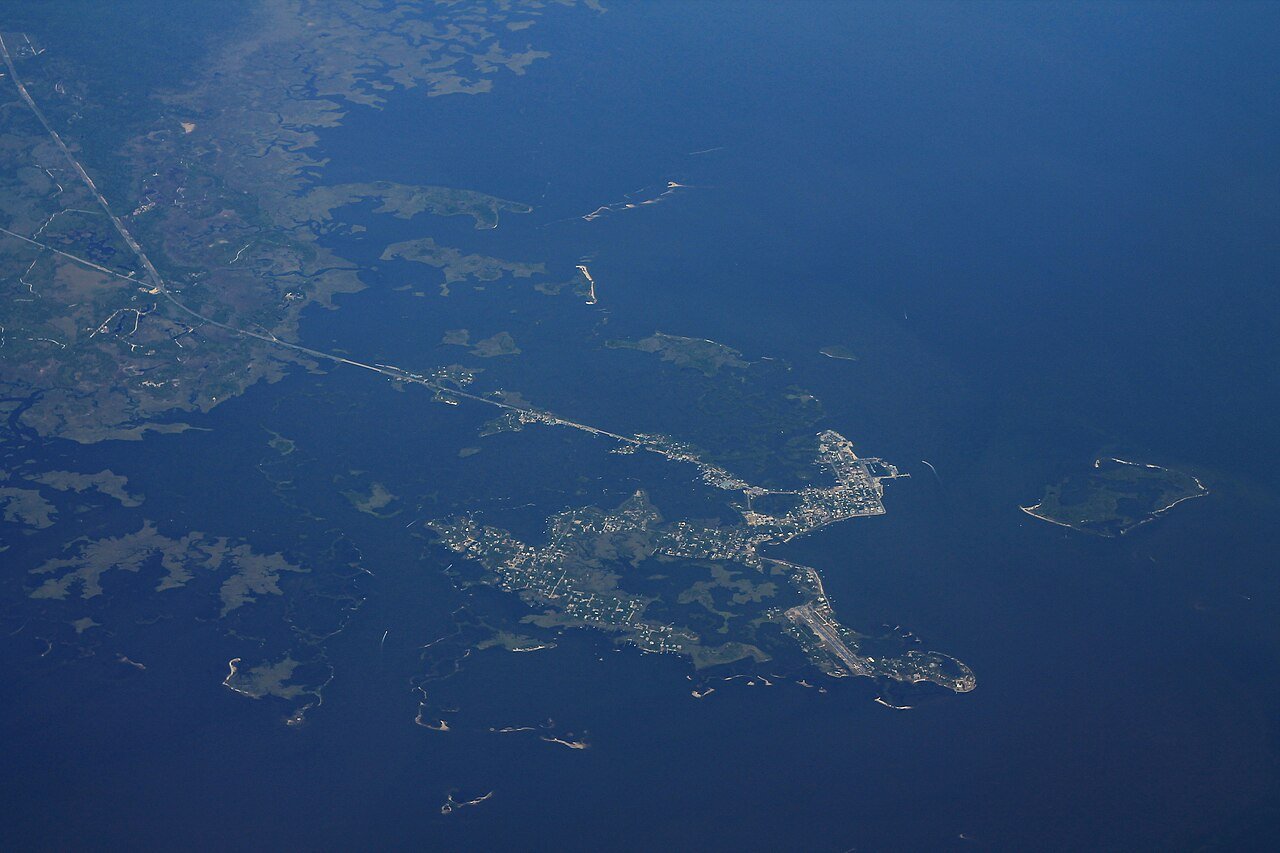
 Photo: formulanone · CC BY-SA 2.0
Few U.S. towns have milder winter nights than Cedar Key
The warmest part of a July day comes in at 91° on average. August is the wettest month, November the driest. Precipitation is plentiful here, more than falls on 92% of U.S. towns. The frost-free window for a garden runs roughly February 28 to December 2.
A year in Cedar Key at a glance
Each month’s typical high and low, and what it brings.
What stands out about Cedar Key’s climate
Compared with towns across the U.S., with Cedar Key’s place in Florida beside it.
What a year in Cedar Key feels like
Typical highs and lows by season and by month, from NOAA’s 30-year normals.
About 279 frost-free days a year
In half of years the last 32° night comes by February 28 and the first by December 2. Frost and day counts come from NOAA’s station at Usher, FL, 22 miles from the town’s center, at about the same height.
The 2023 USDA map puts Cedar Key’s center in zone 9b: the coldest night of a typical winter, averaged over 1991–2020, reaches about 28°. Plant labels use the zone; frost dates tell you when to plant.
Freezing nights by month
Average nights at or below 32°
90° days by month
Average days at 90° or more
About 53 inches of rain a year
August is the wettest month and November the driest. Rain falls on about 105 days a year. Snow is rare: about 0.0" in a normal year at Usher, FL, so most winters see none.
Rain + melted snow by month
Inches of water
Heating and cooling a home in Cedar Key
29% of the work is heating, so air conditioning is the bigger bill. No month averages under 55°.
Degree days add up how far each day’s average falls below (heating) or rises above (cooling) 65° over a year. NOAA normals at Usher, FL.
Living with Cedar Key’s climate
What the numbers mean for a garden, a free afternoon and a bad-weather day.
279 frost-free days in zone 9b. The last frost comes by Feb 28 in half of years, so many gardeners wait a week or two past that to set out tomatoes. The first fall frost comes by Dec 2.
Months with highs of 62–84° and lows of 40° or more: January, February, March, April, October, November and December. 1.8 miles of trails are waiting.
Parks & trails →Of the yearly building losses FEMA expects in Cedar Key from natural hazards, hurricanes are the largest share (33%); heat waves, cold waves, winter storms and ice storms together are 5%. Normals are averages; the hazards page covers the extremes.
Natural hazards →Cedar Key and similar climates
TownRatings has no climate map of the towns around Cedar Key yet.
Climates most like Cedar Key’s, farther away
TownRatings’ own comparison of NOAA 1991–2020 normals, not a NOAA product: places of 5,000+ at least 150 miles away, one per state, closest on January low, July high, precipitation and snow.
| Town | Jan. low | July high | Precip. | Snow |
|---|---|---|---|---|
| Cedar Key, FL | 47° | 91° | 53" | 0.0" |
| Dickinson, TX | 45° | 91° | 54" | 0.2" |
| St. Simons, GA | 43° | 91° | 49" | 0.0" |
| Morgan City, LA | 44° | 91° | 60" | 0.0" |
| Hilton Head Island, SC | 41° | 90° | 49" | 0.0" |
Temperatures and precipitation come from NOAA’s 5 km grid; snow and day counts from the stations named on this page.
Warmer than it used to be
The last 30 years in Cedar Key averaged 1.4° warmer than the 1900s. The biggest change is in July (+1.9°).
A bigger shift than in 55% of U.S. towns.
Change by month
The two periods overlap (1991–2000 is in both), which makes the gap a little smaller than it would be between separate periods.
How Cedar Key compares
Against 12,954 U.S. towns of 2,500 or more (one per 5 km climate cell), with Cedar Key’s place among Florida’s.
Cedar Key weather by month
Highs, lows and precipitation from NOAA’s grid at Cedar Key’s center; snow, wet days and snow on the ground from Usher, FL. 1991–2020 normals.
| Month | High | Low | Rain + melt | Snow | Wet days | Snow on ground | 30-yr range |
|---|---|---|---|---|---|---|---|
| January | 65° | 47° | 3.4" | 0.0" | 7 | 0 | 50° – 63° |
| February | 68° | 50° | 3.0" | 0.0" | 7 | 0 | 51° – 69° |
| March | 73° | 55° | 3.6" | 0.0" | 7 | 0 | 58° – 70° |
| April | 79° | 61° | 2.4" | 0.0" | 5 | 0 | 65° – 76° |
| May | 86° | 68° | 3.0" | 0.0" | 6 | 0 | 73° – 81° |
| June | 90° | 74° | 6.8" | 0.0" | 13 | 0 | 79° – 84° |
| July | 91° | 76° | 8.6" | 0.0" | 16 | 0 | 81° – 86° |
| August | 90° | 76° | 9.1" | 0.0" | 16 | 0 | 80° – 85° |
| September | 88° | 73° | 5.2" | 0.0" | 10 | 0 | 78° – 84° |
| October | 83° | 65° | 3.1" | 0.0" | 6 | 0 | 70° – 79° |
| November | 74° | 56° | 1.9" | 0.0" | 5 | 0 | 59° – 73° |
| December | 67° | 50° | 3.4" | 0.0" | 6 | 0 | 48° – 69° |
| Year | 79° | 63° | 53.4" | 0.0" | 105 | 0 |
How much a month can swing
A normal is an average. December swings the most: from 1991 to 2020 its average ranged from 48° to 69°. July is the most reliable, staying within 5°.
Where Cedar Key’s numbers come from
Normals are 30-year averages, not a forecast. How TownRatings reads climate data →
- Temperatures and precipitation: NOAA’s gridded 1991–2020 normals for the 5 km cell at Cedar Key’s center.
- Snow: Usher, FL.
- Frost, freezing nights, 90° and 100° days, heating and cooling: Usher, FL, 22 miles from the town’s center, at about the same height; the nearest station that passes our checks for distance, height and agreement with the grid.
- Growing zone: USDA Plant Hardiness Zone Map, 2023. USDA Agricultural Research Service and PRISM Group, Oregon State University, prism.oregonstate.edu/phzm, accessed 8 Oct 2026.
- Then and now: NOAA’s gridded normals for 1901–2000 at the same cell.
- Storms and extremes: FEMA National Risk Index (expected annual losses to buildings).
Common questions about Cedar Key’s climate
What is the weather like in Cedar Key?
A typical July afternoon reaches 91°, a January night drops to 47°, and snow is almost unheard of. Milder January nights than 95% of U.S. towns; hotter July afternoons than 83% of U.S. towns.
How cold does it get in Cedar Key in winter?
January nights average 47°. About 15 nights a year reach 32° or below. In the coldest January of the last 30 years the month averaged 50°.
How much snow does Cedar Key get?
About 0.0 inches in a normal winter at Usher, FL, so most winters see none.
How hot does it get in Cedar Key?
July, with a typical high of 91° and a low of 76°. About 82 days a year reach 90° (Usher, FL).
When is the first and last frost in Cedar Key?
In half of years the last spring frost (32°) comes by February 28 and the first fall frost by December 2, about 279 frost-free days, at Usher, FL.
What growing zone is Cedar Key in?
Zone 9b on the 2023 USDA Plant Hardiness Zone Map: the coldest night of a typical winter reaches about 28°.
What is the best time of year to visit Cedar Key?
By one simple rule (highs of 62–84° and lows of 40° or more), January, February, March, April, October, November and December. The rule is ours, not NOAA’s; the month table has the numbers to judge by.
Is Cedar Key getting warmer?
Yes: 1991–2020 averaged 1.4° warmer than 1901–2000 on NOAA’s grid. A bigger shift than 55% of U.S. towns.
Neighbors talk weather
Gardens, snow, and the best days of the year in Cedar Key.
Source: NOAA NCEI U.S. Climate Normals, 1991–2020 and 1901–2000; USDA/PRISM 2023 hardiness zones; FEMA National Risk Index. Today’s forecast: National Weather Service.