Prospect dates to 1827, and 2 of its places are on the National Register
More historic than 58% of U.S. towns · #141 of 155 in Connecticut. What drives it
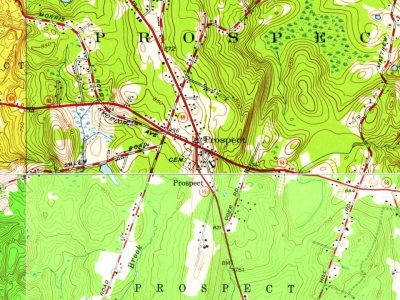
Most of Prospect was built recently: 9% of its homes predate 1940 and the median home dates from 1974. 2 places in town are on the National Register, among them a historic district with 8 buildings. Below: maps from 1955 on and the census since 1830.
Founding year: Wikidata; Wikipedia’s history section gives the same year. First post office: 1830.The full story ↓
History grade
What drives Prospect’s History grade
On its age, its old homes and the National Register, Prospect is more historic than 58% of U.S. towns, #141 of 155 in Connecticut. Its age holds the grade up; its share of homes from before 1940 pulls it down.
B
HistoryA character grade: shown, never part of Prospect’s overall grade.
Connecticut towns list more on the Register than most of the country (a typical Connecticut town has 73.3 per 10,000 residents, the U.S. 2.4), so Prospect’s 11.6 sits below most of its state (13% of Connecticut towns have fewer) while its 11 historic buildings outnumber those of 76% of U.S. towns.
How sure. Graded on any two of the three inputs instead, the letter would range from C+ to B. The pre-1940 share is a Census survey estimate (±5.8 points). Two sources give 1827.
Founding year: Wikidata (other dates in Quick answers). Homes: Census ACS 2020–24. National Register: National Park Service, May 2026 list; each listing counted once (boundary changes and added documentation belong to their listing), and a historic district counts its contributing buildings. How TownRatings grades history →
What stands out about Prospect’s past
Read from the archive, the National Register and the record. The page puts what stands out first.
It is believed that the Native Americans who lived in the area now known as Prospect first arrived to the area between 20,000 and 40,000 years ago. Little is known of their time living here, with only a few arrowheads, stone tools, and utensils being found in the town. What is known is that the town rested near the border zone of the Quinnipiac and Tunxis peoples, and it was known that the area served as a hunting and fishing ground for both tribes. There is no known evidence for any indigenous permanent settlement within the town prior to white European settlers permanently occupying the town. The portion of the town that was located in Waterbury also briefly had an indigenous reservation of 50 acres (20 ha) between 1731 and 1778. The reservation was located on today's Bronson road, and did not have a large population, with a total of four inhabitants in 1774.
Passages that mention Prospect, cut from the printed page as they were published.
History of Cheshire, Connecticut, from 1694-1840, including Prospect, which, as Columbia parish, was a part of Cheshire until 18291912 · page 232Read the page →
Read the text
Court further certifies — That Deacon Smith the abovenamed applicant is of the most unimpeachable character — and that — it appears to them that John E. Bray who had signd the preceding certificate is a Clergyman resident in the town of Prospect and that Saml Peck Esqr who has also signed the same is a resident in the same town of Prospect & is a credible person and that their statement is entitled to credit — The court further certify That Digitized by Microsoft®
Text read by machine from the scan; it may contain errors.
History of Cheshire, Connecticut, from 1649 to 1840, including Prospect, which, as Columbia parish, was a part of Cheshire until 18291912 · page 232Read the page →
Read the text
Court further certifies — Tliat Deacon Smith the abovenamed applicant is of the most unimpeachable character — and that — it appears to them that John E. Bray who had signd the preceding certificate is a Clergyman resident in the town of Prospect and that Saml Peck Esqr who has also signed the same is a resident in the same town of Prospect & is a credible person and that their statement is entitled to credit — The court further certify That
Text read by machine from the scan; it may contain errors.
History of Cheshire, Connecticut, from 1694-1840, including Prospect, which, as Columbia parish, was a part of Cheshire until 18291912 · page 45Read the page →
Read the text
increased facilities, with a direct road from the "Meadle" bridge at the town of Wallingford over to the farms in the valley of the Mill river to the eastward of the "West Rocks," at that time the very appropriate title of the present town of Prospect. This road will now be recognized as the highway coming from the eastward and continuing across the hill, a little to the south of Digitized by Microsoft®
Text read by machine from the scan; it may contain errors.
History of Cheshire, Connecticut, from 1649 to 1840, including Prospect, which, as Columbia parish, was a part of Cheshire until 18291912 · page 45Read the page →
Read the text
increased facilities, with a direct road from the "Meadle" bridge at the town of Wallingford over to the farms in the valley of the Mill river to the eastward of the "West Rocks," at that time the very appropriate title of the present town of Prospect. This road will now be recognized as the highway coming from the eastward and continuing across the hill, a little to the south of
Text read by machine from the scan; it may contain errors.
Scans and text from the Internet Archive. Books published in 1930 or earlier, which are in the public domain.
In 1827, according to Wikidata and Wikipedia’s history of the town. Prospect’s post office opened in 1830, and the census of 1830 counted 651 people here.
How does Prospect rank for history?
Prospect is more historic than 58% of U.S. towns, #141 of 155 in Connecticut. The History grade combines the town’s founding era, the share of homes built before 1940 and its National Register listings. It’s a character grade, so it isn’t part of the overall grade. How it works.
What is on the National Register in Prospect?
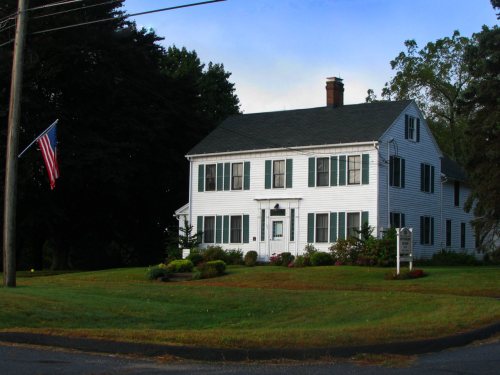
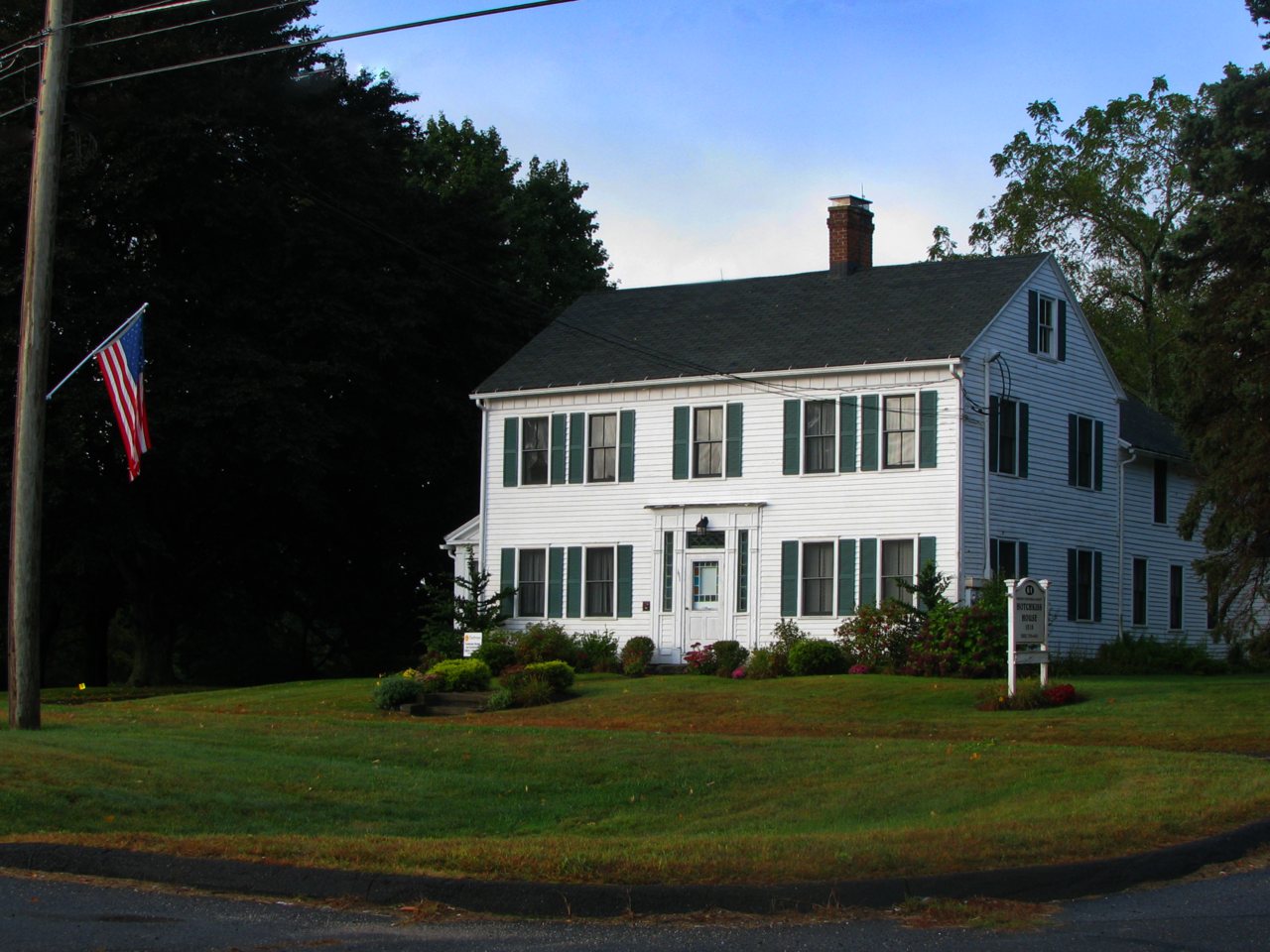
Two places: the David Hotchkiss House (listed 1981) and the Prospect Green Historic District (2000).
How old are the homes in Prospect?
9% of Prospect’s homes were built before 1940 (Census estimate, ±5.8 points), against a typical 15% for a Connecticut town; the median home was built in 1974.
Founding dates: Wikidata, Wikipedia, the U.S. post office records of Blevins & Helbock (CC0) and the Census. Homes by year built: Census ACS 2020–24. National Register of Historic Places: National Park Service (list of May 22, 2026). Old photos, postcards and papers: Wikimedia Commons, the Library of Congress and other public archives, credited on each item’s page. Maps: U.S. Geological Survey historical topographic maps (via Esri) and Sanborn fire-insurance maps (Library of Congress). History text and census tables: Wikipedia (CC BY-SA 4.0). Places that used to be: USGS Geographic Names Information System (2021).
From Wikimedia Commons (22), Wikidata (1), the National Register of Historic Places (2), Wikipedia, Wikidata and Wikipedia for famous people, U.S. Geological Survey historical maps, U.S. Census counts (via Wikipedia), the US Post Offices dataset (Blevins & Helbock), the USGS Geographic Names Information System and old county and town histories (Internet Archive). Archive images are copied here with their credits and licenses, shown on each photo’s page. Refreshed monthly.



 2025
 2024
 2023
 2023
 2020
 2020
 2020
 2020
 2020
 2020
 2020
 2020
 2020
 2020
 2020
 2020
 2019
 2018
 2018
 2018
 2010
 2007