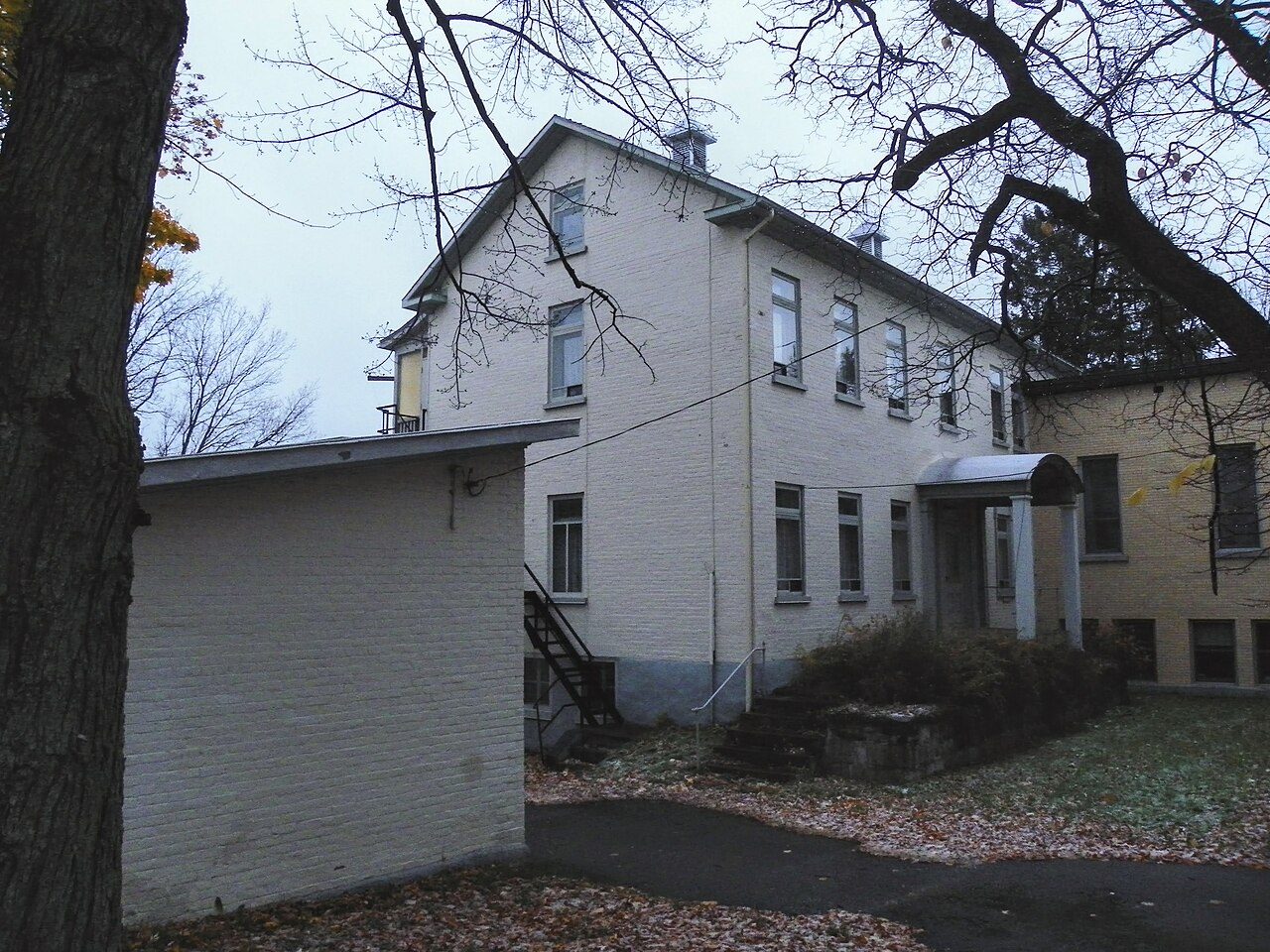
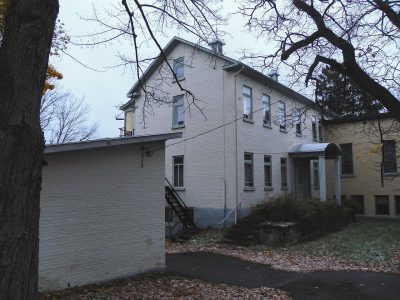
Maison Pierre-Lacroix · Photo: Cantons-de-l'Est · CC BY-SA 4.0
7historic places on the registers
History of Sainte-Marie · Canada’s heritage registers
Sainte-Marie has 7 historic places on the registers, 4 in the top tier
Counted by designation, there are 2 municipal citations and a provincial or municipal listing. Sainte-Marie’s 5 per 10,000 residents puts it ahead of 94% of Canadian towns. The oldest dated place, Manoir Taschereau, goes back to 1810.
National Historic Sites, classified federal buildings and Québec’s classements
Provincial and local listings
3
municipal citations on Québec’s register
Oldest building
1810
the first construction date on its record
Homes built before 1961
11%
typical town: 18%
In pictures
7 pictures of Sainte-Marie today, 2 from its past
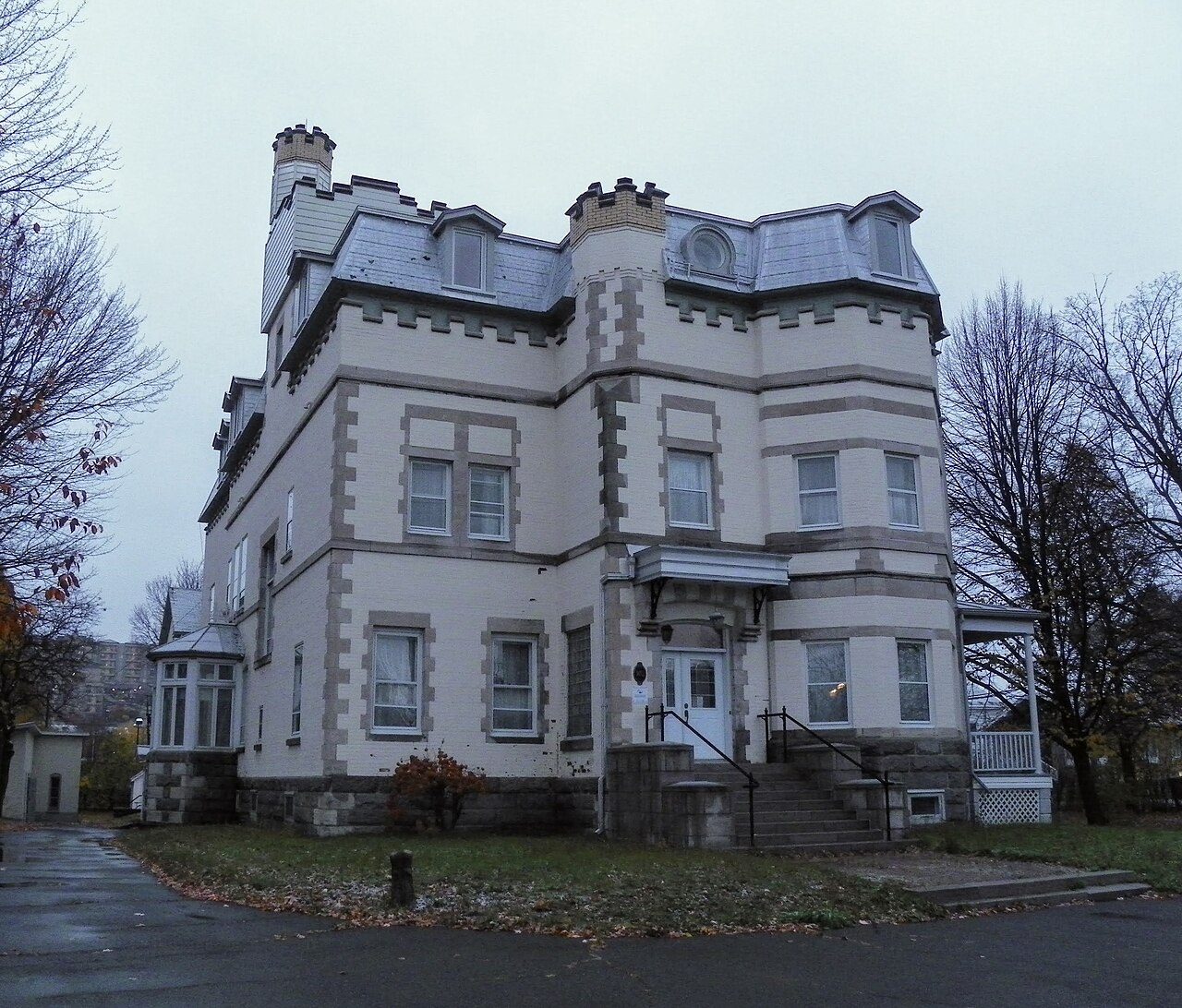
Every place on Sainte-Marie’s registers has a photo here. Open a place’s page for its old views: 2 places in Sainte-Marie have them. In front: Maison Pierre-Lacroix and Site patrimonial du Château-Beauce.
Photos from Wikimedia Commons, each credited to its photographer with its licence; names open the place’s page. Tap a photo to step through them full screen.
Through time
1909–1920: Sainte-Marie in old pictures
Here in time order: the oldest views of 2 of its historic places. A tap on any picture opens it with its credit.
1890190019101920193019401950Confederation to 1900Boom yearsThe wars and betweenAfter the war
Public domain or CC0, made before 1950, from Wikimedia Commons; old views of places can be drawings, prints or maps of their time. Each credit opens the image’s page.
How it began
From 1737: how Sainte-Marie got started
The founding of Sainte-Marie came in 1737. 289 years have passed since. Wikidata holds May 30, 1913 as the start of the municipality of Sainte-Marie, a date that can just as well be an incorporation.
Every place on the registers inside the town, by its designation.
Highest designationsProvincial and local listings400 m from Château Beauce
3 of 4within 400 m of Château Beauce, the heart of the town’s history
Tap any dot to open that place’s own page; hovering shows its name.
The 7, by tier
4 Highest designations3 Provincial and local listings
In Québec the record is fuller than elsewhere: beside Parks Canada’s designations, the province’s register lists its classements and every municipal citation.
Points from Wikidata (Parks Canada’s files carry none) and from Québec’s register, as mapped there.
Highest designations
4 places in Sainte-Marie with the highest designation
They were designated between 1978 and 2020. Here that means 3 places classified by Québec and a National Historic Site. National Historic Sites and Classified Federal Heritage Buildings, Canada’s highest federal recognition. Each one opens its own page.
Two of the highest-ranked are Church of Sainte-Marie and Maison Pierre-Lacroix.
Houses4
Churches and religious buildings1
Other places2
Kinds read from each place’s name and the functions its register gives; a building keeps the kind it was built as.
Provincial and local listings
On provincial and local lists in Sainte-Marie: 3 places
Designations came from 1993 to 2007. Here that means 2 municipal citations and a provincial or municipal listing. Citations the municipality has made, registered with Québec’s ministry of culture. Each one opens its own page.
In Sainte-Marie, the years before Confederation left the most behind
Each place by the first construction date on its record.
British North America 1760–18663
After Confederation 1867–19133
Wars and Depression 1914–19450
Since 1946 1946 on0
3 of the 6 dated places were built before Confederation.
Homes by age
Sainte-Marie is still building: 8.3% of homes date from 2016 to 2021, against 4.1%
The busiest building years in Sainte-Marie were from 1981 to 2000, which account for 29% of today’s homes. At 11%, Sainte-Marie’s share of pre-1961 homes is under the typical town’s 18%. 24% of Sainte-Marie’s homes date from 2001 to 2015, well above the typical 15%.
11%
Before 1961
28%
1961–80
29%
1981–2000
24%
2001–15
8.3%
2016–21
Sainte-MarieTypical town
2021 Census, private dwellings by period of construction (Statistics Canada); the typical town is the middle Canadian town of 2,500 or more.
Born here
Sainte-Marie’s person of national historic significance, and others
The decades after Confederation gave 8 of the 14. Marius Barbeau reached 86, the longest life here, ending in 1969. Fame, by Wikipedia: Marius Barbeau first, in 15 languages. Jean-Thomas Taschereau I comes first, born in 1778.
Jean-Thomas Taschereau I
Joseph-André Taschereau
Elzéar-Alexandre Taschereau
Henri Elzéar Taschereau
Henri-Jules Juchereau Duchesnay
Thomas Linière Taschereau
Joseph-Hughes Fortier
Marius Barbeau
Édouard Lacroix
Roméo Vachon
Louis-Philippe Audet
Joseph Fecteau
Arthur Fecteau
Jean-Berchmans Gagnon
175017751800182518501875190019251950
Marius Barbeau1883–1969 · Canadian ethnographer and folklorist
Henri Elzéar Taschereau1836–1911 · 4th Chief Justice of Canada
Jean-Thomas Taschereau I1778–1832 · Canadian politician
Henri-Jules Juchereau Duchesnay1845–1887 · Canadian politician
Thomas Linière Taschereau1850–1901 · Canadian lawyer and politician
Édouard Lacroix1889–1963 · On Canada’s list since 2006 · Canadian politician
Joseph-André Taschereau1806–1867 · Canadian politician
Everyone born in Sainte-Marie → Born before 1914. Birthplaces from Wikidata, each checked against Wikipedia; national historic persons from Parks Canada’s Directory of Federal Heritage Designations, matched by name and life years.
Towns its size
Sainte-Marie has the most of 16 towns its size
Towns of 13,800 to 14,000 residents, by places on the registers.
All told, Sainte-Marie has 7 historic places, 4 with the highest designation; Church of Sainte-Marie heads the list. No town its size has more historic places: it leads the 16 nearest in population. Its places of the highest designation cluster together: 3 of them stand within 400 m of Château Beauce. the decades after Confederation account for 3 of the 6 dated places.
Marius Barbeau (1883), Elzéar-Alexandre Taschereau (1820) and Henri Elzéar Taschereau (1836) are the best known of its historic lives. Little of its housing was standing by 1961: 11%, against 18% in the typical town. The other figures are unremarkable: its places were designated between 1978 and 2020.
How to read these numbers
What this data can and can’t tell you
•
Map points. Parks Canada publishes no coordinates, so federal places are pinned where Wikidata puts them.
•
People and events. Persons of national historic significance come with no location; a town gets one only by birthplace (name and both life years agreeing) or by one of its own places that bears the name and whose record tells the story. Events, which can’t be tied, are left out.
•
The tiers. Three tiers: the top for National Historic Sites, classified federal buildings and Québec’s classements, a second for the other federal designations, a third for provincial and municipal listings.
•
Protection. Here the register is also the protection: classement and citation under Québec’s cultural heritage law control changes, while federal recognition does not.
•
The grade. History is described, not graded, for every Canadian town.
•
Québec’s register. Québec’s Répertoire du patrimoine culturel records the province’s classements and declarations and every municipal citation, each with a description and a point.
•
The federal register. Federal places come from Parks Canada’s directory, which counts National Historic Sites, federal heritage buildings, stations and lighthouses; their statements are the register’s own.
Questions about Sainte-Marie’s history
Which places in Sainte-Marie have the highest designation?
They are Church of Sainte-Marie, Maison Pierre-Lacroix, Château Beauce and Site patrimonial du Château-Beauce.
What is the oldest building in Sainte-Marie?
Manoir Taschereau — its record dates it to 1810 (Classified heritage immovable).
How old are the homes in Sainte-Marie?
11% of its homes were built before 1961, against 18% in the typical Canadian town.
Contains information licensed under the Open Government Licence – Canada (Parks Canada). Québec register data: Ministère de la Culture et des Communications du Québec, CC BY 4.0.
Sources: Parks Canada, Directory of Federal Heritage Designations · Canadian Register of Historic Places (federal extract) · Répertoire du patrimoine culturel du Québec (MCC, Données Québec) · Wikidata (CC0) for map points, other names and articles · Statistics Canada, 2021 Census (homes by period of construction). Under the Statistics Canada Open Licence.




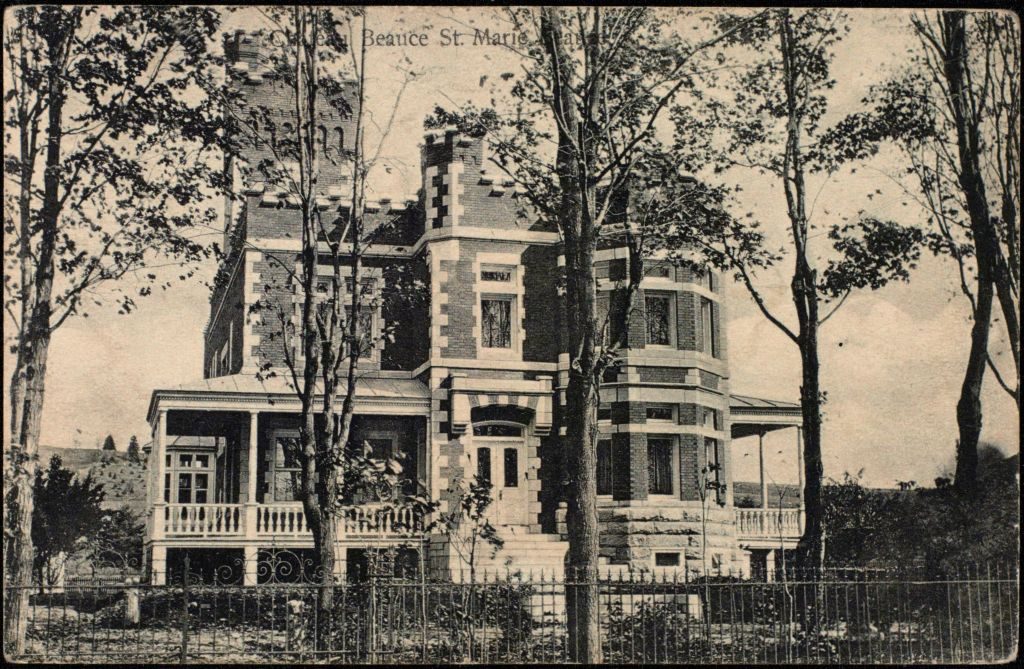 1909
 c. 1920
 Top
 Top
 Top
 Top
 Local
 Local
 Local


